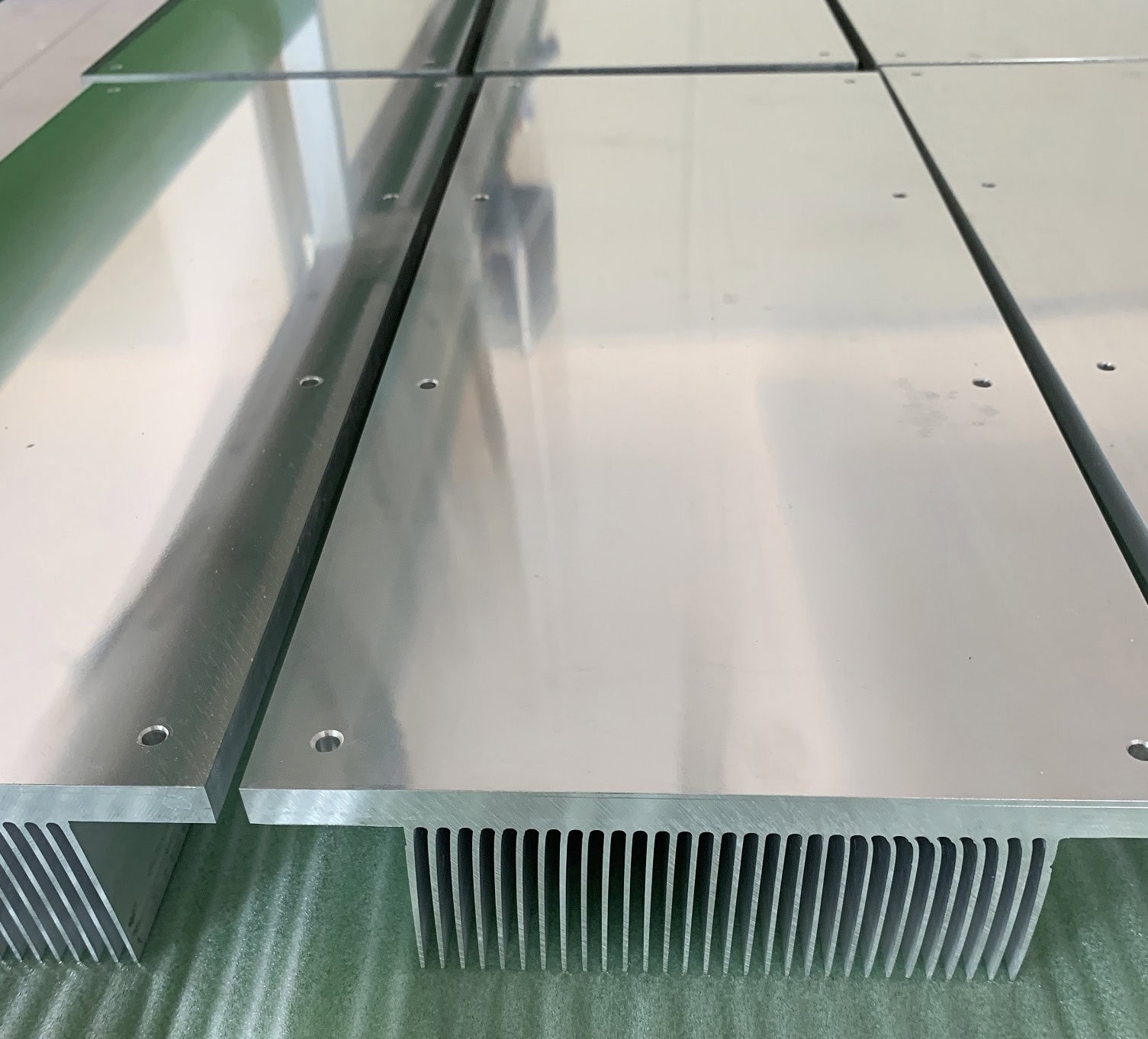
Surface finish is sometimes treated as one of the last items on a heat sink drawing. In practice, it can affect much more than appearance.
For an aluminum heat sink, the finish may influence corrosion resistance, electrical contact, surface emissivity, dimensional tolerances, cosmetic consistency, and downstream assembly. It can also determine whether certain mounting faces, threaded holes, or grounding areas need to be masked before processing.
That means the right question is not simply:
“Should this heat sink be black anodized?”
A better question is:
“What does the surface finish need to accomplish in this application?”
For engineers and procurement buyers sourcing custom heat sinks, defining that requirement early can prevent unnecessary finishing cost and avoid problems during machining, coating, and final assembly.
What Should a Heat Sink Surface Finish Do?
Before selecting a finish, identify its actual function.
A surface treatment may be required to:
- Improve corrosion resistance
- Provide a consistent appearance or color
- Increase surface emissivity
- Protect aluminum in a specific environment
- Maintain electrical bonding or grounding
- Provide electrical insulation
- Prepare the surface for paint
- Meet a customer or industry specification
Not every heat sink needs all of these functions.
An internal heat sink used inside protected electronic equipment may work perfectly well with a mill or machined finish. An externally visible enclosure heat sink may need a durable cosmetic coating. A chassis-mounted heat sink may require controlled conductive areas for grounding.
The application should determine the finish—not habit.
Common Aluminum Heat Sink Finishes at a Glance
Black Anodizing: What It Does—and What It Does Not Do
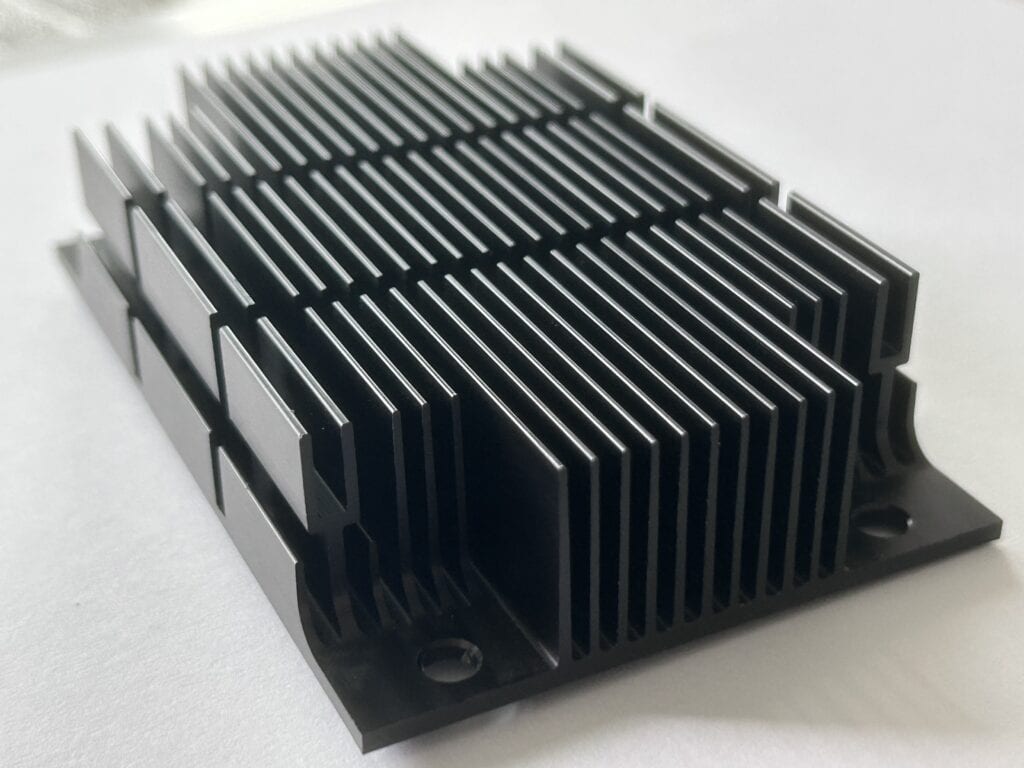
Anodizing is one of the most common finishes for aluminum heat sinks.
It is an electrochemical process that converts the aluminum surface into a controlled aluminum oxide layer rather than simply depositing paint onto the metal. The resulting surface can provide improved corrosion resistance, wear resistance, and appearance.
Black anodizing is especially common because it gives heat sinks a uniform industrial appearance and increases surface emissivity. It is frequently used on custom extruded aluminum heat sinks as well as other aluminum thermal components.
Does Black Anodizing Improve Heat Dissipation?
Yes—but this point is often oversimplified.
A dark anodized aluminum surface can radiate heat more effectively than bright unfinished aluminum because its thermal emissivity is much higher.
However, radiation is only one part of the heat-transfer process.
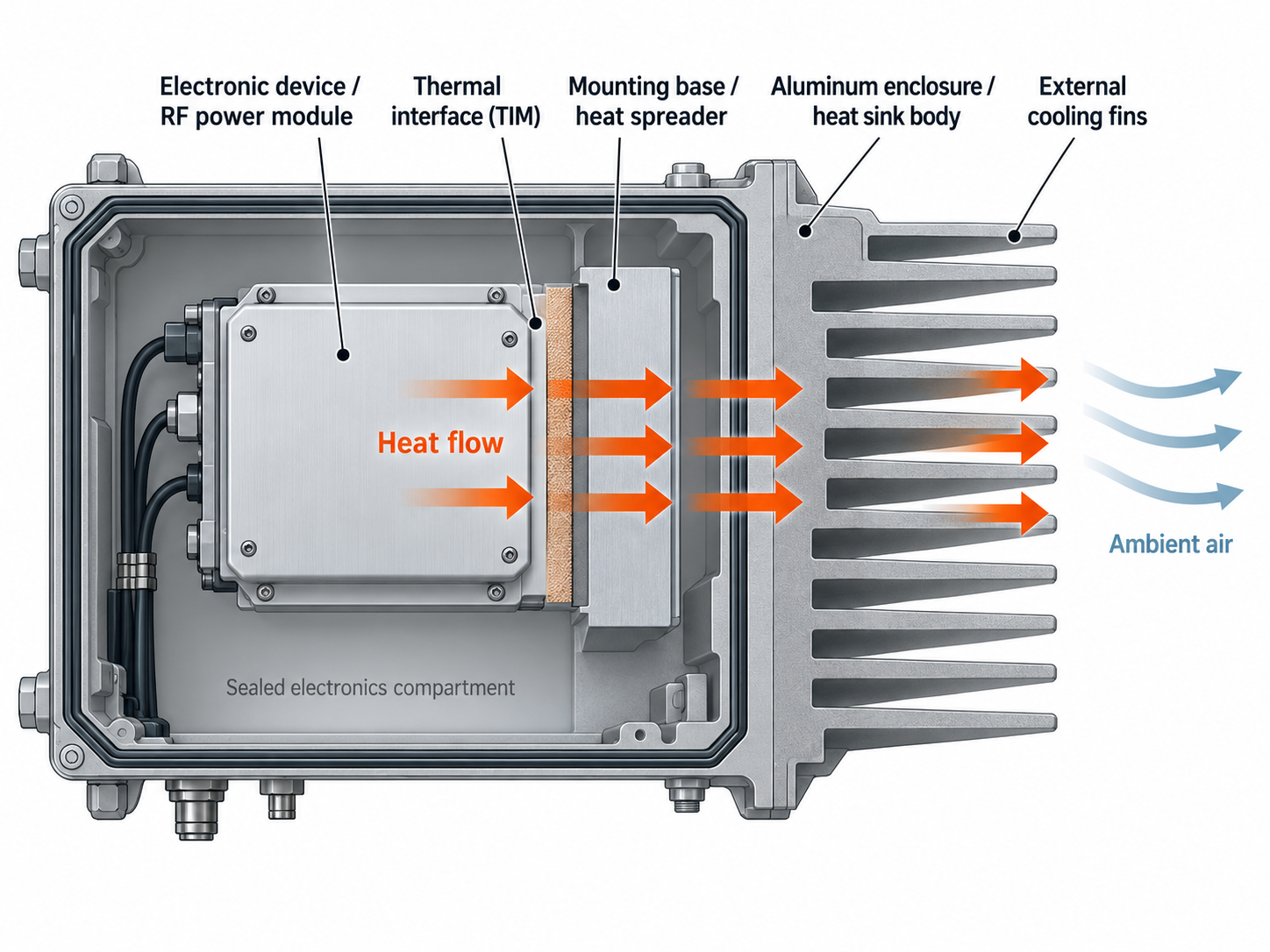
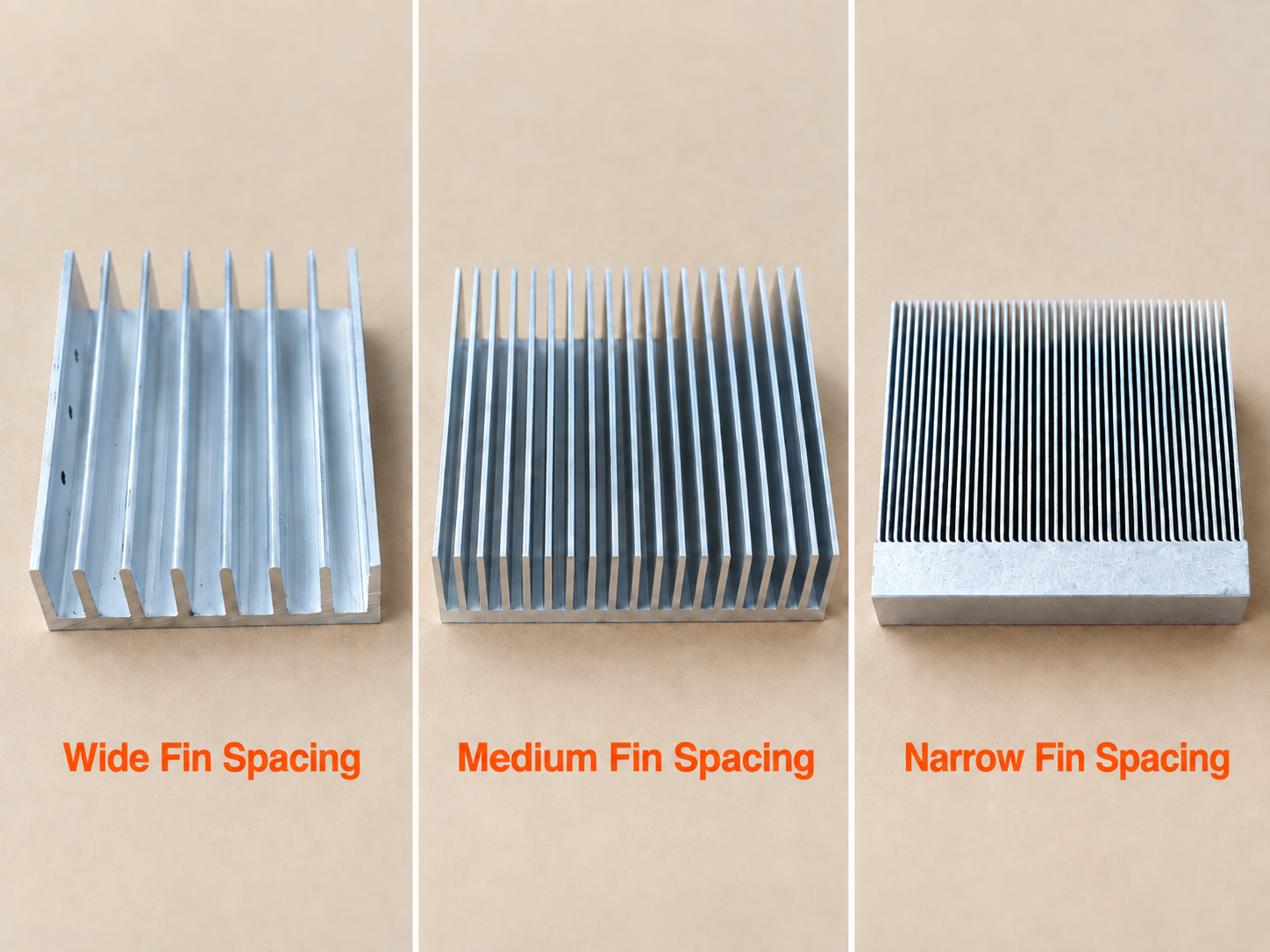
For most forced-air heat sinks, convection between the fins and moving air is the dominant cooling mechanism. Fin spacing, fin height, airflow velocity, static pressure, base spreading, thermal interface quality, and installation conditions can have a greater effect on overall thermal performance than surface color.
In low-airflow, natural-convection, or enclosed applications, radiation may make a more meaningful contribution.
Therefore, black anodizing can be useful, but it should not be used as a substitute for proper heat sink geometry and airflow design.
Clear Anodizing: Protection Without a Black Finish
Clear anodizing uses the same general anodic oxide principle but retains a more natural metallic appearance.
It can be a good choice when the heat sink requires corrosion protection and surface durability but black color is unnecessary.
Engineers should remember that “clear” does not always mean visually identical from one batch or alloy to another.
Extrusion texture, machining marks, aluminum alloy, surface pretreatment, and anodizing conditions can all influence the final appearance.
If a visible heat sink has strict cosmetic requirements, it is better to define the acceptable appearance than simply write “clear anodize” on the drawing.
Chromate Conversion Coating: When Electrical Contact Matters
Chromate conversion coating provides another option for aluminum heat sinks.
Compared with anodizing, it produces a much thinner conversion layer and can be useful when corrosion resistance is required while maintaining better electrical conductivity at the surface.
This is particularly relevant when the heat sink is also part of an electrical bonding or grounding path.
Typical examples include:
- Chassis-mounted heat sinks
- RF or telecom equipment
- Grounded electronic enclosures
- Heat sinks attached to conductive structural frames
Chromate conversion coatings can also improve paint adhesion.
However, buyers should avoid specifying only “chromate” when the project has regulatory or functional requirements. Different conversion-coating chemistries and specifications exist, so the required standard, class, color, or compliance requirement should be included on the drawing when applicable.
Powder Coating and Painting
Powder coating and wet paint are useful when appearance or environmental protection is a major requirement.
They are particularly suitable for heat sinks that also function as:
- External enclosures
- Finned housings
- Outdoor electronic housings
- Visible industrial components
- Brand-colored assemblies
These coatings can provide a broad range of colors and finishes, but they are generally thicker than anodizing or conversion coatings.
That thickness matters around:
- Threaded holes
- Precision bores
- Press-fit features
- Mounting faces
- Electrical contact areas
- Tight assembly clearances
A coating should therefore be considered part of the dimensional and assembly design rather than added after the mechanical design is complete.
When Is an Unfinished Heat Sink the Better Choice?
A finished surface is not always necessary.
Mill-finish or machined aluminum may be appropriate when:
- The heat sink operates inside protected equipment
- Corrosion exposure is limited
- Appearance is not important
- The project is still in prototype testing
- Critical surfaces require direct machining
- Additional finishing adds little functional value
For prototypes in particular, an unfinished heat sink can allow engineers to validate geometry, installation, and thermal performance before committing to the final cosmetic or protective finish.
An unfinished heat sink is therefore not necessarily an incomplete heat sink—it may simply be the most practical engineering choice.
The Detail Many Heat Sink Drawings Miss: Masking
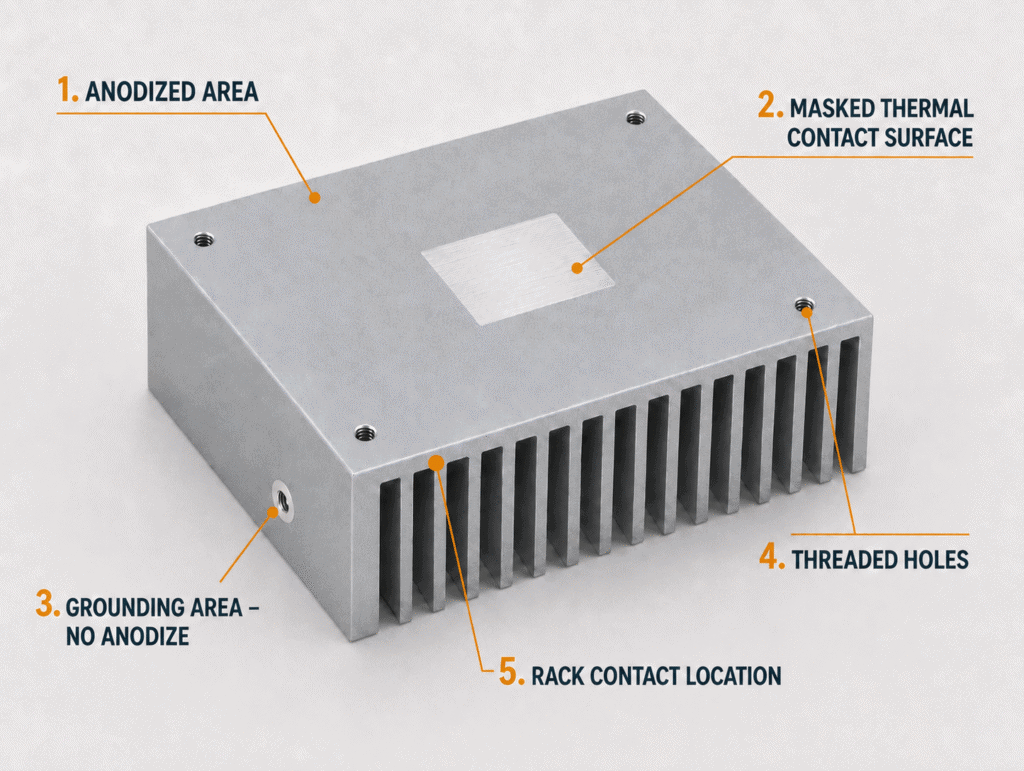
For custom heat sinks, one of the most important finishing decisions is not what finish to use, but where the finish should not be applied.
Critical areas may include:
- Thermal interface surfaces
- Electrical grounding pads
- Threaded holes
- Precision bores
- Press-fit locations
- Datum surfaces
- Connector mounting areas
Anodizing creates an oxide layer and also changes part dimensions slightly. The exact dimensional effect depends on the anodizing process, alloy, and coating requirement.
That change may be insignificant on a large external surface but important inside a tightly toleranced bore or threaded feature.
These finishing requirements should therefore be considered together with the overall heat sink manufacturing process, CNC machining sequence, and final assembly requirements.
XINXIANG Manufacturing Note
For custom heat sink projects, we recommend identifying masking and critical surfaces directly on the drawing before finishing is released.
For example:
MASK THIS SURFACE – NO ANODIZE
or
ANODIZE ALL SURFACES EXCEPT INDICATED AREAS
is much clearer than leaving the finishing supplier to decide which surfaces should remain untreated.
Because CNC machining and surface finishing often occur at different stages of the manufacturing route, defining these areas early also helps determine whether a surface should be masked during finishing or machined afterward.
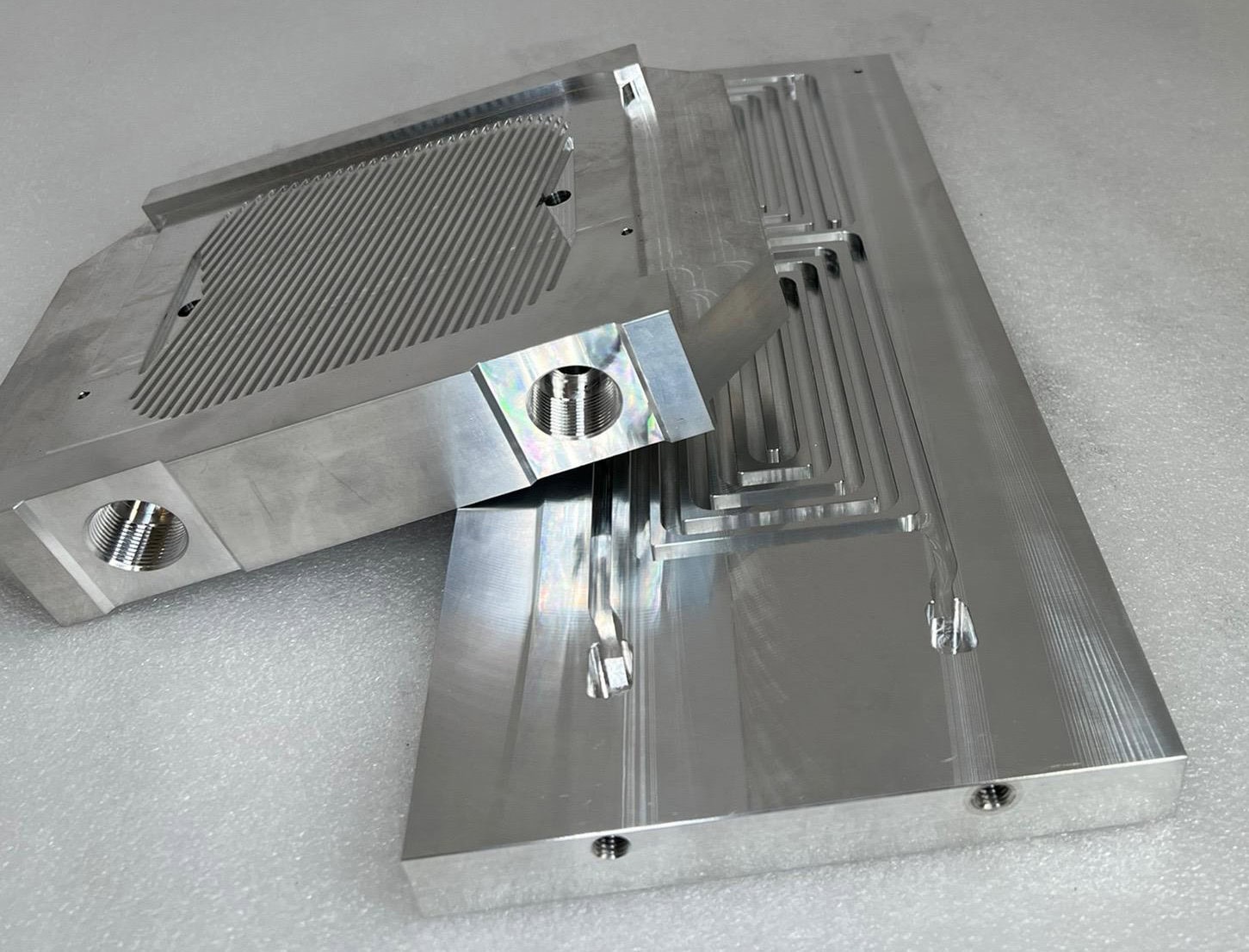
This is especially important when the same heat sink combines thermal contact, mounting, grounding, and cosmetic requirements. The same principle applies to high-density skived heat sinks when the part also includes machined mounting or electrical-contact features.
Do Not Forget Anodizing Rack Marks
There is another practical manufacturing detail that is rarely mentioned in basic heat sink articles.
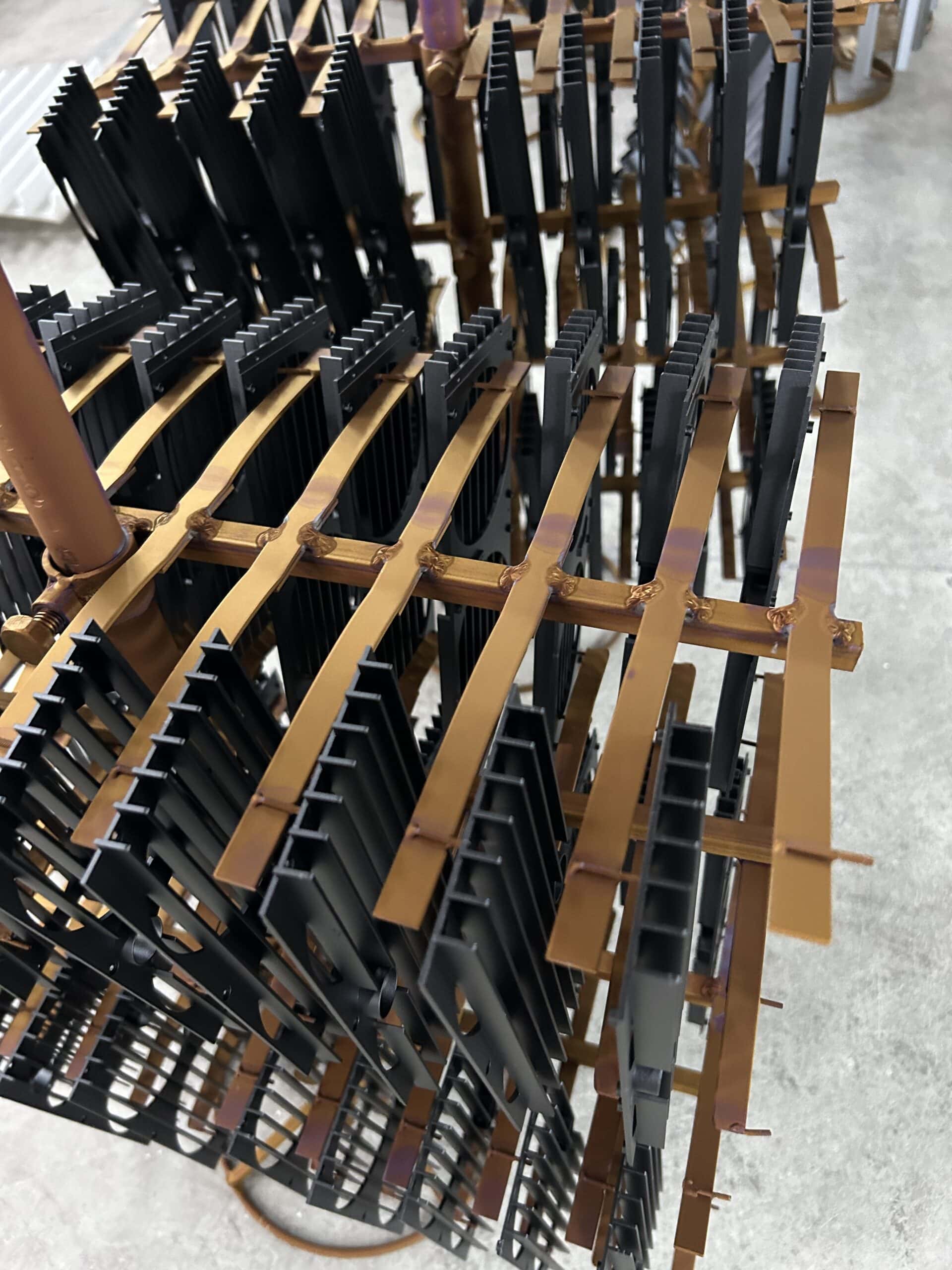
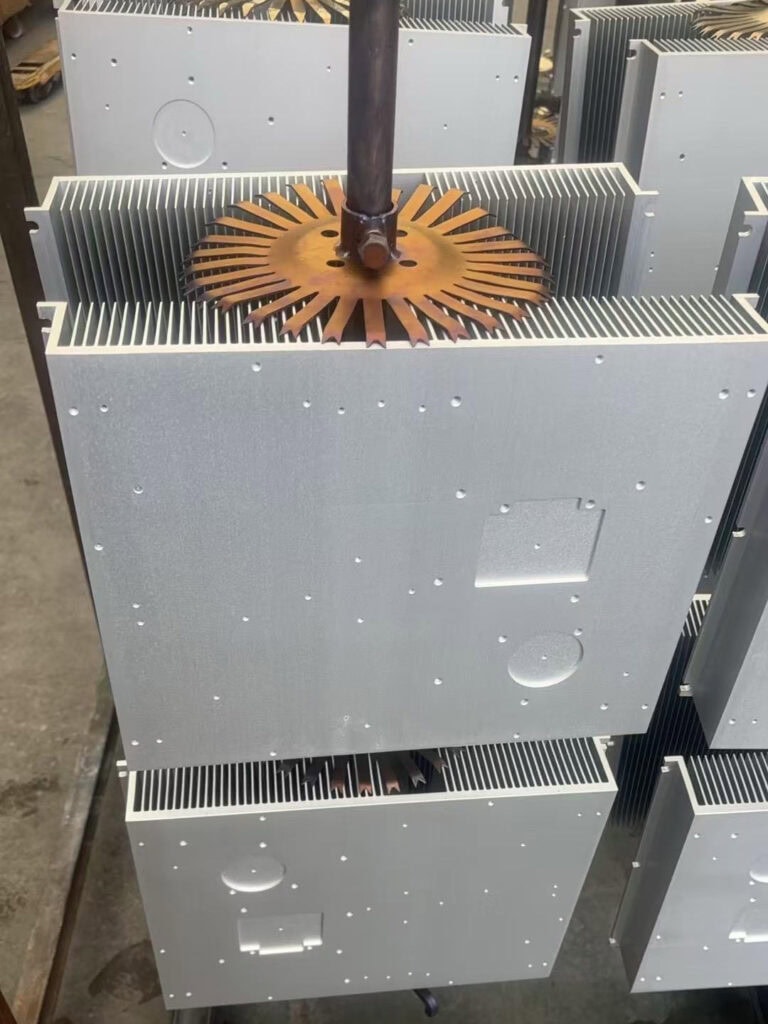
The anodizing process requires electrical contact with the aluminum part during processing. This means the part must be held or “racked” at one or more contact locations.
Those contact points can leave small visible marks.
On an internal industrial heat sink, that may not matter at all.
On a highly visible anodized enclosure or cosmetic heat sink, the rack location should be considered in advance so the contact mark can be placed in a less visible area whenever practical.
This is another reason why cosmetic requirements should be communicated before production rather than inspected only after the finished parts arrive.
How to Specify a Heat Sink Finish in an RFQ
Instead of writing only “Black Anodize”, provide the manufacturer with enough information to understand the function of the finish.
A good RFQ or drawing should define, where applicable:
1. Aluminum Alloy
For example, 6063, 6061, or another specified alloy.
2. Required Finish
Black anodizing, clear anodizing, chromate conversion, powder coating, paint, or mill finish.
3. Applicable Specification
If the project requires a particular anodizing or conversion-coating standard, include the exact specification and type or class.
4. Masked Areas
Clearly mark thermal interfaces, grounding pads, threads, bores, or other areas that must remain untreated.
5. Cosmetic Requirements
Identify which surfaces are visible and whether color consistency or appearance is critical.
6. Critical Dimensions
Indicate dimensions that must be maintained after finishing.
7. Operating Environment
Indoor, outdoor, humid, corrosive, or other relevant conditions.
Providing this information allows the manufacturer to review the finish together with the alloy, CNC machining, tolerances, and production sequence instead of treating surface treatment as an isolated operation.
Choose the Finish for the Whole Application
There is no single best surface finish for every aluminum heat sink.
Choose black anodizing when corrosion protection, durable appearance, and increased surface emissivity are useful.
Choose clear anodizing when similar surface protection is required but a natural aluminum appearance is preferred.
Consider chromate conversion coating when corrosion protection must be combined with electrical bonding or conductive contact requirements.
Use powder coating or painting when exterior protection, product appearance, or custom color is a major design requirement.
And when the application does not require additional protection or appearance control, a mill or machined finish may be entirely appropriate.
Most importantly, surface treatment should be considered together with heat sink material, manufacturing process, CNC machining, electrical requirements, mounting, and final assembly.
A well-defined finish specification helps avoid unnecessary cost—and prevents small finishing details from becoming large production problems.
Need Help Specifying a Finish for Your Custom Heat Sink?
XINXIANG can coordinate aluminum heat sink manufacturing, CNC machining, anodizing, conversion coating, painting, powder coating, assembly, and inspection according to project requirements.
Send us your drawing, required quantity, operating environment, preferred finish, and any critical masking or dimensional requirements. Send us your heat sink requirements and we can review the manufacturing sequence before quotation and production.