Efficient cooling starts with the right combination of material, base design, fin geometry, and airflow.
XINXIANG manufactures custom finned heat sinks in aluminum and copper for power electronics, telecommunications, computing, industrial equipment, LED systems, and other thermal management applications.
Depending on your thermal requirements, dimensions, production volume, and airflow conditions, we can manufacture finned heat sinks using extrusion, skiving, bonded fin construction, forging, die casting, and CNC machining.
Send us your drawing or thermal requirements — we’ll help evaluate a practical manufacturing solution for your project.
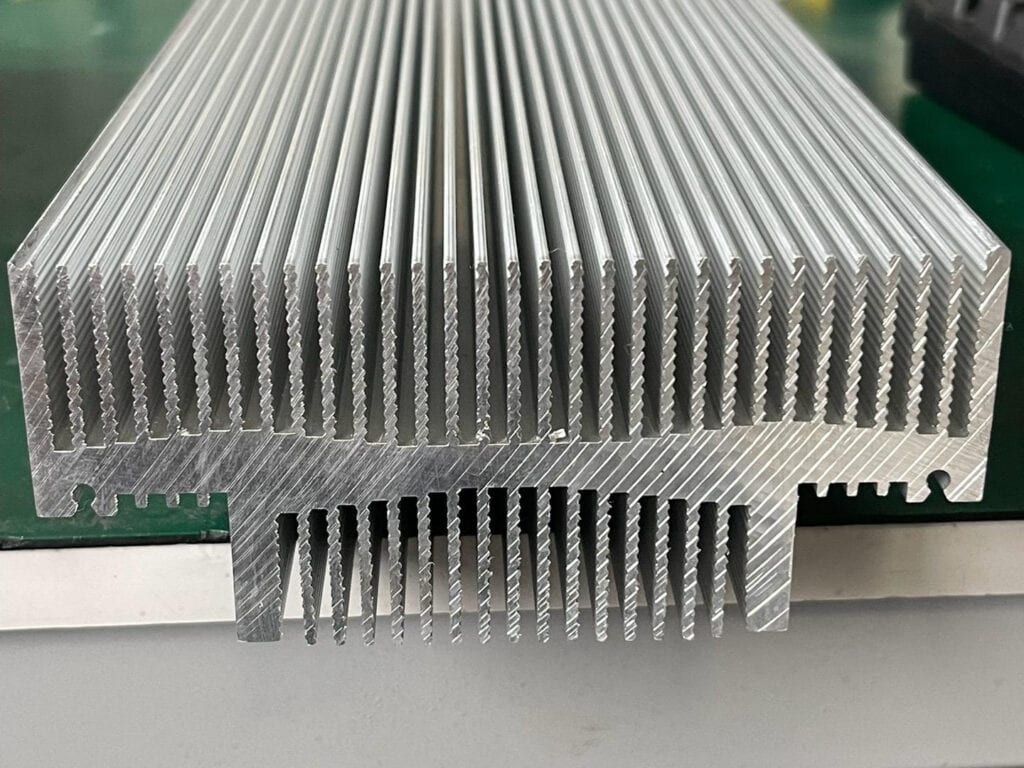
A finned heat sink uses a thermally conductive base and a series of fins to transfer heat from an electronic component into the surrounding air.
Heat first travels from the heat source into the base, spreads across the heat sink, and then moves into the fins. The fins increase the available surface area, allowing more heat to be dissipated through natural or forced convection.
However, more fins do not automatically mean better cooling. Fin height, thickness, pitch, orientation, base thickness, material, and airflow must work together as a system.
This is why the best finned heat sink design depends on the actual operating environment rather than fin count alone.
Fin geometry has a major influence on heat sink performance.
For natural convection, sufficient spacing between fins is important because warm air must rise freely through the channels. Packing too many fins into a limited space can restrict airflow and reduce cooling efficiency.
With forced-air cooling, a fan or blower moves air through the heat sink, making closer fin spacing and higher fin density practical in many applications.
Other design factors also matter, including:
A well-designed finned heat sink balances surface area with effective airflow.
Different manufacturing methods create different fin geometries and cost-performance characteristics.
| Heat Sink Type | Key Advantages | Typical Use |
|---|---|---|
| Extruded Heat Sink | Cost-effective, strong one-piece construction, suitable for many custom profiles | Industrial electronics, power supplies, LED, motor drives |
| Skived Heat Sink | Thin fins, high fin density, excellent design flexibility | High-power electronics, servers, telecom, power modules |
| Bonded Fin Heat Sink | Large sizes, tall fins, flexible fin spacing and high surface area | High-power systems, large equipment, forced-air cooling |
| Forged Heat Sink | Dense fin structures, strong one-piece construction, good thermal performance | Power electronics, high-power LED, automotive electronics, compact thermal modules |
| Die Cast Heat Sink | Complex shapes, integrated features, excellent repeatability for high-volume production | Lighting housings, telecom equipment, automotive electronics, consumer and industrial electronics |
Engineering Note:
For many projects, the manufacturing process should be selected only after considering the required thermal performance, size, airflow, quantity, and target cost.
Looking for a pre-tooled aluminum section? Browse our existing heat sink extrusion profiles by width and height.
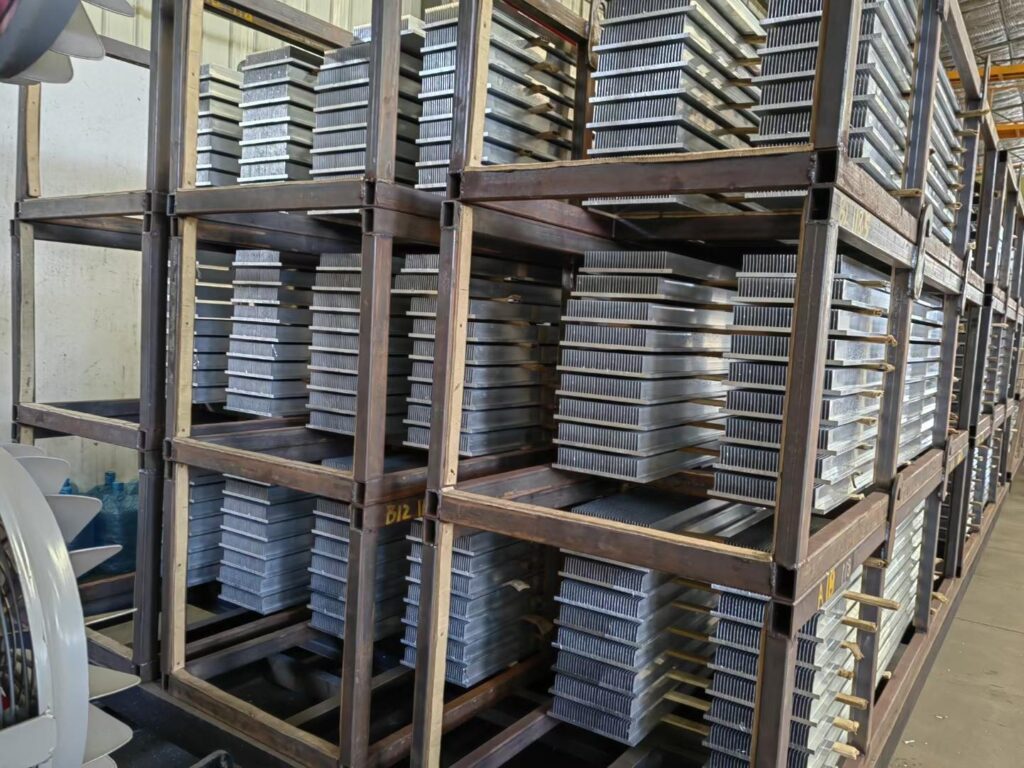
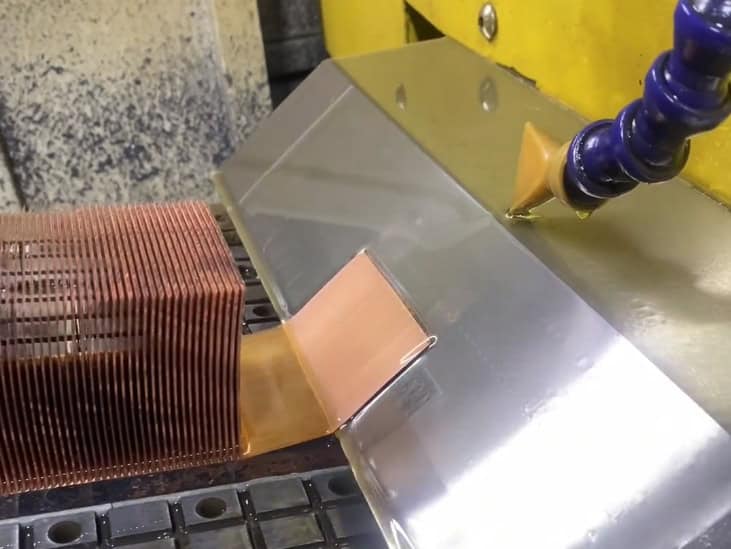
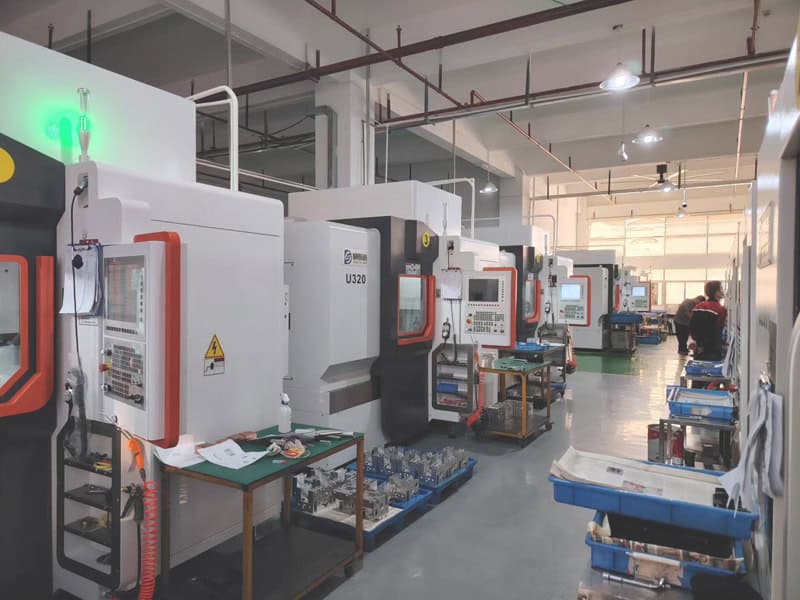
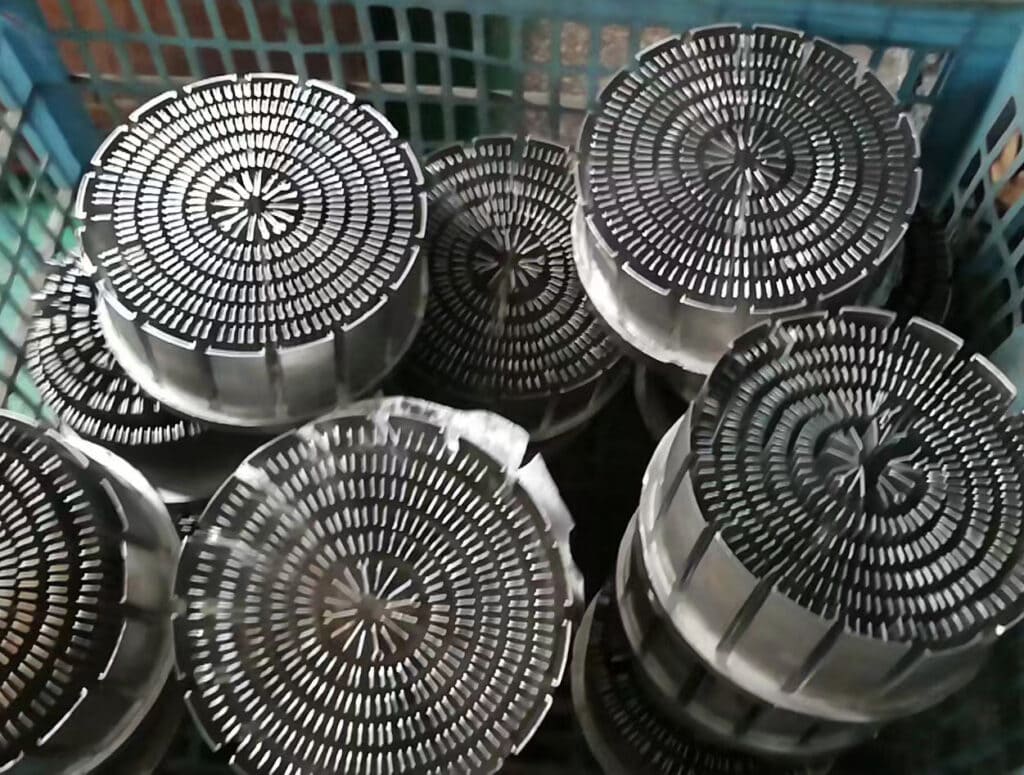
At XINXIANG, our finned heat sinks can be customized around your mechanical and thermal requirements.
Material
Aluminum heat sinks are widely used for their combination of thermal performance, low weight, manufacturability, and cost. Copper heat sinks can be selected when greater thermal conductivity or localized heat spreading is required.
Fin Geometry
Fin height, thickness, spacing, direction, and overall heat sink dimensions can be adjusted according to the selected manufacturing process. Round and radial fin arrangements can also be used when the product geometry or airflow favors a circular heat sink structure.
CNC Machining
Drilling, tapping, milling, pockets, mounting holes, cutouts, and other secondary machining can be completed according to your drawings.
Surface Treatment
Options include anodizing, chemical conversion coating, painting, plating, and other finishes depending on the material and application.
Assembly
Fans, thermal interface materials, mounting hardware, heat pipes, and other components can be integrated when required.
XINXIANG supports custom heat sink projects from initial prototypes through repeat production.
Our 6,000 m² manufacturing facility supports multiple heat sink manufacturing processes, including extrusion, skiving, die casting, forging, CNC machining, and assembly, while additional specialized processes can be coordinated through qualified manufacturing partners when required.
This multi-process capability allows us to evaluate the design based on more than one manufacturing method instead of forcing every project into the same process.
Whether you need a simple aluminum finned heat sink or a more complex high-density cooling solution, we focus on achieving a practical balance between thermal performance, manufacturability, cost, and production volume.
Custom finned heat sinks are widely used across thermal management applications including:
If you already have a finished drawing, send us the design for manufacturing review and quotation.
If your design is still being developed, the following information can help determine a suitable solution:
Our team can then evaluate suitable manufacturing processes and production options for your application.
For IGBT and other power-module applications, see our practical guide to selecting an IGBT heat sink based on thermal resistance, airflow, mounting, and manufacturing requirements.
Aluminum is the most common choice because it combines good thermal conductivity with low weight, competitive cost, and excellent manufacturability. Copper offers higher thermal conductivity but is heavier and more expensive, making it more suitable for applications where additional heat spreading is required.
No. Increasing fin density adds surface area, but excessively narrow spacing can restrict airflow. The optimum fin density depends on the cooling method, airflow, fin length, heat load, and available space.
Yes. These dimensions can be customized within the limits of the selected manufacturing process. Extrusion, skiving, and bonded fin construction each offer different design possibilities.
Extrusion is often economical for conventional profiles and production volumes. Skiving is well suited to thin, high-density fins, while bonded fin construction provides greater flexibility for large heat sinks and tall fin structures. The final choice should consider thermal performance, geometry, quantity, and cost.
From standard fin structures to high-density and large-format heat sinks, XINXIANG provides custom manufacturing solutions for demanding thermal applications.
Send us your drawings, dimensions, quantities, or application requirements to discuss your next heat sink project.
You can also contact our team at sales@heat-sinks.com
Send us your drawing or project requirements. Our team will review your request and typically respond within 24 hours.
You can also email us directly at sales@heat-sinks.com