
A passive heat sink provides reliable cooling without a dedicated fan or blower, making it ideal for applications where simplicity, silent operation, and long-term reliability are important.
XINXIANG manufactures custom aluminum and copper passive heat sinks for industrial electronics, power systems, LED lighting, telecommunications, computing equipment, and other natural-convection cooling applications.
Using extrusion, skiving, bonded fin construction, forging, die casting, and CNC machining, we can manufacture heat sinks around your mechanical, thermal, and production requirements.
Send us your drawing or application requirements to discuss a custom passive cooling solution.
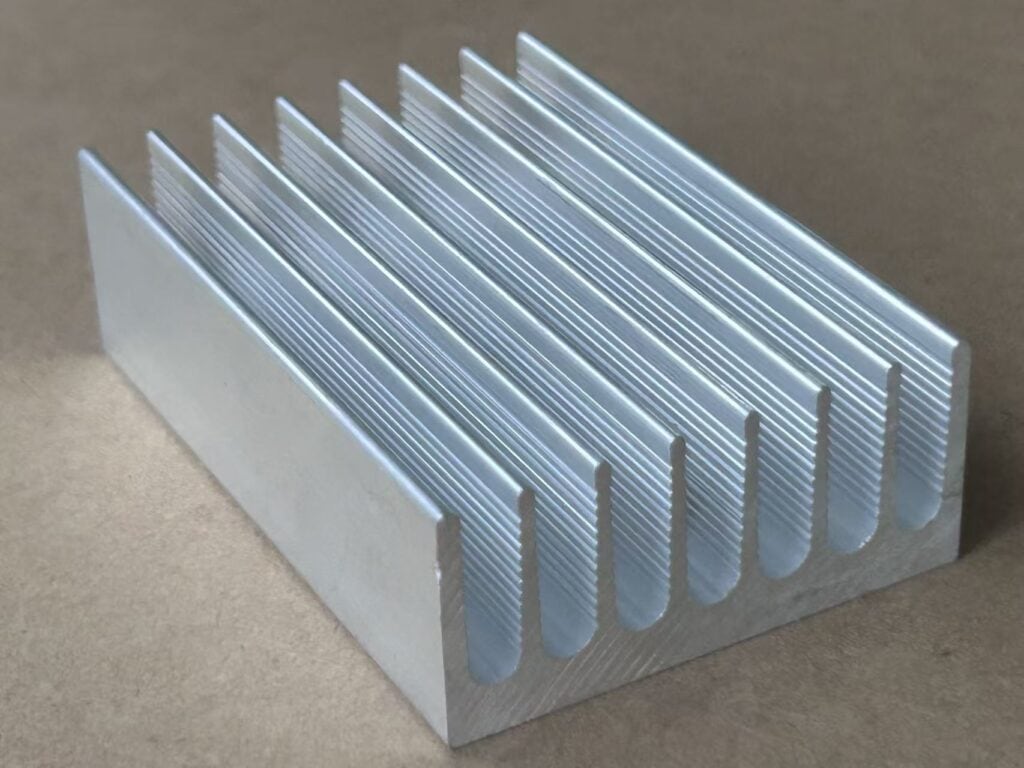
A passive heat sink dissipates heat without using a dedicated powered fan or blower.
Heat is conducted from the electronic component into the heat sink base and fins. As the fin surfaces heat the surrounding air, the warmer air becomes less dense and rises while cooler air moves in to replace it. This continuous buoyancy-driven airflow creates natural convection.
Thermal radiation can also contribute to heat dissipation, especially under natural-convection conditions.
Because passive cooling does not depend on a powered air mover, it offers a simple thermal solution with no fan noise and fewer moving components.
Simple & Reliable
Removing the cooling fan eliminates one moving component from the thermal system and can reduce maintenance requirements.
Silent Operation
Passive heat sinks generate no fan noise, making them suitable for equipment where acoustic performance is important.
No Fan Power Required
Natural convection moves air without electrical power for a dedicated cooling fan.
Suitable for Long-Term Operation
Passive cooling is attractive for industrial, outdoor, lighting, and other applications where access for fan inspection or replacement may be limited.
Finned heat sink performance under natural convection depends heavily on the relationship between surface area, fin geometry, orientation, and available airflow space.
Because there is no fan forcing air through the heat sink, warm air must be able to rise naturally through and away from the fin channels.
Important design factors include:
For many straight-fin designs, orienting the fin channels vertically allows heated air to rise more freely and supports natural convection.
More fins do not automatically provide better performance. If fin spacing becomes too narrow, airflow through the channels can be restricted. Passive heat sink design therefore requires a balance between increased surface area and sufficient space for natural airflow. For a more detailed explanation of this tradeoff, see our guide to heat sink fin spacing.
When selecting an existing extrusion for passive cooling, fin spacing should therefore be evaluated together with the overall profile dimensions. See our guide to choosing a heat sink extrusion profile for more practical selection criteria.
Several manufacturing methods can be used to create passive heat sinks.
Extruded aluminum heat sinks are widely used for natural-convection cooling because they offer a practical balance of thermal performance, mechanical strength, customization, and cost.
Bonded fin construction is useful when large base sizes, tall fins, or greater cooling surface area are required beyond the practical limits of conventional extrusion.
Skiving provides thin fins and flexible fin geometry. For natural-convection applications, fin spacing should be selected according to the available airflow rather than maximizing fin density.
Other structures, including forged heat sinks and die cast heat sinks, can be useful for compact, pin-fin, round or radial heat sink geometries depending on the product design and production volume.
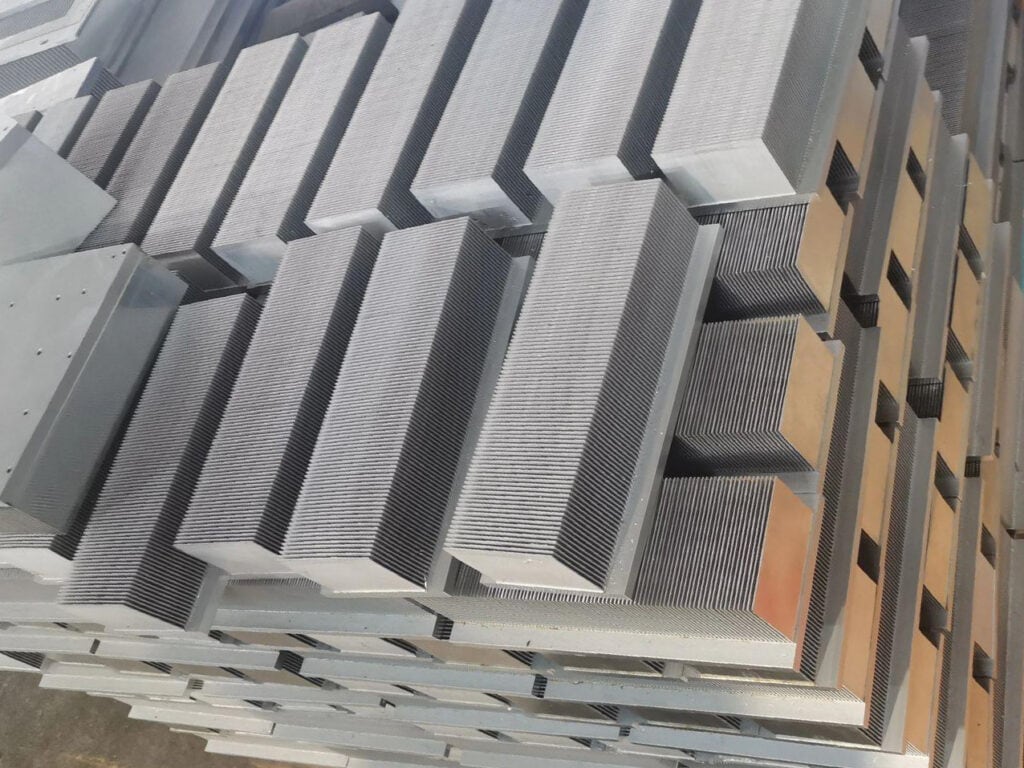
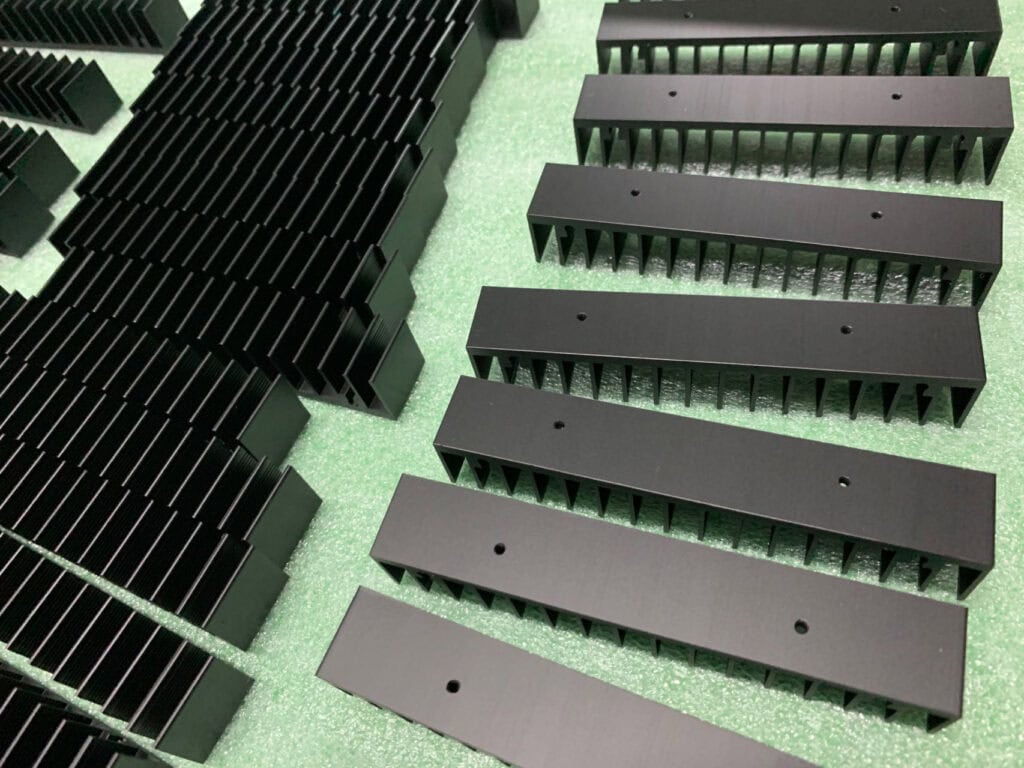
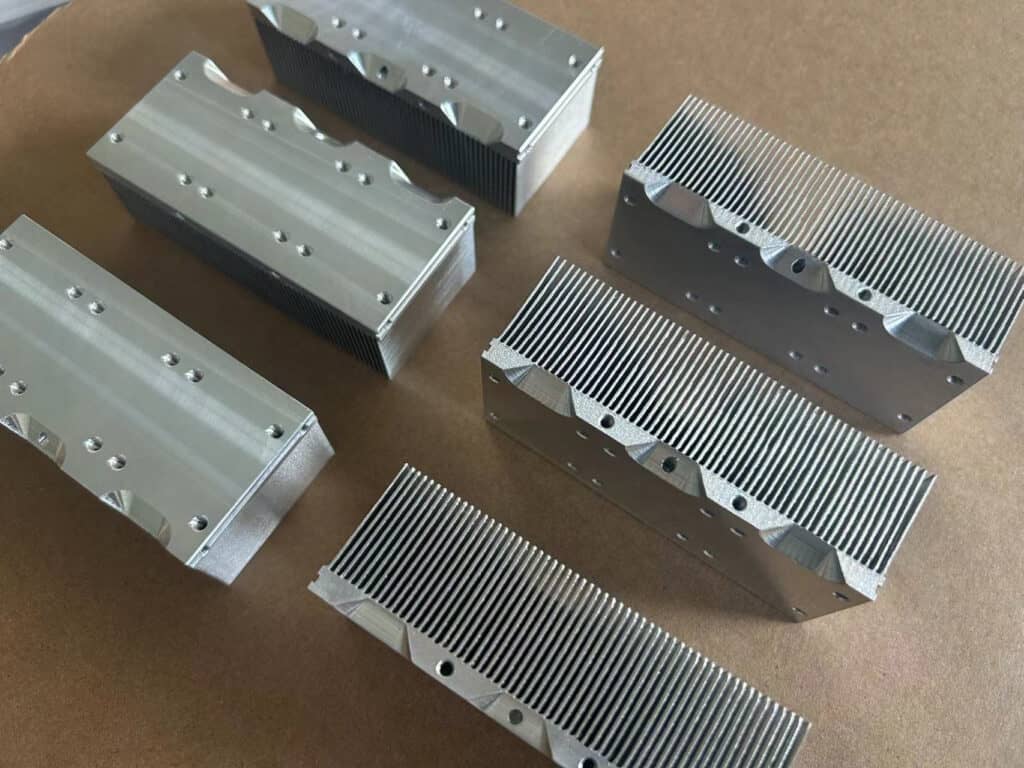
Passive cooling may be a good choice when:
Passive cooling is not suitable for every thermal problem. High heat loads, very compact spaces, high ambient temperatures, or restricted natural airflow may require an active heat sink or another cooling technology.
The cooling method should therefore be selected according to the complete operating environment.
For outdoor telecom equipment, passive cooling must also account for solar exposure, sealed enclosures, and the installation orientation of external fins. See our outdoor telecom heat sink design guide for more detailed engineering and manufacturing considerations.
At XINXIANG, our passive heat sinks can be customized according to your application.
Materials
Aluminum heat sinks are widely used because they combine good thermal conductivity with low weight, manufacturability, and competitive cost. Copper heat sinks can be used when greater thermal conductivity or heat spreading is required.
Fin Geometry
Fin height, thickness, spacing, direction, and overall dimensions can be adjusted within the capabilities of the selected manufacturing process.
CNC Machining
Drilling, tapping, milling, pockets, mounting holes, cutouts, and other features can be machined according to your drawings.
Surface Treatment
Anodizing, chemical conversion coating, painting, plating, and other finishes are available depending on material and application requirements.
XINXIANG supports custom passive heat sink projects from prototypes through production quantities.
Our multiple manufacturing processes allow us to evaluate different heat sink structures according to the required geometry, material, quantity, and target cost.
For a new passive cooling project, useful information includes:
If you already have a finished drawing, simply send us the design for manufacturing review and quotation.
Heat is conducted from the component into the heat sink base and fins. The heated fin surfaces warm the surrounding air, which rises naturally and is replaced by cooler air. This natural convection carries heat away from the heat sink.
Yes. Orientation can significantly influence natural airflow. For many straight-fin heat sinks, vertical fin channels allow heated air to rise through the fins more freely.
Not necessarily. Greater surface area can help, but fin spacing, orientation, base heat spreading, ambient conditions, and available airflow also influence cooling performance.
A fan can often improve cooling, but a heat sink optimized for natural convection may not have the ideal fin spacing or airflow resistance for forced-air operation. If forced cooling is planned, it is better to consider the fan and heat sink together during design.
From conventional aluminum extrusions to large-format and specialized fanless heat sinks, XINXIANG manufactures custom passive cooling solutions according to your drawings and application requirements.
You can also contact our team at sales@heat-sinks.com
Send us your drawing or project requirements. Our team will review your request and typically respond within 24 hours.
You can also email us directly at sales@heat-sinks.com