
Single-piece aluminum and copper forged heat sinks with dense pin fins, compact geometry, flexible airflow, and reliable production.
Forged heat sinks are formed by applying high pressure to an aluminum or copper billet, forcing the material into a precision tool that creates the base and fins as one continuous component.
Cold forging is particularly suited to pin-fin, elliptical-fin, round and radial heat sink designs, and other compact three-dimensional fin structures. Because the base and fins are formed from a single piece of metal, there is no adhesive or solder joint between them.
The process can produce dense pin arrays with good dimensional repeatability, mechanical strength, and thermal continuity. Forged pin-fin designs are also useful where airflow direction may vary or where air enters from above rather than moving through a single straight channel.
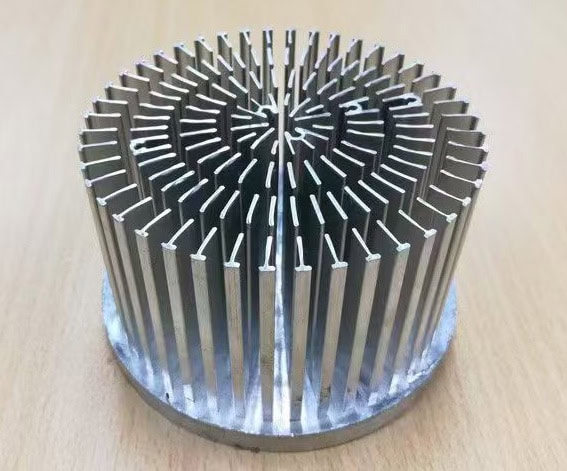
One-Piece Construction
The fins and base are integral, reducing thermal interfaces and providing a strong, durable structure.
Compact Pin-Fin Geometry
Round, square, elliptical, or custom pins provide substantial surface area within a compact footprint.
Flexible Airflow Direction
Pin-fin arrays allow air to travel through the heat sink from several directions, which can be useful in compact or variable-airflow systems.
Repeatable Production
After tooling approval, forging supports stable production with consistent fin geometry and limited assembly work.
| Item | Typical Options |
|---|---|
| Material | High-conductivity aluminum or copper |
| Geometry | Round pin, square pin, elliptical pin, radial fin, or custom |
| Construction | Single-piece forged base and fins |
| Cooling | Natural convection or forced airflow |
| Machining | Milling, drilling, tapping, pockets, slots, surface finishing |
| Finish | Clear/black anodizing, anti-oxidation treatment, nickel plating |
| Mounting | Screws, push pins, clips, brackets, thermal adhesive, custom hardware |
| Integration | Fans, guards, TIMs, heat spreaders, and mounting plates |
Engineering Note:
Final pin height, diameter, spacing, draft, and base dimensions depend on the material, tooling, forging pressure, part geometry, and required tolerances.
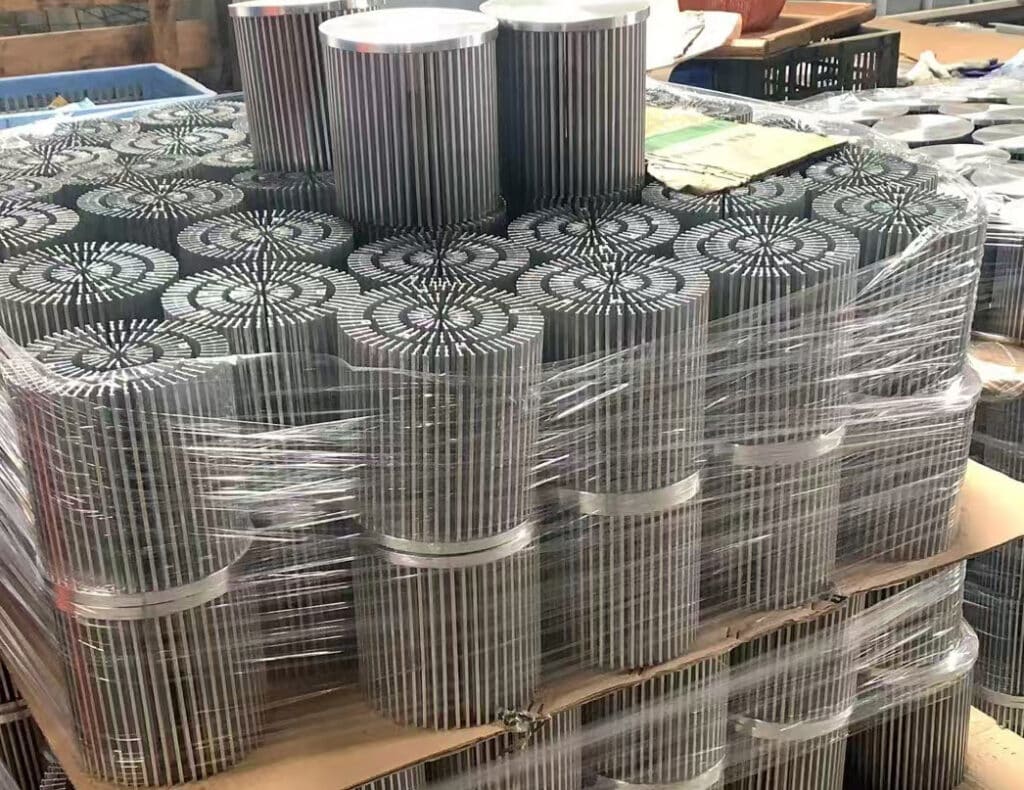
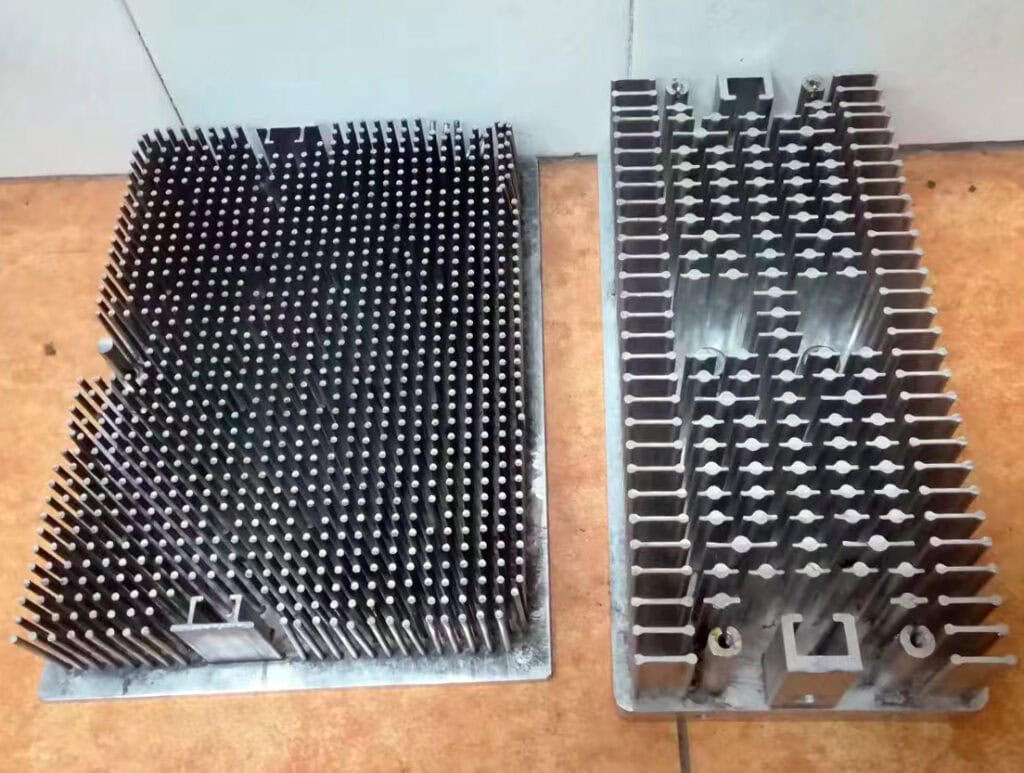
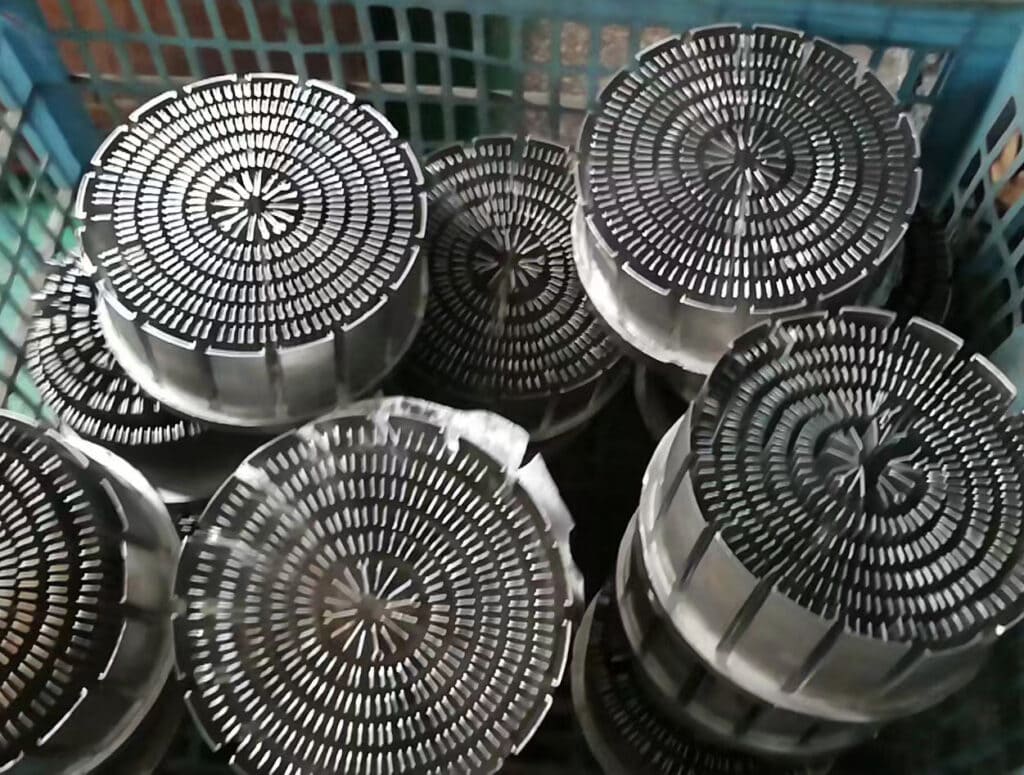
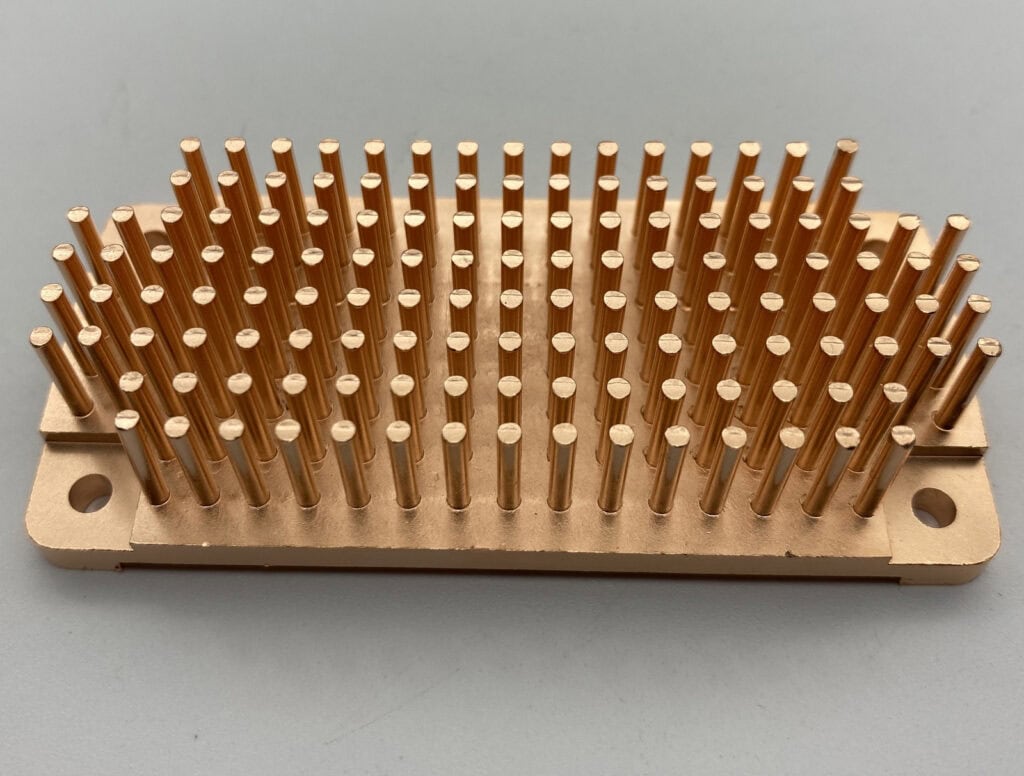
At XINXIANG, we manufacture custom forged heat sinks from your drawings, thermal requirements, or existing product samples.
Custom Pin and Fin Design
We can evaluate round pins, square pins, elliptical pins, radial fins, and other forged structures according to the cooling method and available space. Elliptical pin structures can be useful where lower pressure drop is required in a defined airflow direction, while round pins are suitable for more multidirectional airflow.
CNC Secondary Operations
After forging, heat sinks can be machined with component pockets, mounting holes, threads, slots, flat contact surfaces, fan mounts, and assembly features.
Surface Treatment
Aluminum forged heat sinks can be supplied with clear or black anodizing and other project-specific finishes. Copper parts can receive anti-oxidation treatment or nickel plating.
Fan and Hardware Assembly
Fans, brackets, push pins, spring screws, clips, thermal interface materials, and mounting plates can be supplied as a complete assembly.
Application Review
Send us your drawing, material preference, quantity, and finish requirement.
Design and DFM
We review fin density, airflow resistance, base spreading, mounting, tolerances, and machining access.
Prototype & Production
Produce samples for dimensional, assembly, and thermal evaluation. Then complete volume production under controlled work instructions once we receive your confirmation.
Inspection and Delivery
Inspect the parts, protect the fins from damage, pack for export, and ship worldwide.
With more than 20 years of heat sink manufacturing experience, XINXIANG supports international OEMs and industrial buyers from early design review through repeat production. Our 6,000 m² facility combines multiple thermal manufacturing processes with CNC machining, finishing, inspection, assembly, and export packaging.
Forged heat sinks commonly use pin-fin, radial, or three-dimensional structures formed under pressure. Skived heat sinks use thin plate fins cut and lifted from a solid block. Skiving usually offers very thin, closely spaced straight fins, while forging is especially useful for compact pin arrays and multidirectional airflow.
Yes. Pin-fin and radial designs are frequently used in natural-convection applications, but the final geometry must be matched to orientation, available space, heat load, and ambient conditions.
Copper forging can be evaluated for projects requiring improved heat spreading. Copper parts are heavier and generally more expensive than aluminum parts.
Yes, custom forged geometries normally require dedicated tooling. Tooling cost is most easily justified for repeat or volume production.
Yes. Mounting surfaces, holes, threads, pockets, and assembly features can be machined after forging.
Yes, we can. We work with several reliable freight forwarders and can arrange door-to-door shipping to most countries — just let us know your delivery address.
We can also use your freight forwarder if you have one.
Send us your drawing, heat load, airflow conditions, space limitations, material preference, and required quantity. We will evaluate the forged geometry, tooling, machining, finish, and assembly requirements.
You can also contact our team at sales@heat-sinks.com
Send us your drawing or project requirements. Our team will review your request and typically respond within 24 hours.
You can also email us directly at sales@heat-sinks.com