
Custom thermal solutions for IGBT, MOSFET, SiC power modules, inverters, motor drives, power supplies, energy systems, and industrial power equipment.
Power electronics systems often concentrate significant heat into relatively small semiconductor modules. IGBTs, MOSFETs, SiC devices, rectifiers, and other power components therefore depend on an effective thermal path from the device or module baseplate into the cooling system.
The heat sink must do more than provide enough fin area. Base heat spreading, mounting-surface flatness, thermal interface conditions, airflow, fin geometry, installation space, and mechanical mounting all affect the final cooling performance.
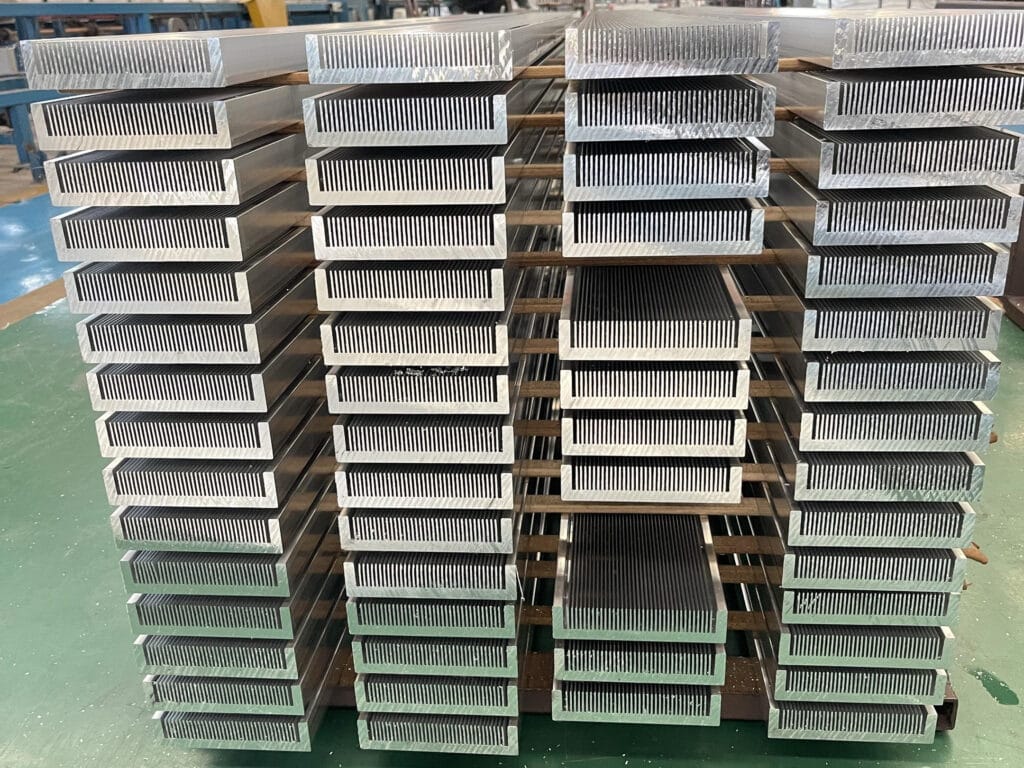
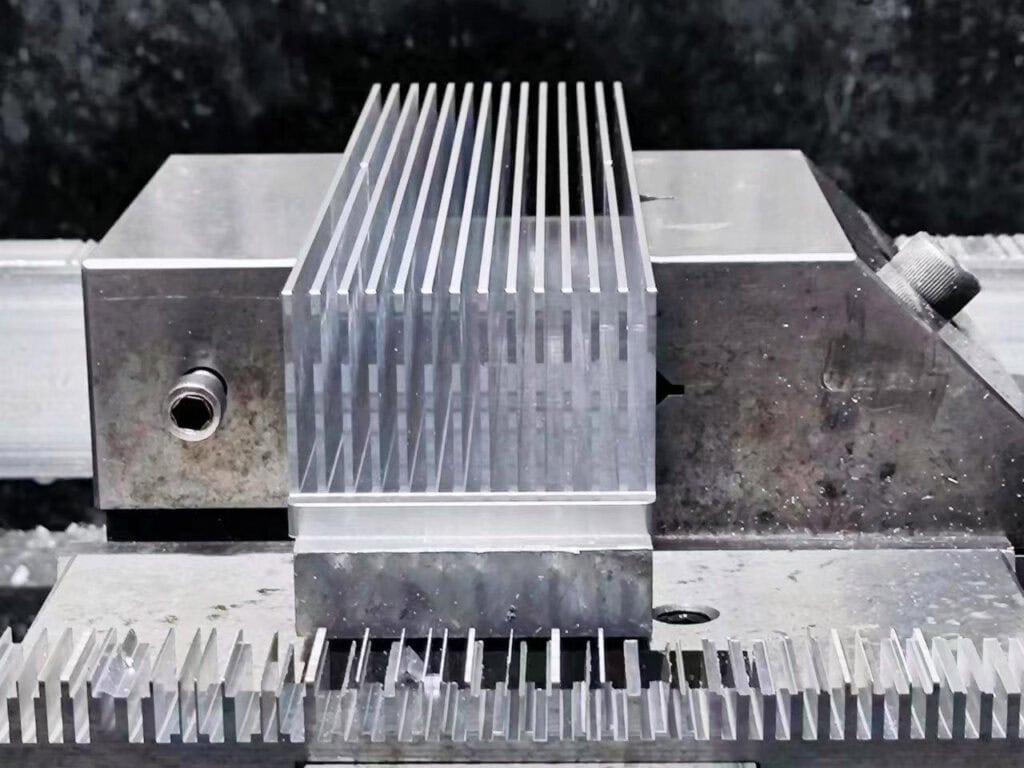
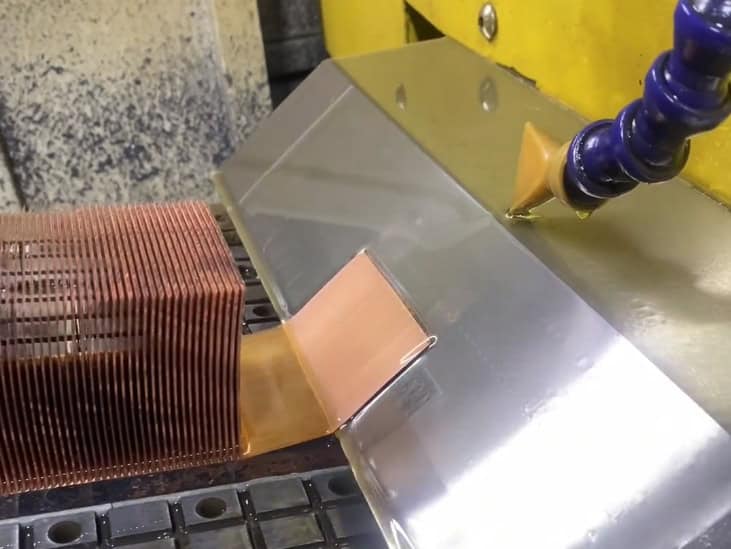
At XINXIANG, we manufacture custom heat sinks and cooling components for industrial power electronics using aluminum extrusion, skiving, bonded-fin construction, CNC machining, forced-air assemblies, and liquid cold plates.
The appropriate solution depends on the heat load, power-module layout, available space, airflow, operating environment, production quantity, and target cost.
Different power electronics systems can create very different thermal conditions. There is no single heat sink structure that is best for every application.
Below are general manufacturing options rather than fixed thermal recommendations. Final selection should be based on the actual power losses, temperature limits, airflow, mechanical design, and operating environment.
| Application | Typical Thermal Challenge | Possible Cooling Approach |
|---|---|---|
| IGBT / SiC Power Modules | Concentrated heat sources and critical module-to-base interfaces | Extruded, skived, or liquid-cooled base |
| Industrial Inverters & Converters | Continuous power dissipation and multiple power modules | Large extruded, bonded-fin, or fan-cooled heat sink |
| Motor & Servo Drives | High load inside industrial enclosures with limited airflow | Extruded or forced-air cooling |
| UPS & Power Supplies | Compact packaging and multiple heat-generating devices | Extruded, skived, or fan-assisted cooling |
| EV Chargers & Energy Storage PCS | High continuous power density and demanding ambient conditions | Skived, large air-cooled heat sink, or liquid cold plate |
| Welding, Laser & Test Power Supplies | High localized or variable thermal loads | Skived, bonded-fin, forced-air, or liquid cooling |
For IGBT, MOSFET, SiC, and other baseplate power modules, the interface between the module and heat sink is a functional part of the thermal path.
Small gaps, surface irregularities, or poor mounting contact can increase interface thermal resistance.
For this reason, critical mounting surfaces should be controlled according to the module manufacturer’s requirements or the customer drawing. Flatness, surface condition, hole location, mounting pressure, and thermal interface material should be considered together.
At XINXIANG, module mounting areas can be precision machined after extrusion, skiving, or other primary manufacturing processes.
A power module may generate heat over an area much smaller than the overall heat sink base.
The base must therefore spread heat effectively before it reaches the fins or cooling channels.
Base thickness, aluminum or copper construction, heat-source position, multiple module locations, and the distance between heat sources all influence spreading performance.
For high local heat loads, a thicker base, copper structure, heat-spreading element, or liquid-cooled design may be evaluated.
Fin design should match the actual cooling environment.
Natural-convection systems generally require relatively open airflow paths, while forced-air systems can use different fin densities when sufficient airflow and fan pressure are available.
Increasing fin density does not automatically improve cooling. Excessively narrow channels can increase airflow resistance and prevent the available surface area from being used effectively.
Even accurately machined metal surfaces contain microscopic irregularities.
Thermal interface material is commonly used between a power module and heat sink to reduce the thermal resistance created by small air gaps.
The TIM type, thickness, application method, mounting pressure, and electrical insulation requirements should be defined according to the power-module and system design.
Power electronics may operate inside industrial cabinets, outdoor equipment, energy systems, transportation equipment, or other demanding environments.
Ambient temperature, dust, vibration, humidity, airflow direction, enclosure layout, and service life can all influence the choice of heat sink structure, material, surface finish, and cooling method.
Power electronics heat sinks often require significantly more machining than a simple cut aluminum profile.
Critical mounting surfaces can be machined according to the customer drawing and the requirements of the selected power module.
Where surface finish or anodizing is required, functional contact areas can be masked or post-machined when specified.
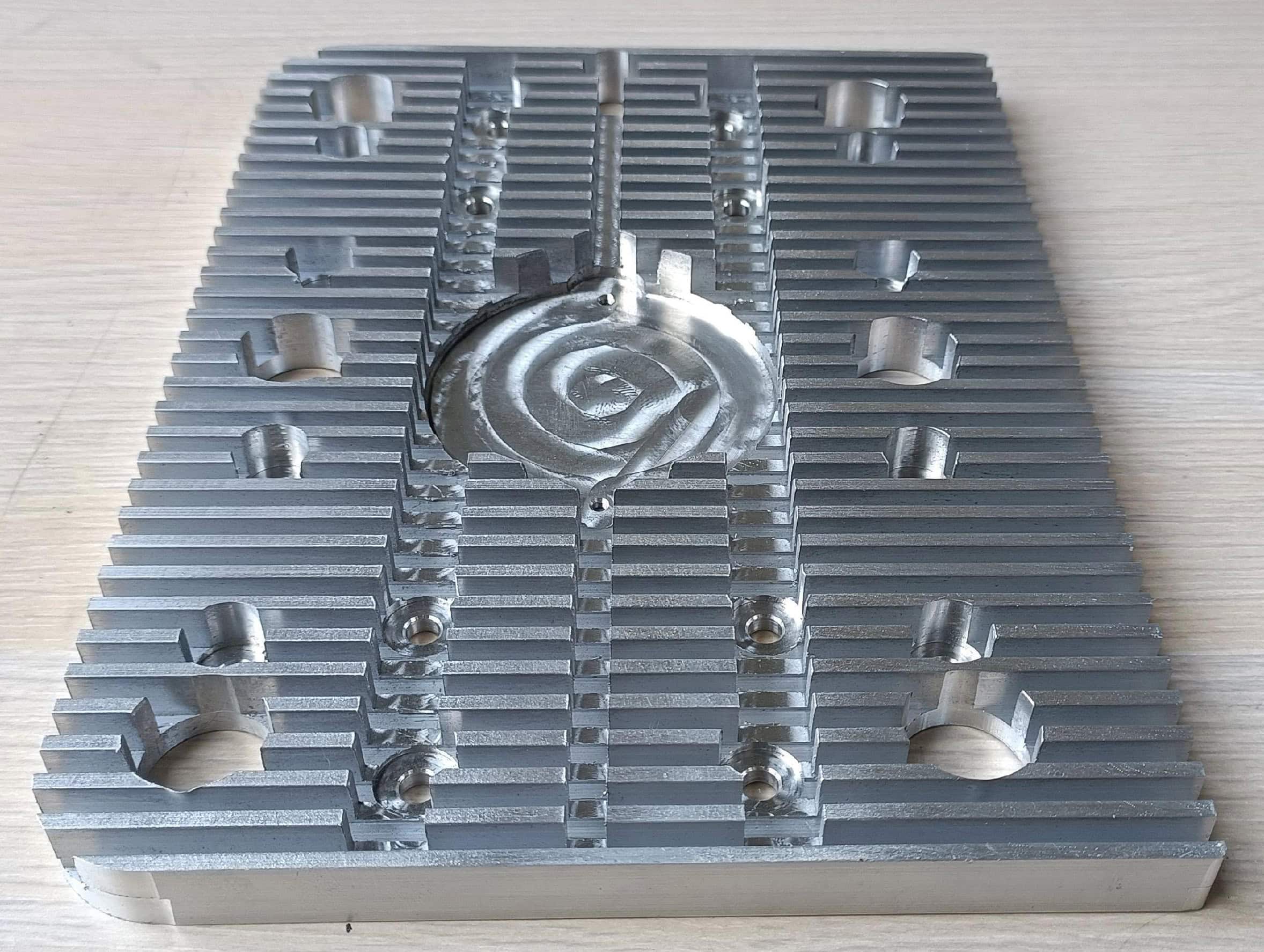
Precision module mounting surfaces
Face milling and flatness machining
Drilling and tapping
Counterbores and countersinks
Component pockets
Busbar and cable clearances
Sensor holes and mounting slots
Local fin removal
Threaded mounting features
Assembly interfaces
Send us your drawings or project requirements, and we’ll review them before preparing a quotation.
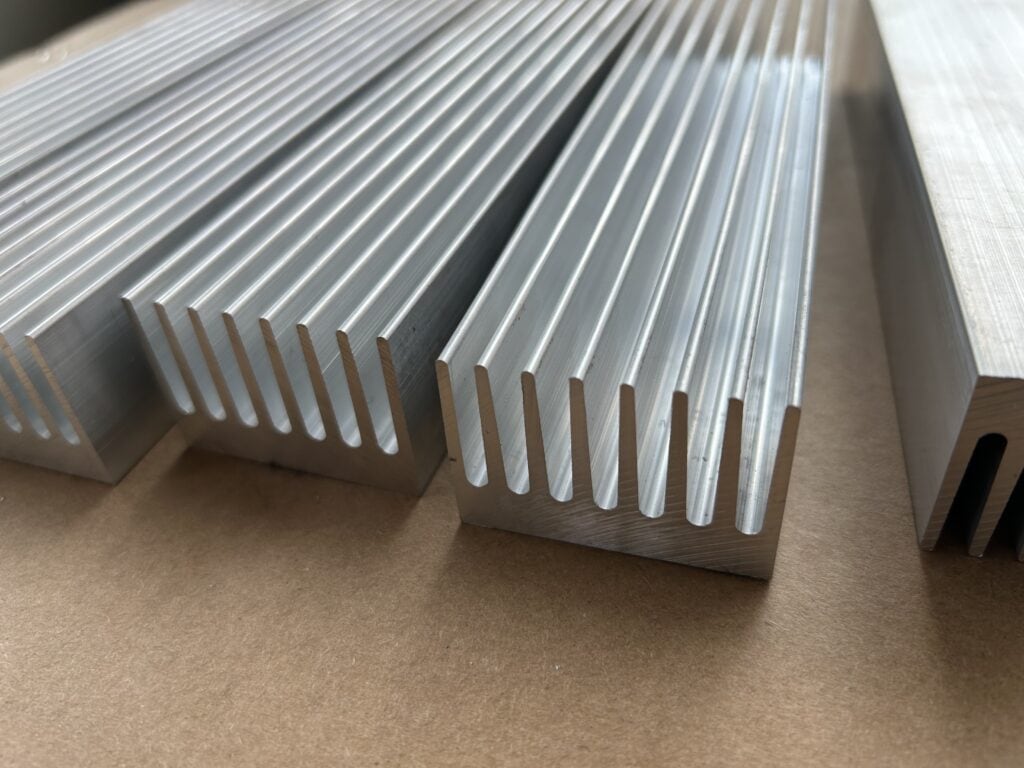
Aluminum is the most widely used material for air-cooled power electronics heat sinks because it provides a strong balance of thermal conductivity, low weight, corrosion resistance, manufacturability, and cost.
6063 is commonly used for extrusion, while other aluminum alloys may be selected depending on the manufacturing process and mechanical requirements.
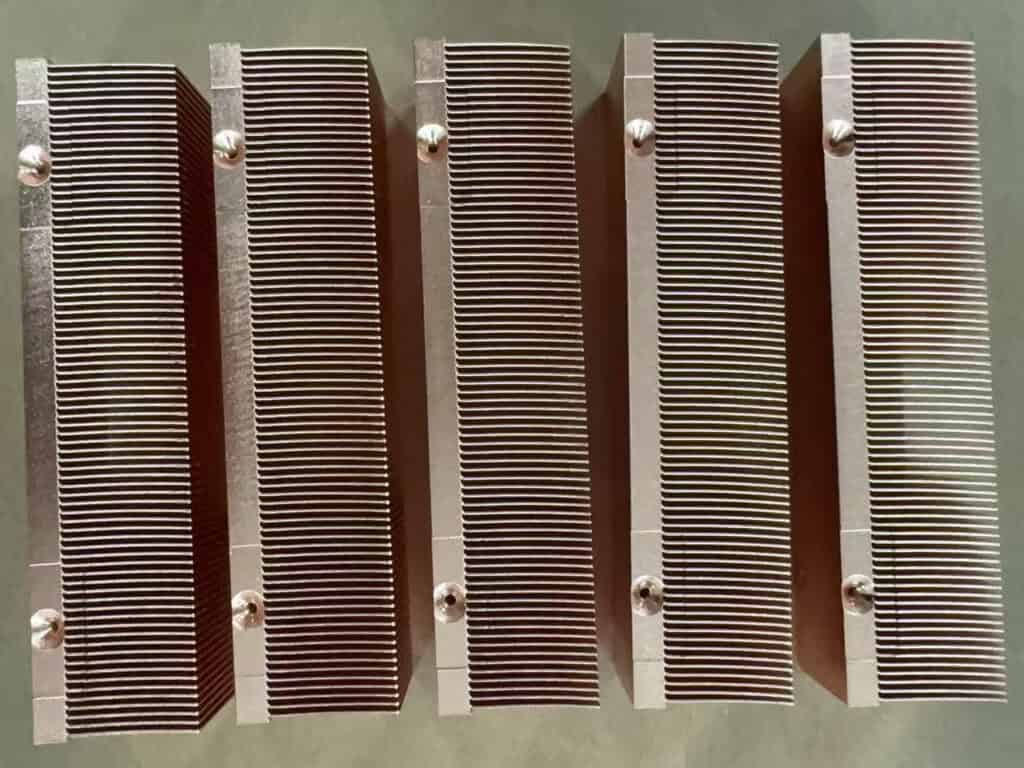
Copper offers higher thermal conductivity and can improve heat spreading where the heat source is highly concentrated.
Because copper is heavier and more expensive than aluminum, it is often used selectively in compact heat sinks, copper bases, inserts, or other high-performance structures.
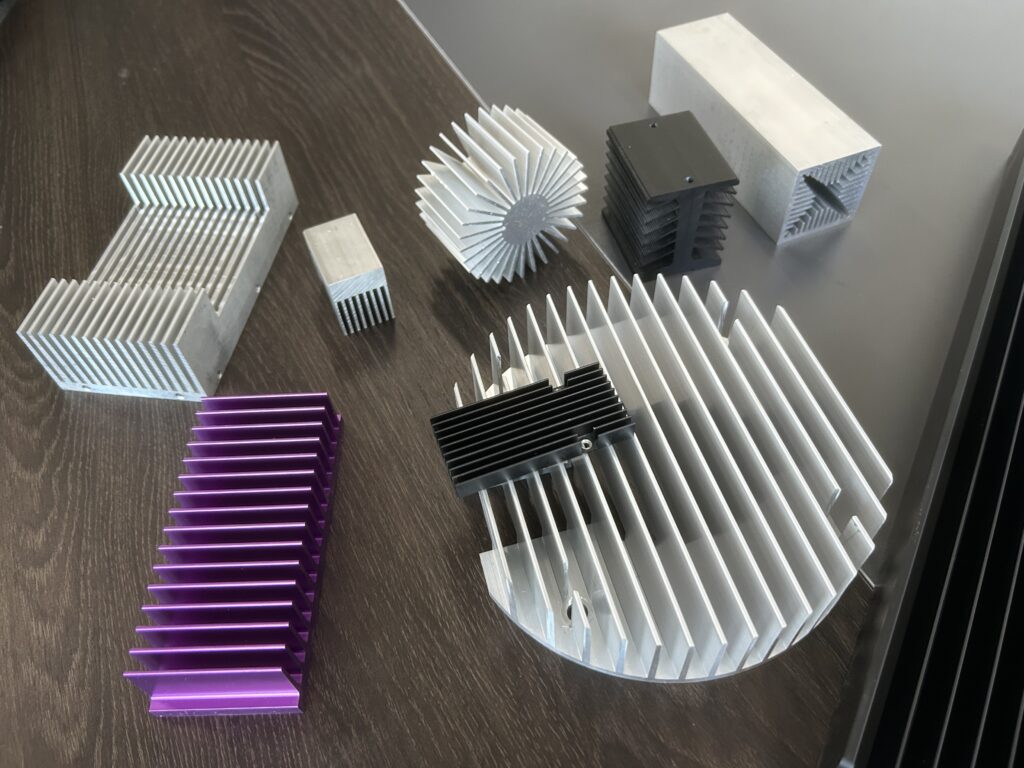
Available finishes for aluminum heat sinks include clear anodizing, black anodizing, chromate conversion coating, powder coating, painting, and other drawing-specified treatments.
Module-contact areas, electrical grounding surfaces, and other functional features can be treated differently from cosmetic or corrosion-protection surfaces when required by the design.
With more than 20 years of heat sink manufacturing experience, XINXIANG supports OEM and industrial power electronics projects from prototype through repeat production.
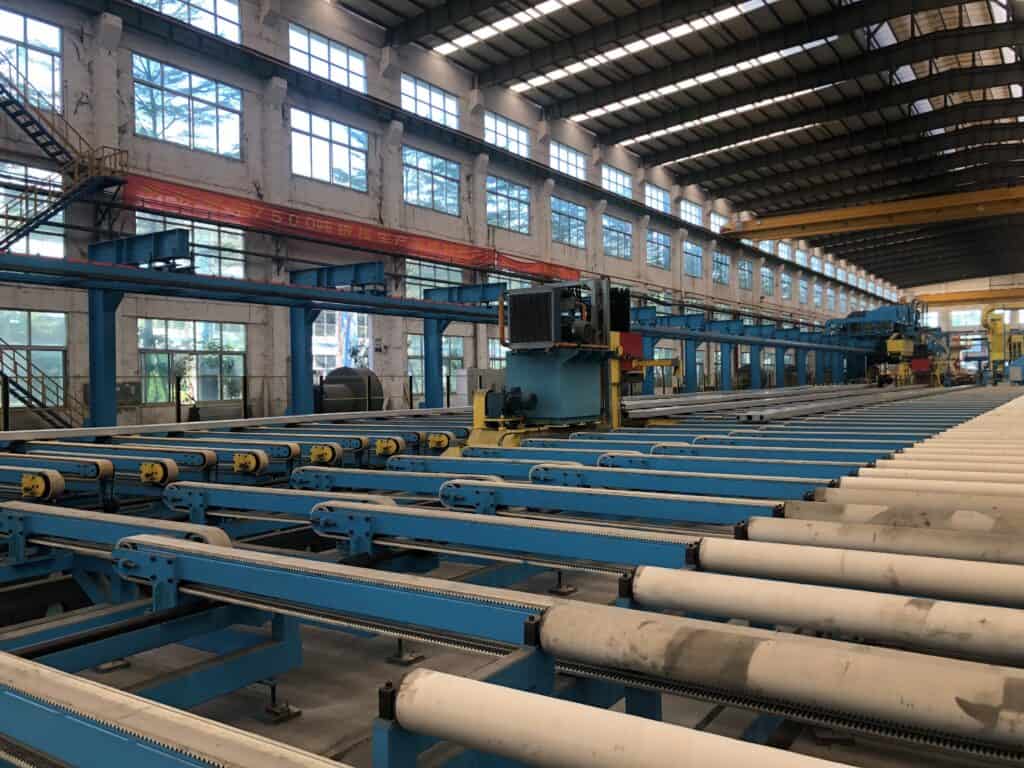
Our 6,000 m² manufacturing facility combines aluminum extrusion, skiving, CNC machining, die casting, assembly, inspection, and export packaging, supported by additional qualified manufacturing resources where required.
Because we work with several different heat sink manufacturing methods, we do not need to force every power electronics project into the same production process.
We evaluate geometry, mounting requirements, airflow, materials, quantity, and manufacturing cost before recommending a practical production route.
Different power levels. Different cooling challenges. Practical manufacturing for each design.
For a power electronics heat sink project, useful information includes:
If your heat sink design is already complete, we can review the drawing for manufacturability and provide a quotation.
If the project is still under development, we can review the mechanical and manufacturing requirements and help determine whether extrusion, skiving, bonded-fin construction, forced-air cooling, or a liquid cold plate is a practical production approach.
There is no single best heat sink for every module.
An extruded heat sink may be sufficient for many conventional applications. Skived or bonded-fin structures can provide greater fin area when space is limited, while liquid cooling may be considered for higher heat loads or compact systems.
The correct choice depends on the actual module losses, allowable temperature, interface area, airflow, available space, ambient conditions, and production requirements.
For a step-by-step approach covering power loss, thermal resistance, airflow, mounting interfaces, and manufacturing options, see our guide on how to select an IGBT heat sink.
Heat must cross the interface between the power-module baseplate and heat sink before it can reach the cooling fins or liquid channels.
Surface irregularities and poor mounting contact can introduce additional thermal resistance.
Flatness, surface condition, mounting-hole position, thermal interface material, and clamping requirements should therefore follow the power-module manufacturer’s instructions or the project drawing.
Yes.
We can provide face milling, flatness machining, drilling, tapping, pockets, mounting holes, and other CNC operations according to the drawing.
Critical interface requirements should be identified during the quotation and DFM review.
Aluminum is normally preferred for larger heat sinks because of its low weight, cost, and good thermal performance.
Copper can provide better heat spreading but adds significant weight and cost.
In some applications, a hybrid structure using copper only where additional spreading is required can provide a useful compromise.
Liquid cooling may be considered when the required thermal performance cannot be achieved with a practical air-cooled heat sink inside the available space, or when the equipment already includes a liquid cooling circuit.
The decision should be based on the complete system rather than a fixed power threshold.
Yes.
We can provide fan-cooled heat sink assemblies with brackets, guards, shrouds, mounting hardware, and related components according to the project requirements.
It depends on the electrical and thermal requirements of the system.
Functional module-contact, grounding, or electrically conductive surfaces may need to be masked during finishing or machined after anodizing.
The required treatment should be specified on the drawing.
Send us your drawing or 3D model together with the heat load, module layout, airflow conditions, material, surface finish, quantity, mounting requirements, and any critical inspection requirements.
We can review the manufacturing requirements and provide a quotation based on the project.
Send us your power-module layout, heat sink drawing, or project requirements.
XINXIANG can review the geometry, cooling method, manufacturing process, CNC features, materials, finishing, assembly, and production quantity before preparing a quotation.
You can also contact our team at sales@heat-sinks.com
Send us your drawing or project requirements. Our team will review your request and typically respond within 24 hours.
You can also email us directly at sales@heat-sinks.com