
Custom thermal components for base stations, RRU/RRH, AAU, RF amplifiers, telecom power systems, network equipment, and outdoor communication electronics.
Telecommunication equipment must operate reliably while handling continuous heat generation from RF components, power electronics, processors, power supplies, and other electronic assemblies.
For outdoor radio equipment such as remote radio units and active antenna units, cooling can be particularly demanding. The equipment may operate in high ambient temperatures, direct outdoor exposure, limited installation space, and sealed or semi-sealed enclosures where conventional airflow is restricted.
Many telecom applications therefore rely heavily on passive heat dissipation, natural convection, heat spreading, and efficient transfer of heat from internal components to external finned surfaces.
At XINXIANG, we manufacture custom heat sinks and thermal components for telecom equipment using aluminum extrusion, die casting, skiving, bonded-fin construction, CNC machining, heat pipes, surface finishing, and assembly.
The appropriate manufacturing method depends on the heat load, equipment structure, available space, airflow conditions, environmental requirements, production quantity, and target cost.
Unlike many indoor electronic systems, telecom equipment may need to dissipate heat while exposed to demanding environmental and installation conditions.
Different types of equipment require different cooling approaches.
| Application | Typical Thermal Challenge | Possible Cooling Approach |
|---|---|---|
| RRU / RRH | Localized RF and power-device heat inside outdoor equipment | Finned enclosure, extruded or skived heat sink, heat-spreading structure |
| AAU | High component integration, limited space, outdoor operation, and weight constraints | Integrated die-cast housing, external fins, heat pipes, or other heat-spreading structures |
| 5G Base Station Equipment | Continuous power dissipation from RF, power, and processing electronics | Passive heat sinks, forced-air heat sinks, or combined thermal assemblies |
| RF Power Amplifiers | Concentrated heat generation at power transistors and amplifier modules | Extruded or skived heat sinks with precision-machined interfaces |
| Telecom Power Supplies | Continuous power-conversion losses in compact equipment | Extruded, skived, or fan-assisted heat sinks |
| Routers & Network Equipment | Multiple processors, power components, and restricted internal airflow | Extruded or skived heat sinks with controlled airflow |
| Outdoor Telecom Enclosures | High ambient temperature, solar exposure, dust, and moisture considerations | External finned surfaces, passive cooling, or closed-system thermal solutions |
| Small Cells & Repeaters | Compact packaging with limited available cooling volume | Compact extruded, die-cast, or machined heat sinks |
These are general manufacturing approaches rather than fixed thermal recommendations. Final heat sink selection should be based on actual heat dissipation, component temperature limits, equipment orientation, airflow, installation environment, mechanical design, and system-level thermal analysis.
Outdoor radio equipment is often designed to minimize moving parts and maintenance requirements.
Where fans are not practical, heat must be transferred from internal components through the enclosure or heat sink and then dissipated by natural convection and radiation.
Fin height, spacing, orientation, airflow path, heat sink position, and the surrounding installation environment all influence performance.
More fins do not automatically provide better cooling. If the fin channels are too narrow for natural convection, the available surface area may not be used effectively.
RF power devices, power amplifiers, processors, and power-conversion components can generate heat over areas much smaller than the total heat sink or enclosure.
The base or housing must spread this heat before it can be effectively transferred to the cooling fins.
Base thickness, material, component position, contact area, heat-source distribution, and the distance between heat sources can all affect heat spreading.
Where localized heat loads are high, thicker aluminum sections, copper components, heat pipes, or other heat-spreading structures may be considered.
Telecom equipment may operate outdoors for long periods under changing ambient conditions.
Thermal design should therefore consider not only internal heat generation but also ambient temperature, equipment orientation, solar exposure, wind conditions, dust, moisture, corrosion, and installation spacing.
For external heat sinks and finned housings, surface treatment and material selection should be specified according to the actual environmental and electrical requirements.
In many outdoor telecom products, the enclosure itself can become part of the thermal path.
Instead of attaching a separate heat sink to a conventional housing, fins may be integrated directly into an aluminum enclosure or structural component.
This can reduce the number of parts while providing both mechanical support and external heat dissipation.
Die casting can be particularly useful for complex housings that combine cooling fins, mounting bosses, ribs, connector areas, sealing features, and other structural details in one component.
Tower-mounted and outdoor telecom equipment often has tighter weight and installation constraints than stationary industrial equipment.
A thermal solution should therefore balance cooling performance with overall size, weight, structural strength, mounting requirements, and manufacturability.
Aluminum is commonly preferred because it combines useful thermal conductivity with relatively low weight and good manufacturing flexibility.
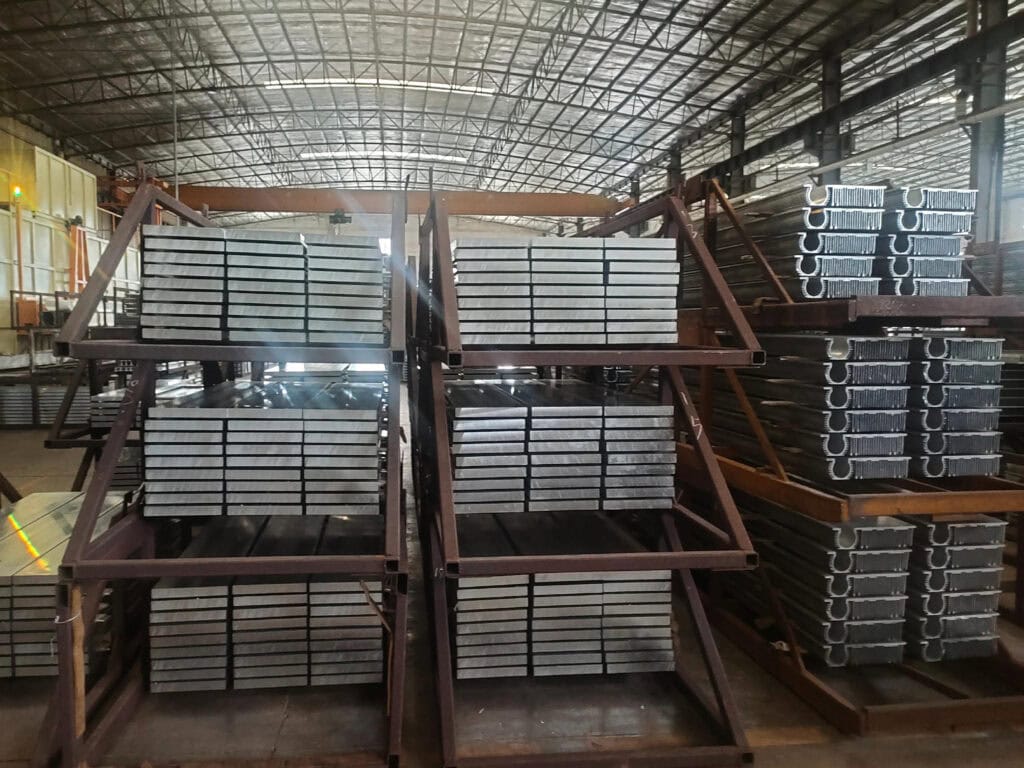
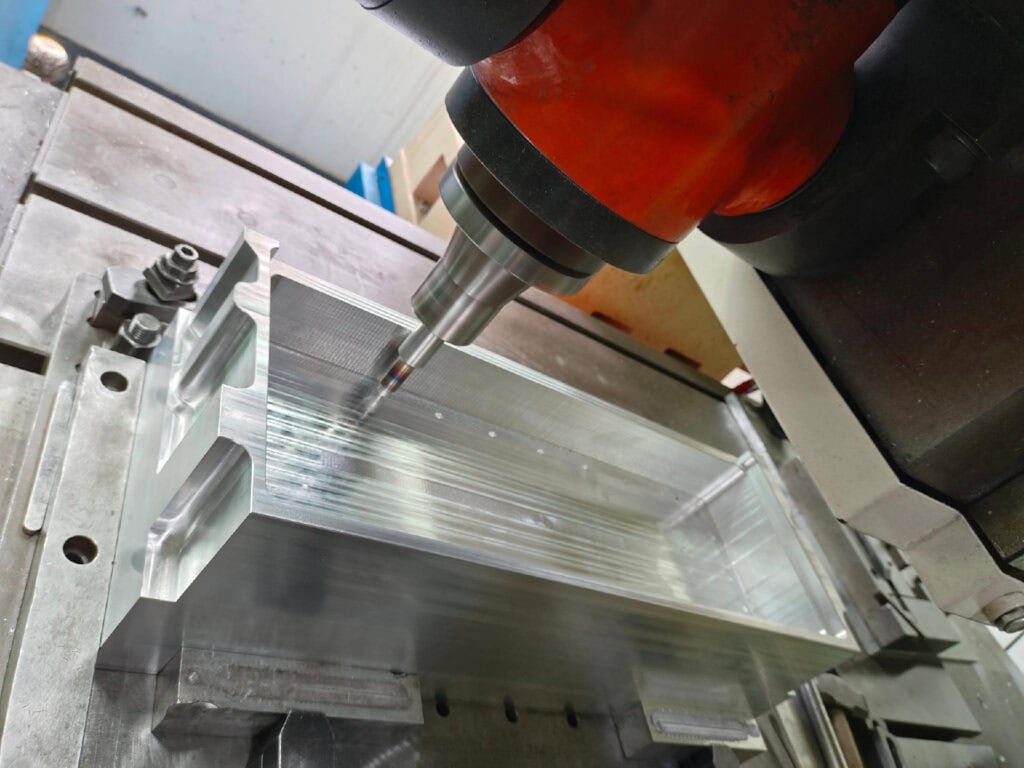
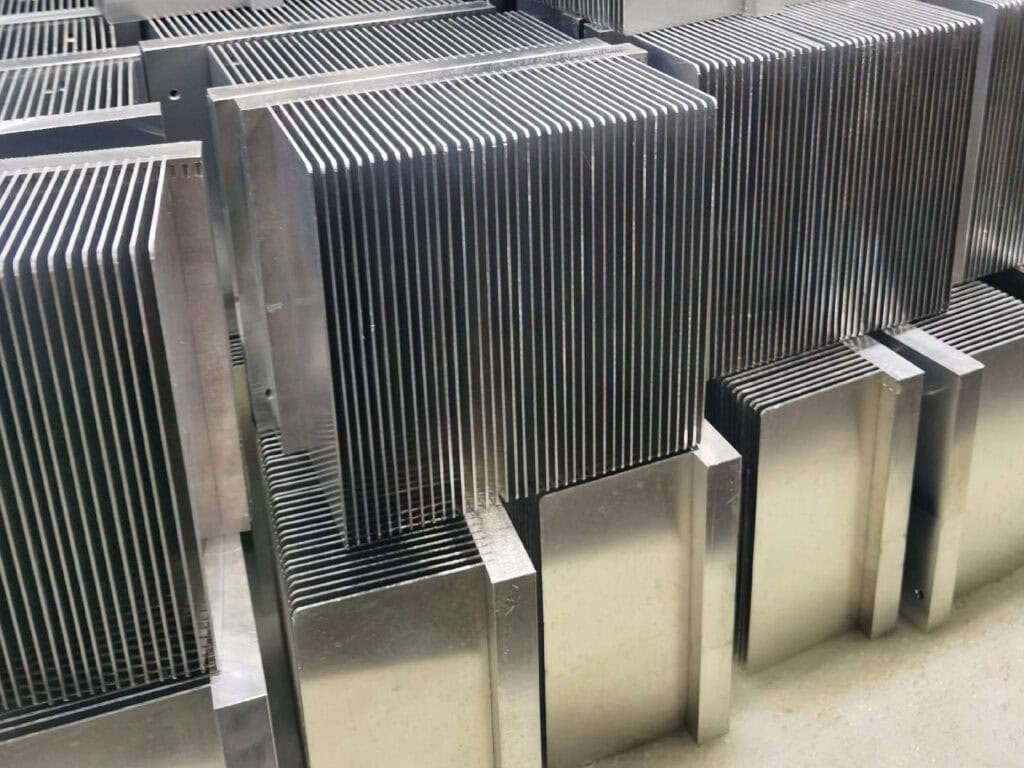
Telecom heat sinks often require additional machining after extrusion, die casting, skiving, or other primary manufacturing processes.
At XINXIANG, CNC machining can be used to produce the mechanical interfaces required by the final equipment design.
Critical surfaces, dimensions, tolerances, and inspection requirements can be manufactured according to the customer drawing.
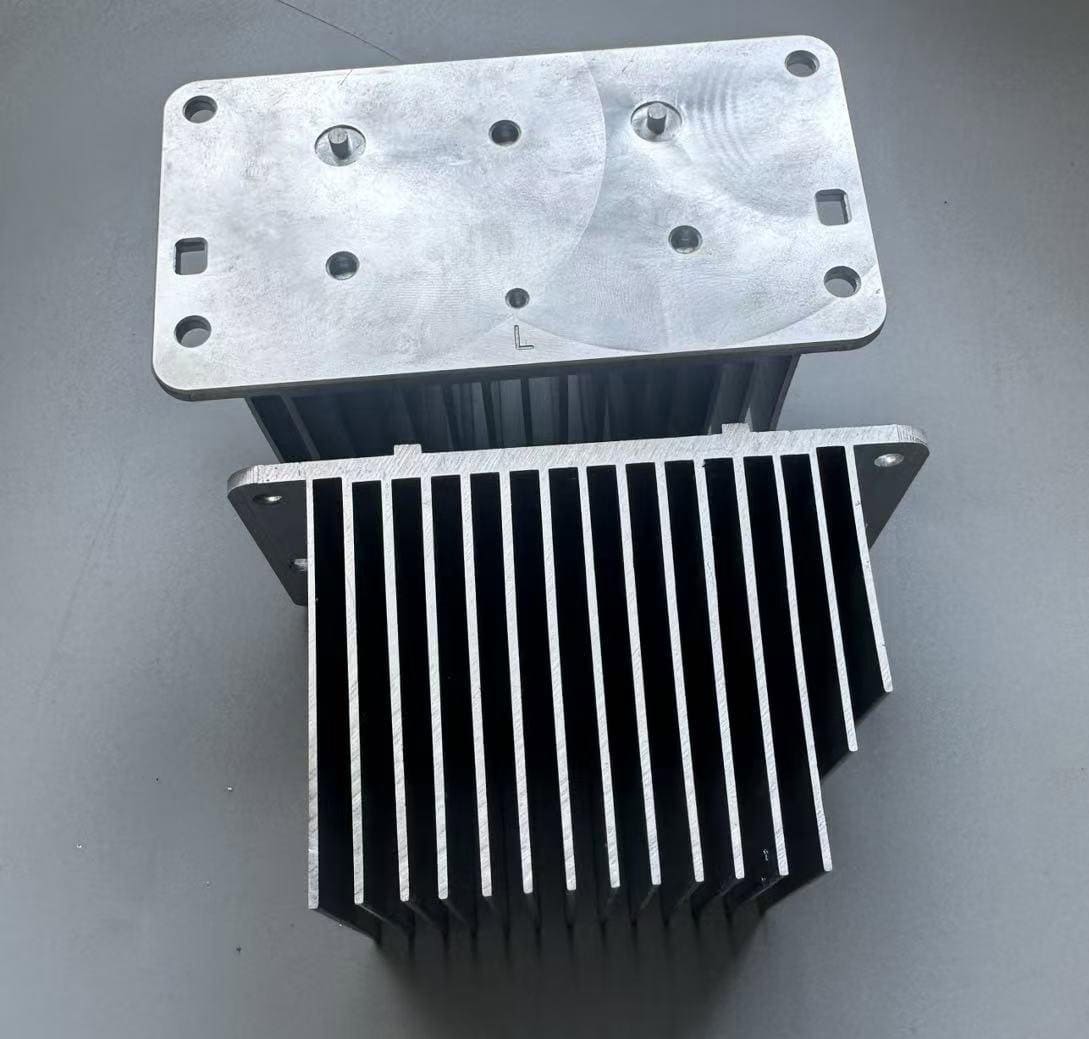
Precision mounting surfaces
Face milling and flatness machining
Drilling and tapping
Counterbores and countersinks
Connector openings
Component pockets
Mounting slots
Local fin removal
Cable and wiring clearances
Sealing surfaces
Threaded mounting features
Assembly interfaces
If your telecom heat sink design is already complete, send us your 2D drawing or 3D model for a manufacturing review and quotation.
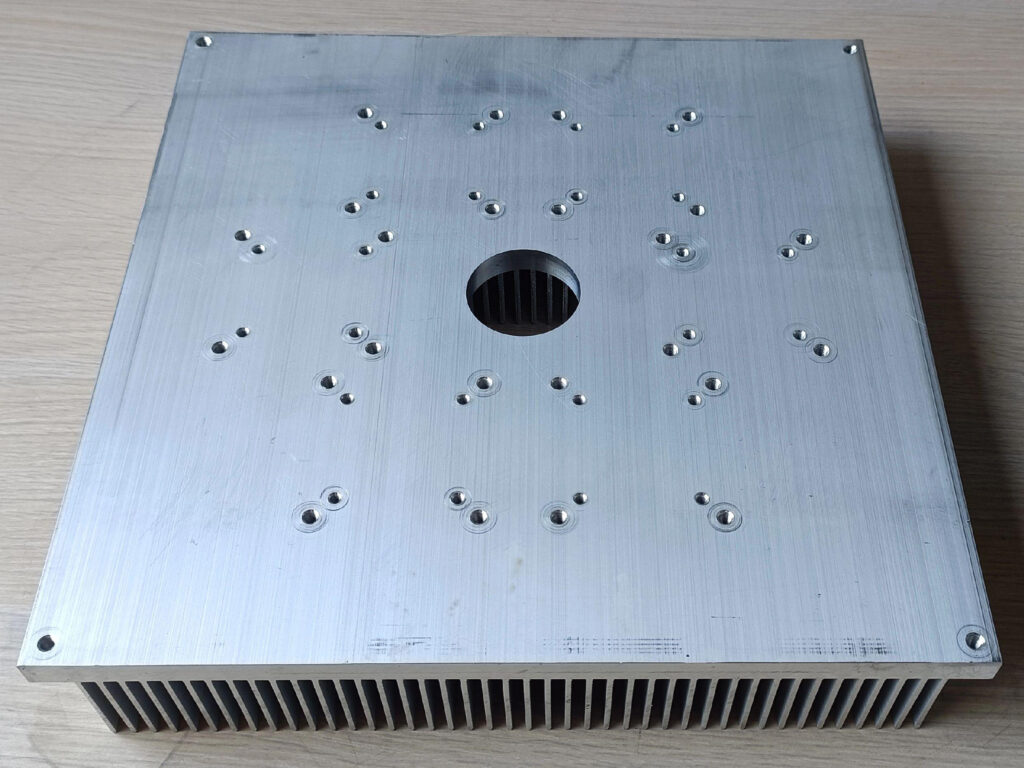
Aluminum is the primary material for most telecom heat sinks because it offers a practical combination of thermal performance, low weight, corrosion resistance, manufacturability, and cost.
6063 aluminum is widely used for extrusion, while other aluminum alloys can be selected depending on the manufacturing process, mechanical requirements, and project specification.
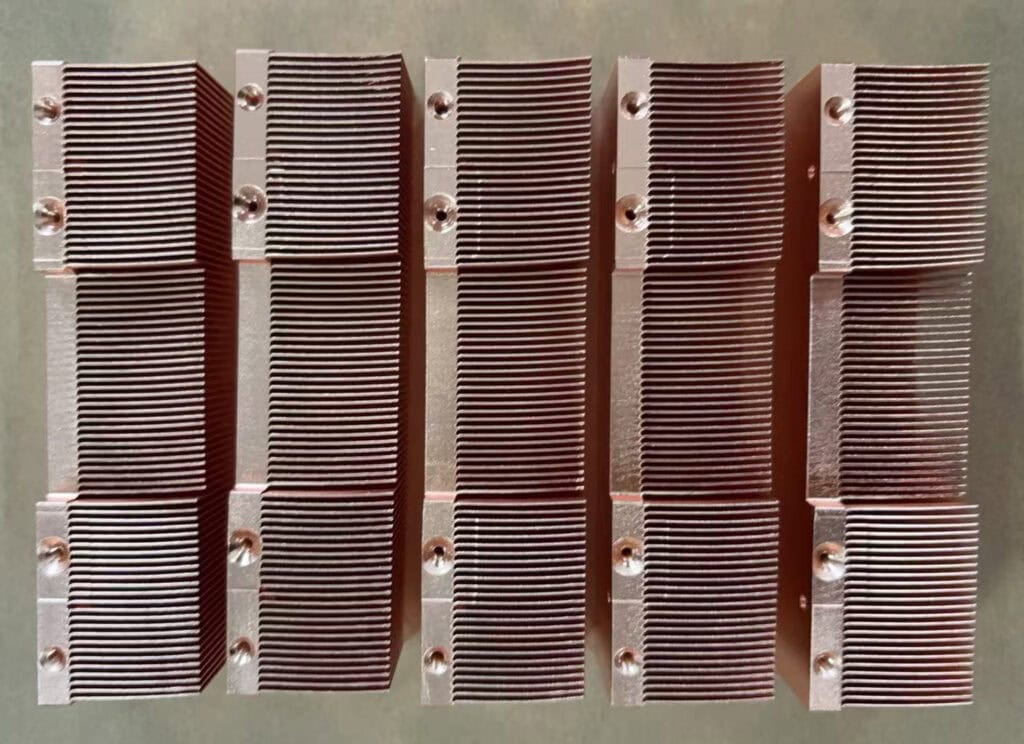
Copper provides higher thermal conductivity than aluminum and can improve heat spreading where heat sources are highly concentrated.
Because copper adds weight and cost, it is often used selectively in bases, inserts, heat-spreading components, or compact high-performance structures rather than throughout a large telecom enclosure.
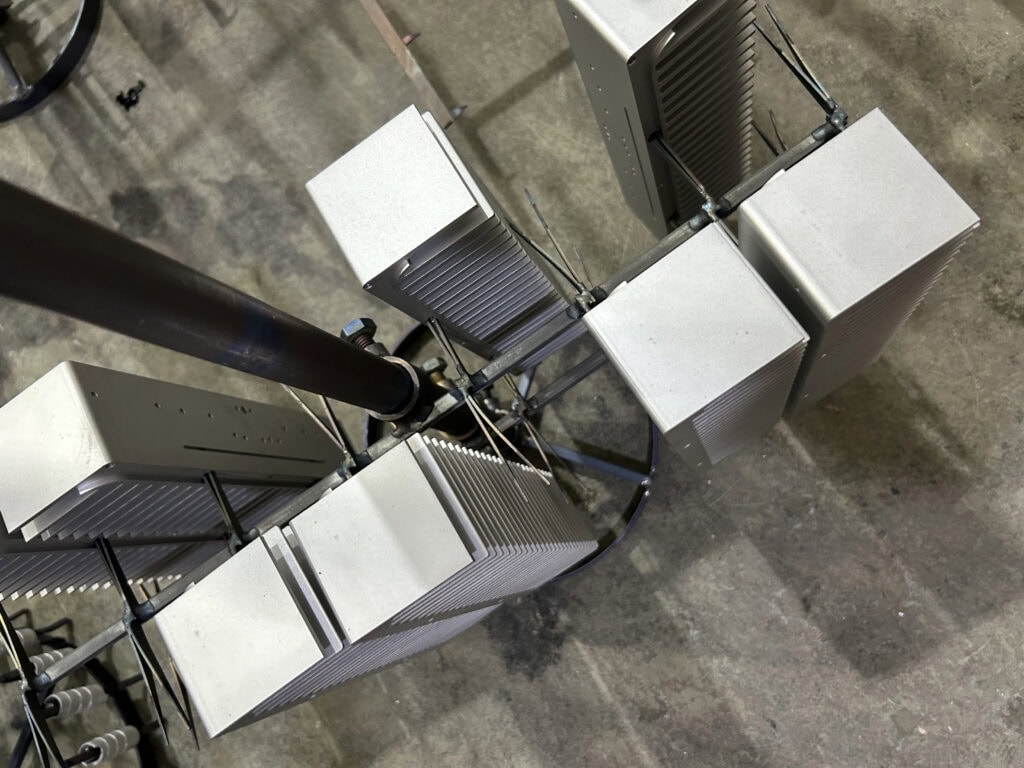
Available finishing options for aluminum heat sinks and housings include clear anodizing, black anodizing, chromate conversion coating, powder coating, painting, and other drawing-specified treatments.
The appropriate finish depends on the aluminum alloy, outdoor environment, corrosion requirements, electrical grounding requirements, appearance, and manufacturing process.
Electrical contact areas, grounding points, sealing surfaces, and other functional areas can be masked or post-machined when required.
With more than 20 years of heat sink manufacturing experience, XINXIANG supports telecom and electronics customers from prototype development through repeat production.
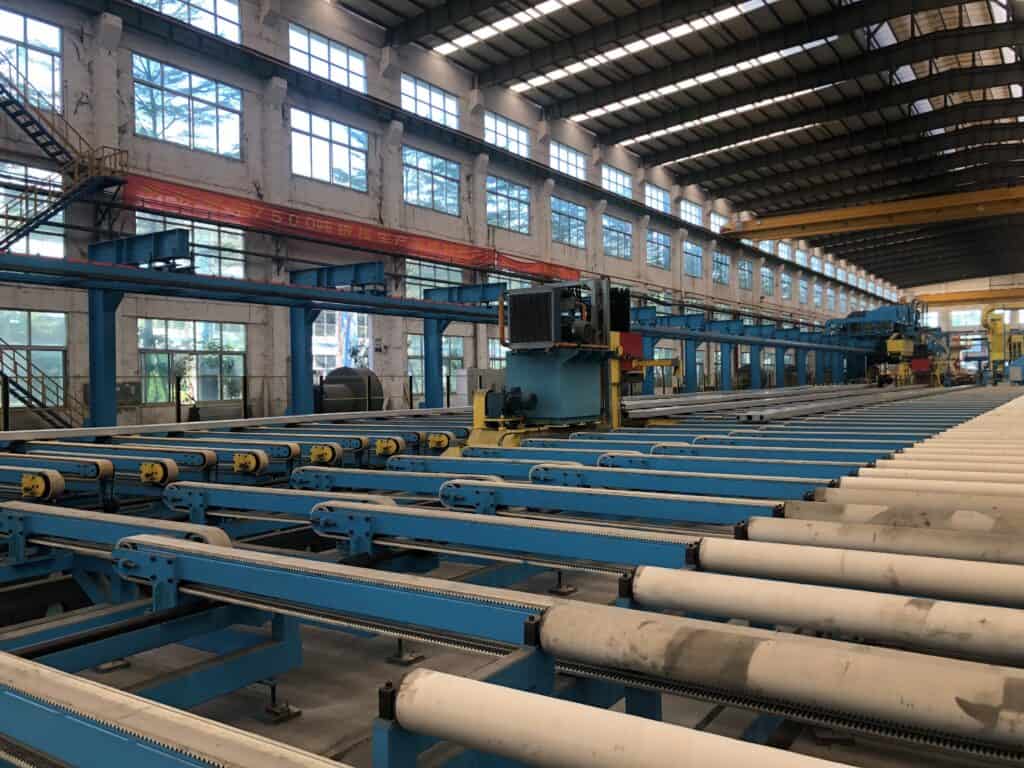
Our 6,000 m² manufacturing facility and established production network support multiple heat sink manufacturing processes, including aluminum extrusion, skiving, die casting, CNC machining, heat pipe integration, finishing, assembly, and inspection.
Because telecom products can have very different thermal and mechanical requirements, we do not try to fit every project into the same manufacturing process.
We review the drawing, geometry, material, production quantity, machining requirements, finishing requirements, and target cost before determining a practical manufacturing route.
For a telecom heat sink or thermal component project, useful information includes:
If your design is already complete, we can review the drawing for manufacturability and prepare a quotation.
If the project is still under development, we can review the mechanical and manufacturing requirements and help evaluate whether extrusion, die casting, skiving, bonded-fin construction, heat-pipe integration, or another manufacturing approach is practical.
There is no single heat sink structure suitable for every outdoor telecom application.
Extruded heat sinks are economical for many conventional designs, while die-cast finned housings can integrate cooling and mechanical enclosure functions. Skived heat sinks provide higher fin density where more surface area is required, and heat pipes may be used where localized heat needs to be spread over a larger cooling surface.
The final solution depends on heat load, available space, equipment orientation, ambient conditions, mechanical design, production volume, and cost.
Passive cooling does not require fans or other moving airflow components.
This can reduce maintenance requirements and can be useful in outdoor equipment where electronics are enclosed to limit exposure to dust and moisture.
However, passive cooling performance depends strongly on heat load, ambient temperature, fin geometry, orientation, installation spacing, and surrounding airflow.
Yes.
Depending on the geometry and production quantity, integrated finned enclosures can be manufactured using die casting, extrusion, CNC machining, or a combination of processes.
Die casting is particularly useful where fins, mounting bosses, ribs, connector areas, and housing features need to be integrated into one complex component.
Yes.
If the required envelope and fin structure are compatible with one of our existing extrusion profiles, using existing tooling can reduce new tooling cost and shorten the development process.
You can browse our Heat Sink Extrusion Profiles to check available sizes.
Yes.
Heat pipes can be integrated into machined aluminum structures or cooling assemblies where heat needs to be transported from a localized source to a larger heat-dissipating area.
The heat-pipe arrangement should be evaluated together with the component layout, heat sink orientation, available space, and operating conditions.
Not necessarily.
Black anodizing can provide surface protection and may influence radiative heat transfer, but the overall thermal performance of a telecom heat sink depends much more broadly on heat conduction, fin geometry, airflow, orientation, ambient conditions, and the complete thermal path.
The surface finish should therefore be selected based on thermal, corrosion, electrical, cosmetic, and manufacturing requirements rather than color alone.
Yes.
We can provide face milling, drilling, tapping, pockets, connector openings, mounting slots, local fin removal, threaded features, and other CNC operations according to the customer drawing.
Send us your 2D drawing or 3D model together with the material, quantity, surface finish, machining requirements, and any critical tolerances.
If thermal information is available, please also provide heat dissipation, component layout, ambient temperature, airflow conditions, installation orientation, and available cooling space.
Send us your telecom heat sink drawing, enclosure model, or project requirements.
XINXIANG can review the geometry, material, manufacturing process, CNC features, surface treatment, assembly requirements, and production quantity before preparing a quotation.
You can also contact our team at sales@heat-sinks.com
Send us your drawing or project requirements. Our team will review your request and typically respond within 24 hours.
You can also email us directly at sales@heat-sinks.com