Extruded and skived heat sinks are two common options for cooling power electronics, computing hardware, telecom equipment, industrial controls, and other heat-generating devices. Both can create a one-piece base-and-fin structure, but they are manufactured very differently.
That difference affects fin geometry, material options, tooling cost, production volume, mechanical robustness, and ultimately the suitability of each process for a particular thermal design.
So, when should you use an extruded heat sink, and when is skiving the better choice?
There is no universal winner. The right decision starts with the heat load, available space, airflow, material, required fin geometry, production quantity, and project economics.
How Is an Extruded Heat Sink Made?
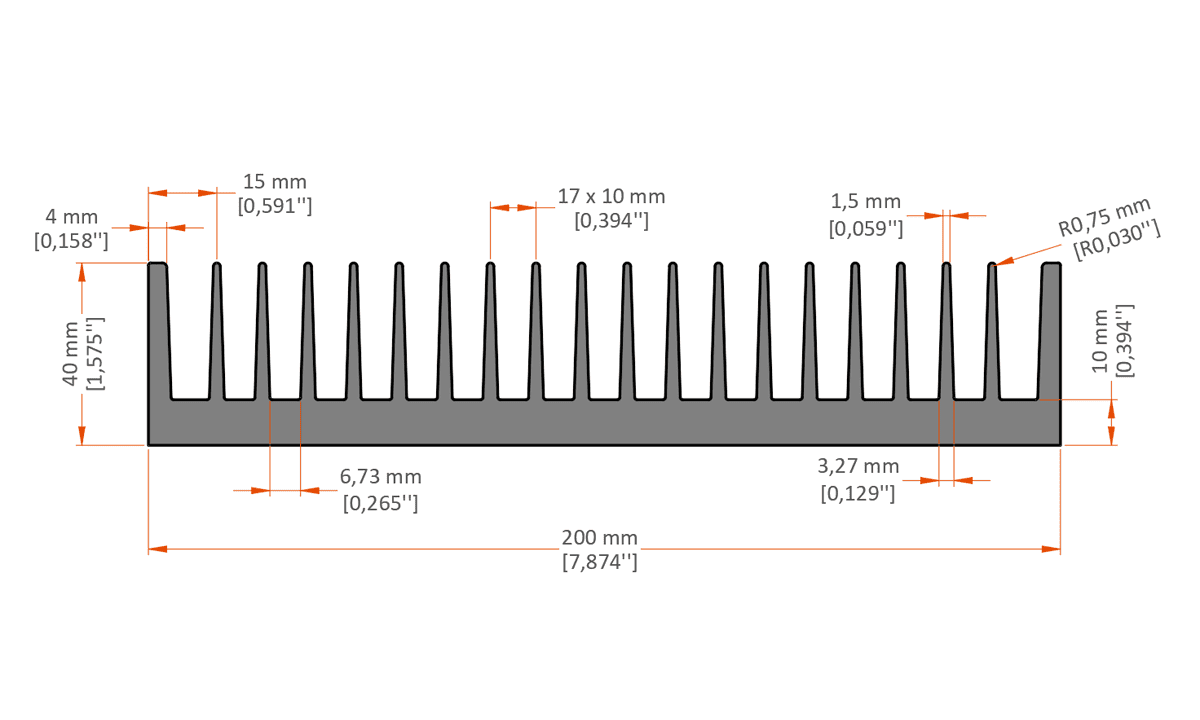
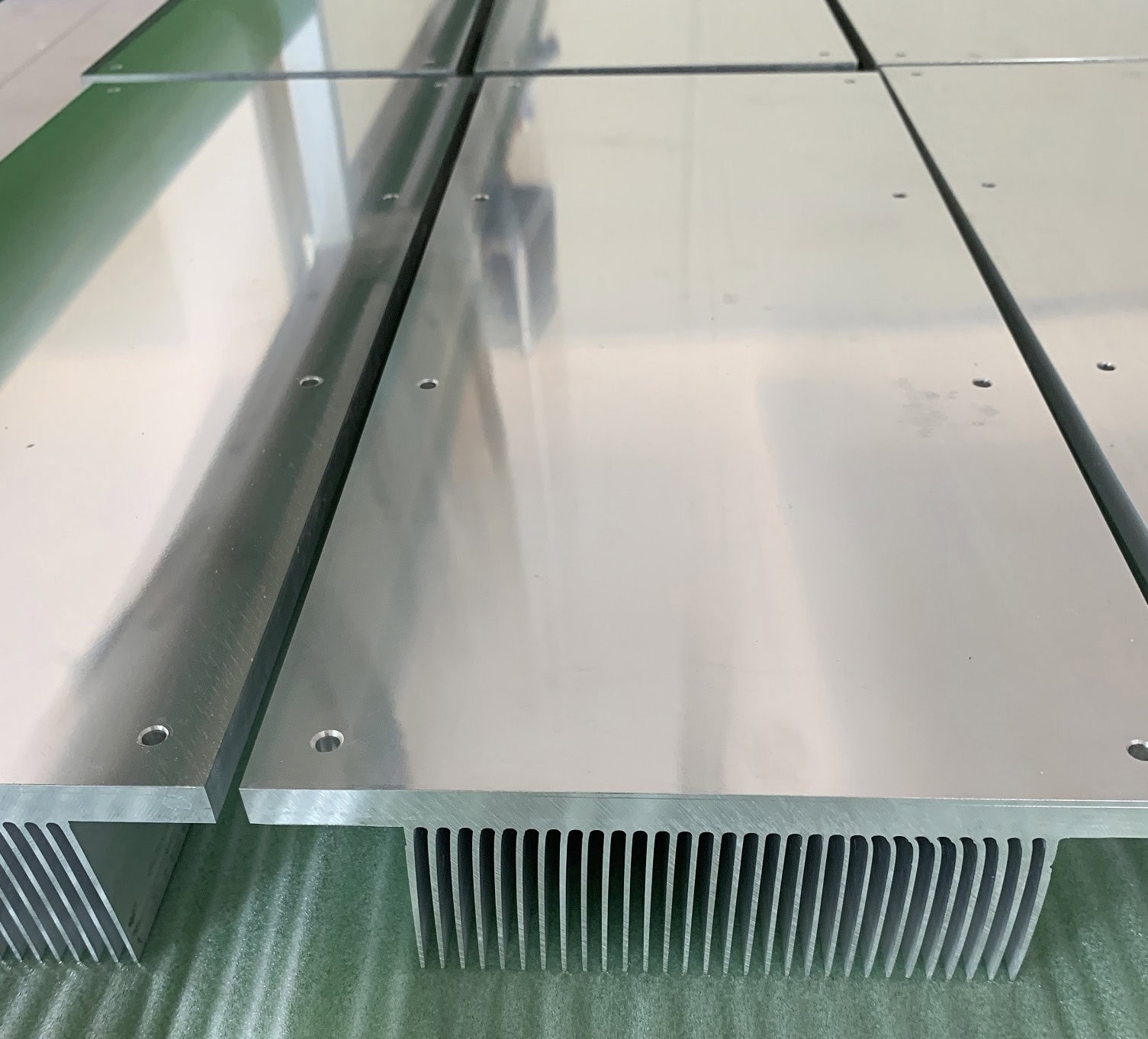
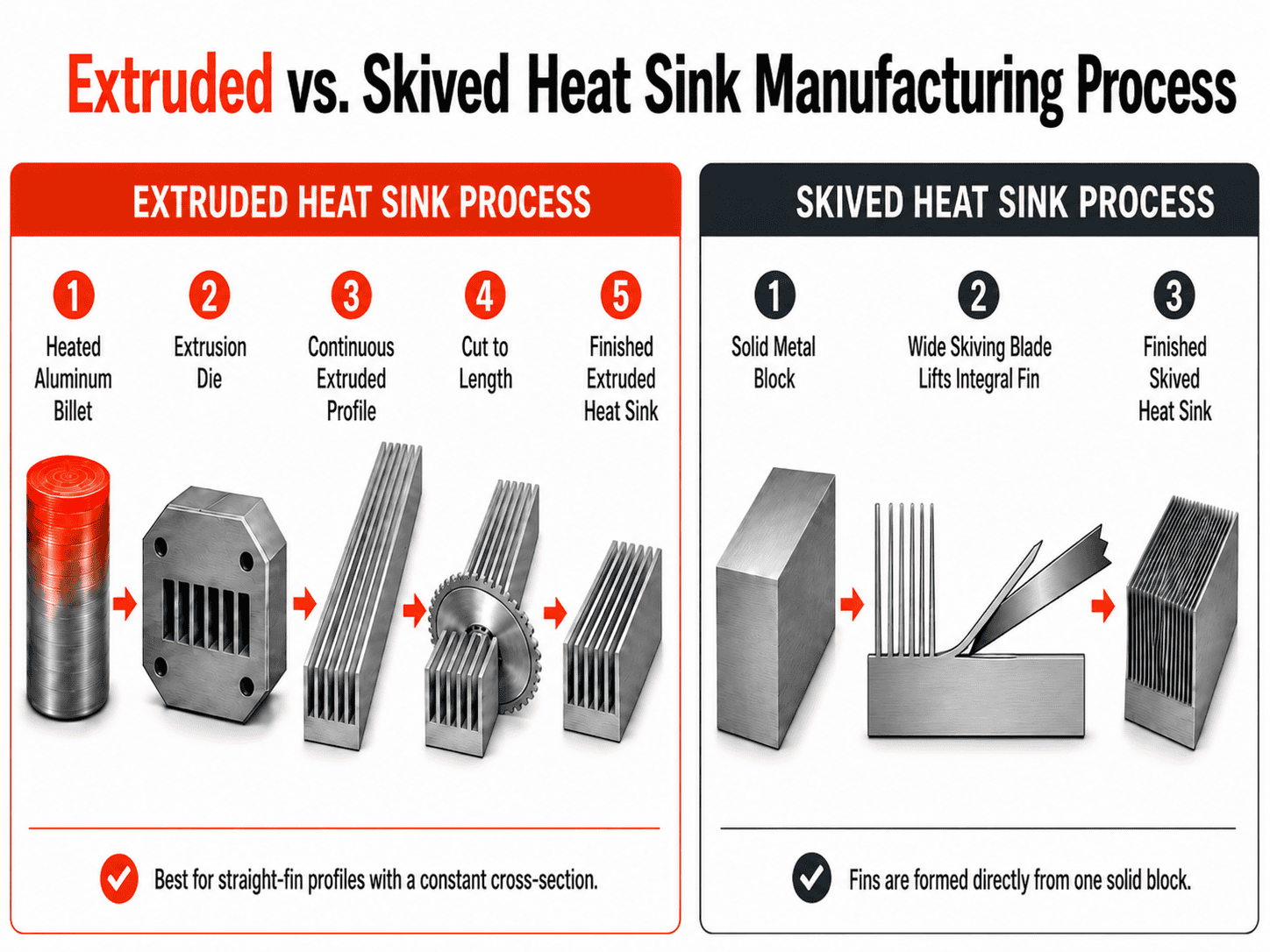
An extruded heat sink is produced by forcing heated aluminum through a die containing the required cross-sectional shape. The resulting continuous profile is cooled, straightened, cut to length, and then machined or finished as required.
Because the profile has a constant cross-section, extrusion is particularly effective for straight-fin designs that can be produced continuously and cut into different lengths.
After extrusion, secondary operations can include CNC milling, drilling, tapping, cutting, anodizing, and assembly.
Extrusion is widely used for aluminum heat sinks because it combines practical design flexibility with cost-effective repeat production once suitable tooling is available.
If an existing extrusion can meet your design envelope, browse our heat sink extrusion profiles to find available tooling by profile dimensions.
How Is a Skived Heat Sink Made?
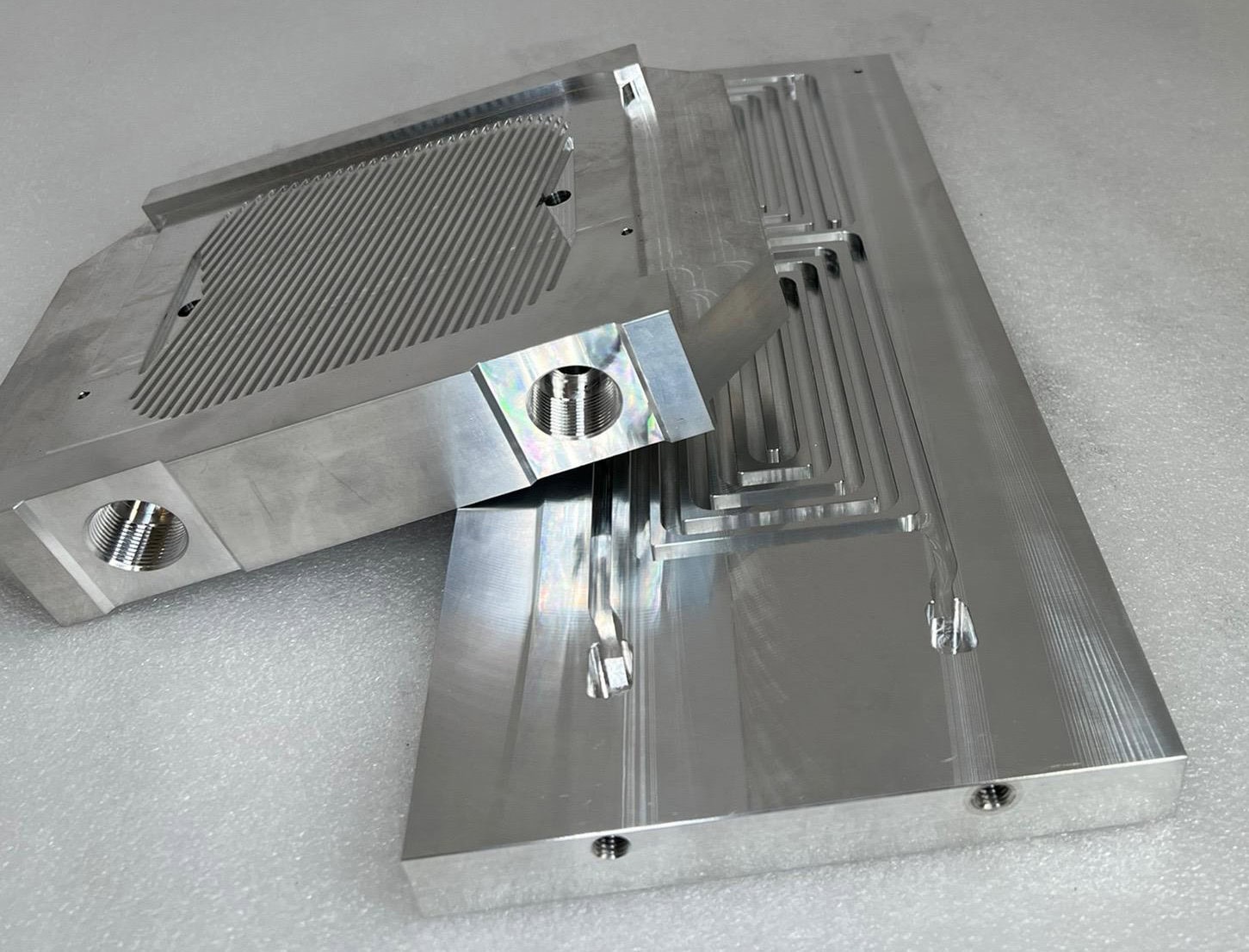
Skiving starts with a solid aluminum or copper block. A wide precision blade cuts a thin layer from the surface and raises it into a fin while leaving the fin connected to the base. The operation is repeated to create a dense array of integral fins.
Because the fins remain part of the original metal block, there is no separate fin-to-base bonding layer.
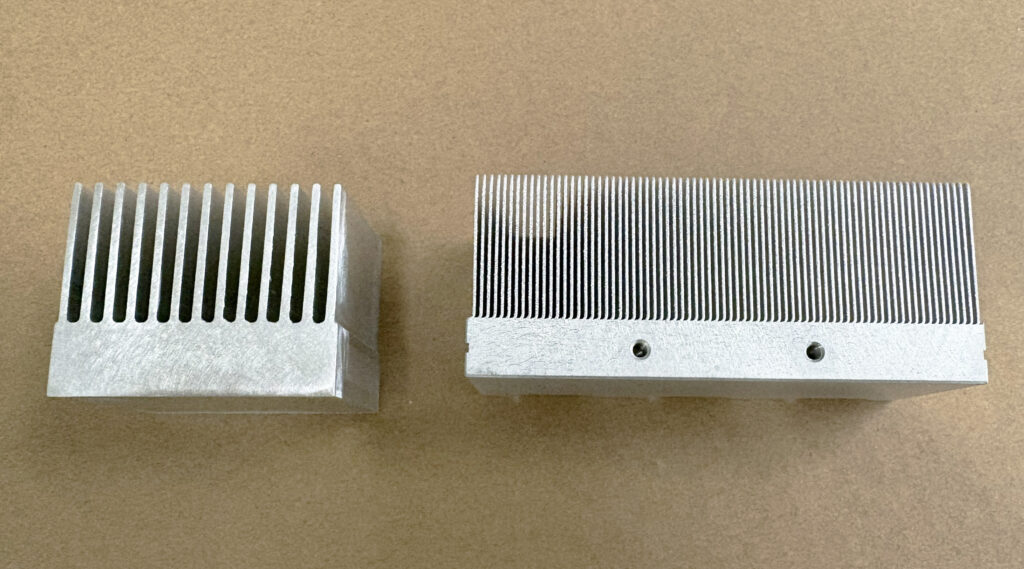
Skived heat sinks can achieve thinner fins and tighter fin spacing than many conventional extrusion designs. They can also be manufactured from aluminum or copper, which makes skiving useful when high fin density, compact geometry, or one-piece copper construction is required.
Extruded vs. Skived Heat Sink: Key Differences
This comparison is a starting point rather than a performance guarantee. Actual thermal performance depends on airflow, fin spacing, heat spreading, interface resistance, installation orientation, and the available cooling envelope.
When Does Extrusion Make More Sense?
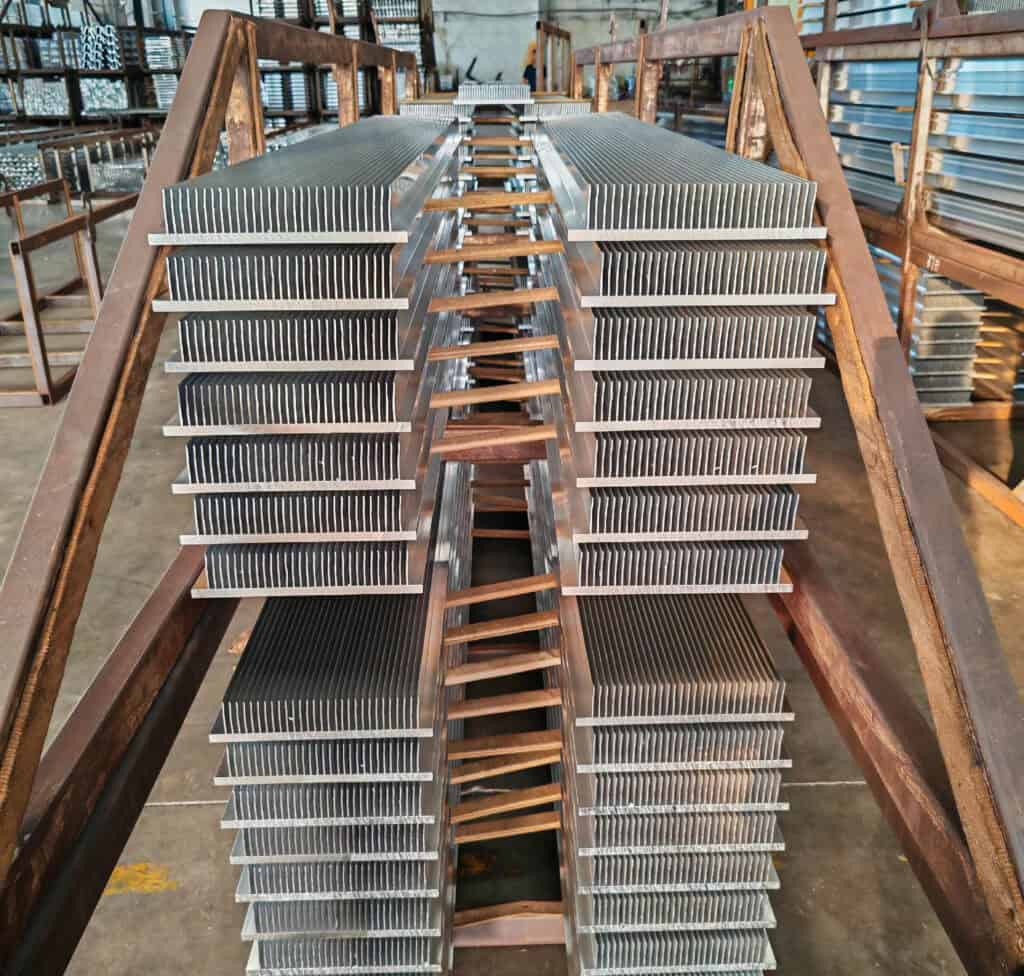
You Need Cost-Effective Repeat Production
Once the extrusion die has been developed, long lengths of profile can be produced efficiently and cut into individual heat sinks. This makes extrusion attractive for medium- and high-volume OEM programs.
The same profile can also be cut to different lengths, which can simplify product-family development.
Your Fin Geometry Fits Extrusion Limits
If the required thermal performance can be achieved with a practical extruded fin thickness, spacing, height, and base thickness, there may be little reason to select a more complex process.
Extrusion is especially suitable when the design uses relatively straight fins and a constant cross-section.
You Need a Durable Product
Extruded fins are generally more robust than extremely thin skived fins. This can be useful during machining, anodizing, assembly, packaging, shipping, and field installation.
An Existing Profile Is Available
For a new project, it is worth checking whether the manufacturer already has a suitable extrusion die.
Using an existing profile can eliminate new tooling cost and may also shorten the development process.
When Is Skiving the Better Choice?
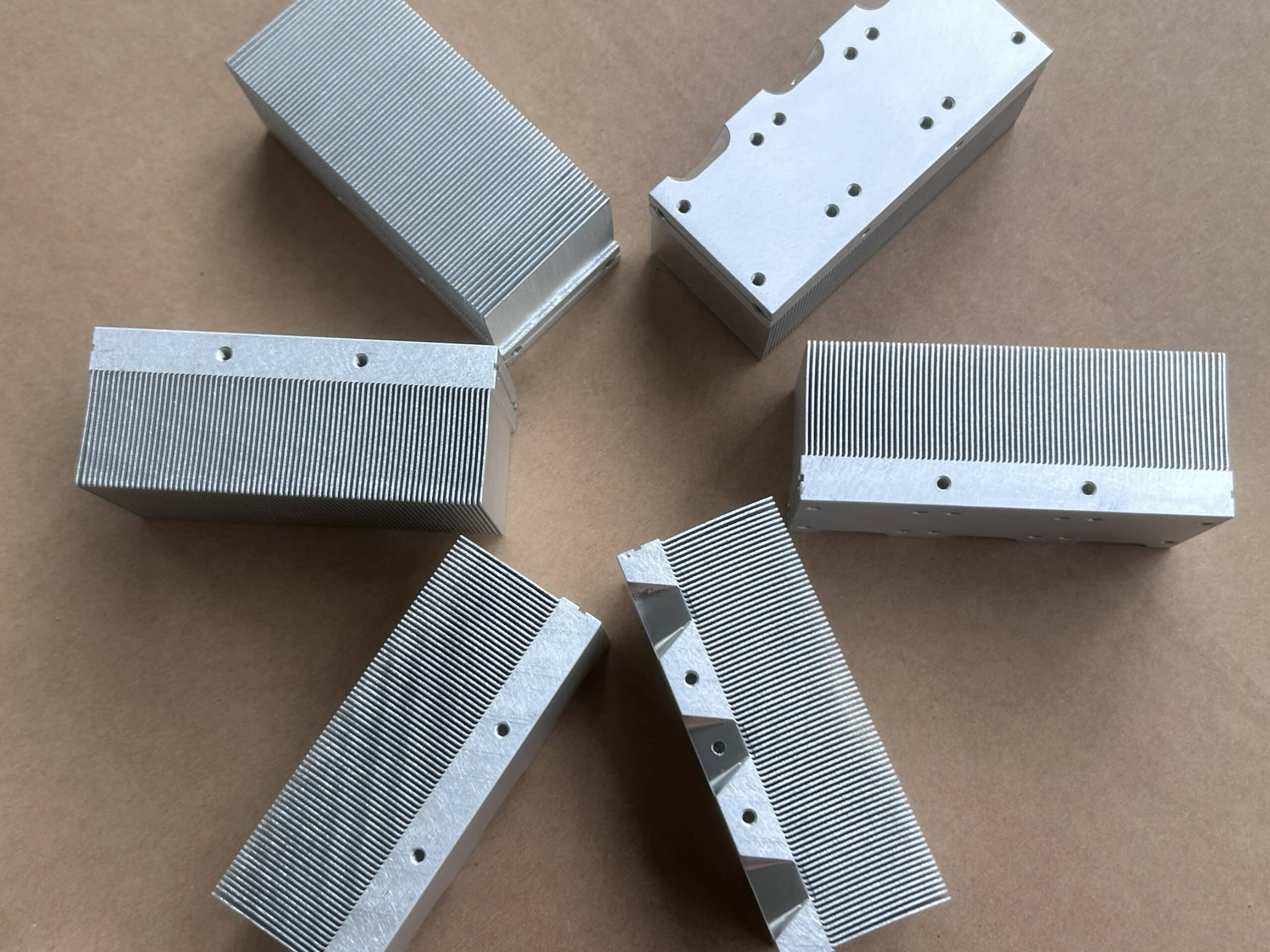
You Need Higher Fin Density
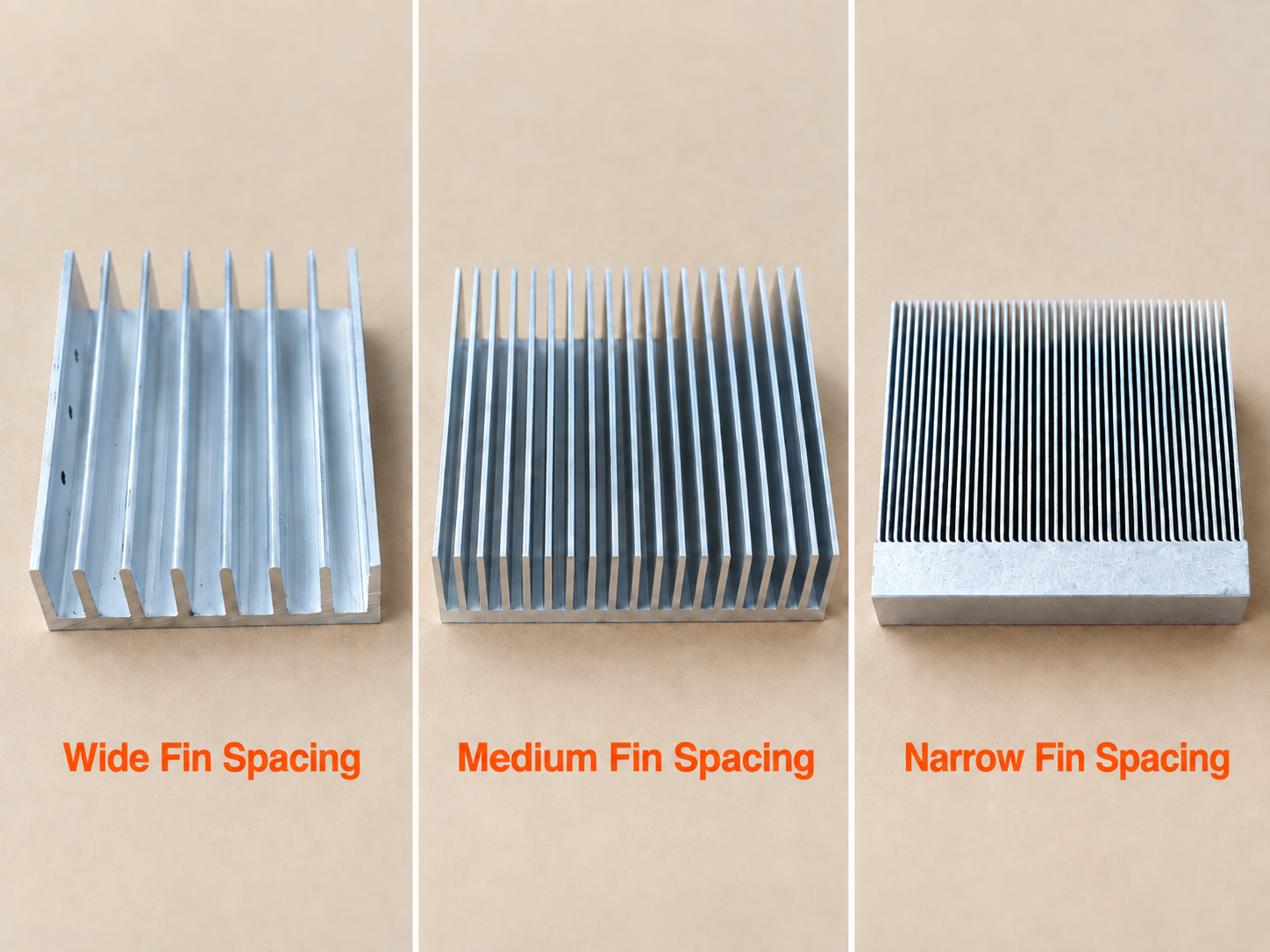
One of skiving’s primary advantages is the ability to create thin, closely spaced fins. More fins can increase the available surface area within a restricted footprint, provided the airflow can effectively pass through the fin channels.
Installation Space Is Limited
When width and overall envelope are constrained, simply increasing heat sink size may not be possible. Skiving can allow more cooling surface to be packaged into the available space.
However, increasing fin density also increases airflow resistance. Fin spacing should therefore be designed together with the available airflow and fan pressure rather than considered independently.
You Need a One-Piece Copper Heat Sink
Copper provides higher thermal conductivity than common aluminum heat sink alloys, but conventional copper extrusion is generally not a practical equivalent to aluminum heat sink extrusion.
Skiving provides a manufacturing route for producing a dense copper heat sink in which the fins and base remain one continuous piece of material.
Copper also brings trade-offs, including greater weight, higher material cost, and different machining and surface-protection considerations.
You Want to Avoid Dedicated Extrusion Tooling
A custom extrusion normally requires a die. Skiving uses a cutting process rather than a profile-specific extrusion die, which can make it attractive for projects requiring custom fin geometry without committing to extrusion tooling.
This does not mean skiving is always less expensive. Unit machining time, material utilization, dimensions, fin count, and production quantity still affect the final cost.