
When natural convection cannot provide enough cooling within the available space, an active heat sink uses forced airflow to increase heat transfer and achieve greater cooling performance.
XINXIANG manufactures custom aluminum and copper heat sinks for fan- and blower-assisted cooling systems. Depending on your thermal requirements, dimensions, airflow conditions, and production volume, we can provide extruded, skived, bonded fin, forged, and machined heat sink solutions with secondary CNC machining and assembly.
Send us your drawing, fan specifications, or application requirements to discuss a practical cooling solution for your project.
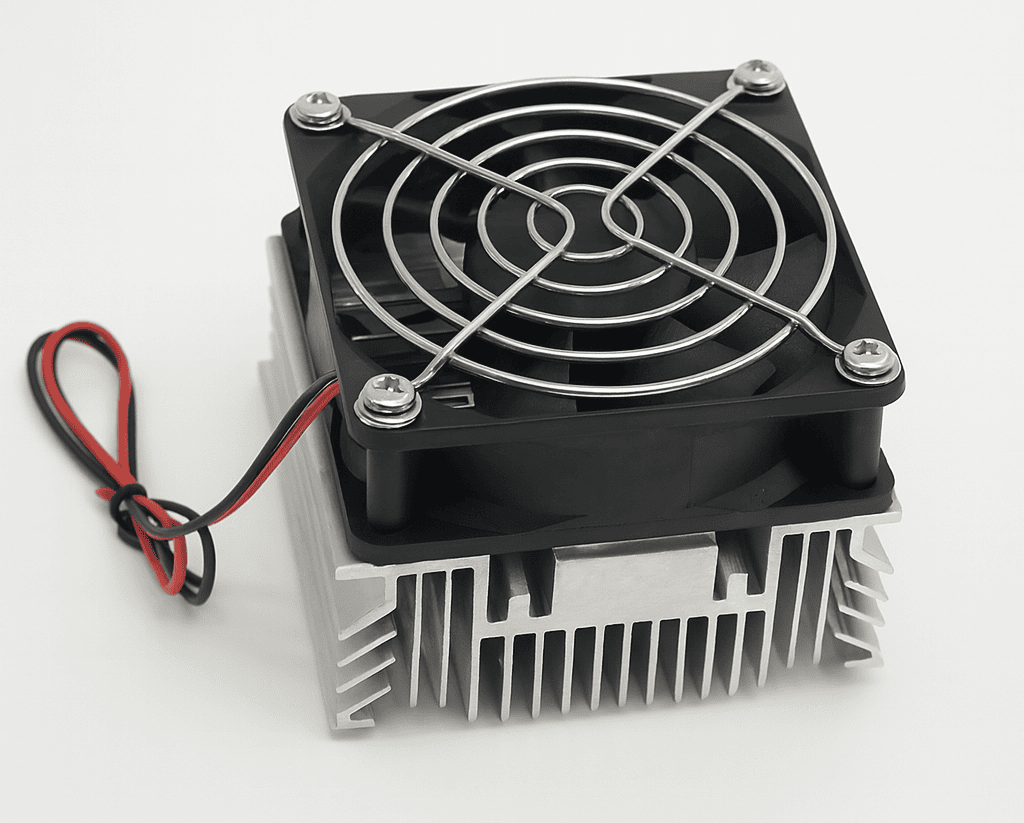
An active heat sink combines a heat sink with a powered airflow source, typically a fan or blower, to move air through or across the fins.
Heat travels from the electronic component into the heat sink base and fins. Forced airflow then removes heat from the fin surfaces more rapidly than natural convection alone.
Active cooling is commonly used when heat loads are relatively high, installation space is limited, or the required thermal performance cannot be achieved with a practical passive heat sink.
For this page, active heat sinks refer primarily to air-cooled heat sink assemblies using fans or blowers.
An effective active cooling system requires the heat sink and airflow source to work together.
A fan may provide high airflow in open air, but actual airflow through a heat sink depends on resistance created by the fin channels, enclosure, ducts, filters, and other components.
Important design factors include:
Closer fin spacing can increase surface area, but it also increases resistance to airflow. A good forced-air design therefore balances fin density, airflow, and pressure drop rather than simply maximizing the number of fins. Our guide to heat sink fin spacing explains how fin density, flow length, airflow, and pressure drop should be considered together.
If you are starting from an existing aluminum extrusion, our heat sink extrusion profile selection guide explains how fin geometry, profile dimensions, base thickness, and machining requirements should be evaluated together.
Different finned heat sink structures and manufacturing methods can be used depending on the required size, fin density, cooling performance, quantity, and target cost.
A cost-effective solution for many fan-cooled industrial and electronic applications. Custom extrusion profiles can combine good mechanical strength with practical fin geometries.
Thin fins and high fin density provide a large surface area within a relatively compact footprint, making skived heat sinks suitable for many high-performance forced-air applications.
Bonded fin construction allows large base sizes, tall fins, and flexible fin spacing. It is particularly useful for large power electronics and other applications requiring substantial cooling surfaces.
Other structures, including forged heat sinks, die cast heat sinks, and machined heat sinks, can also be used depending on the geometry and application.
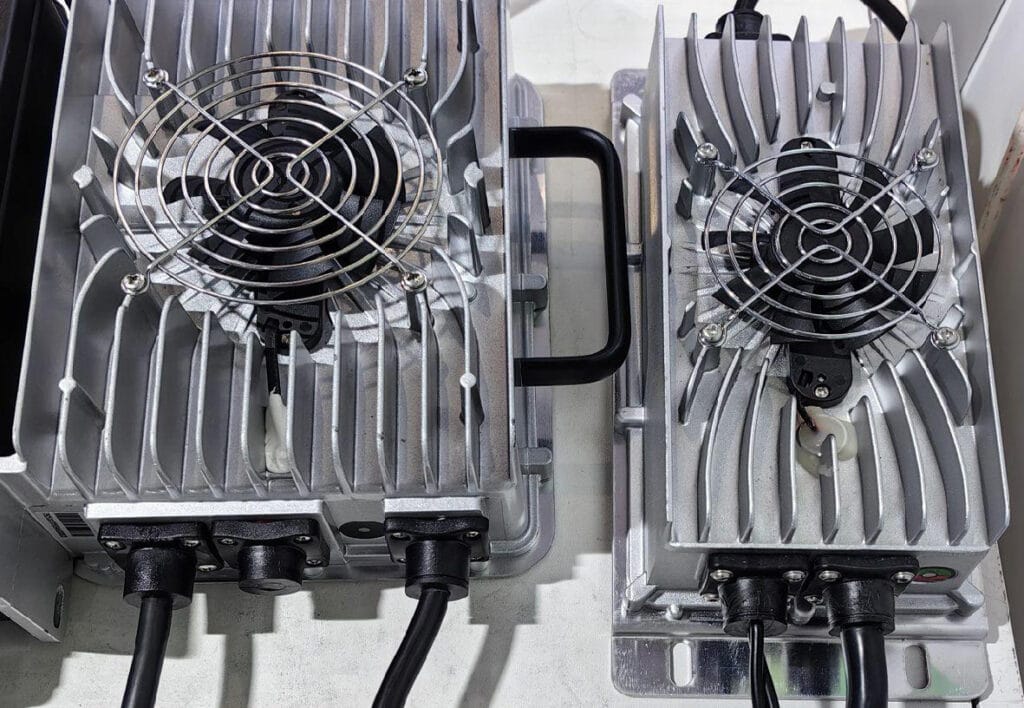
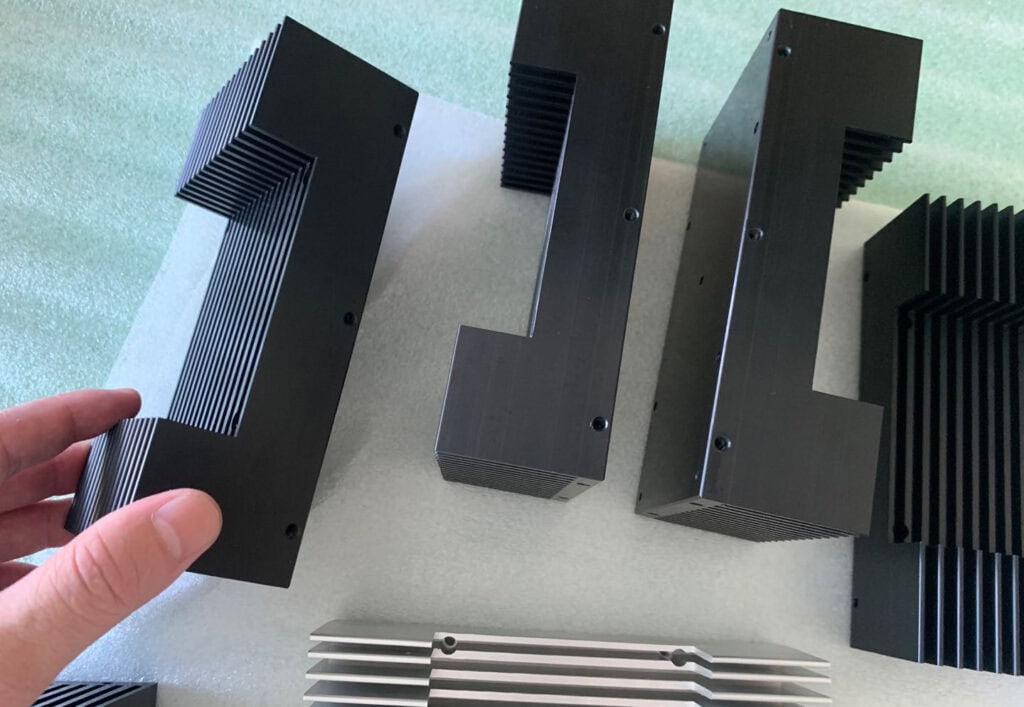
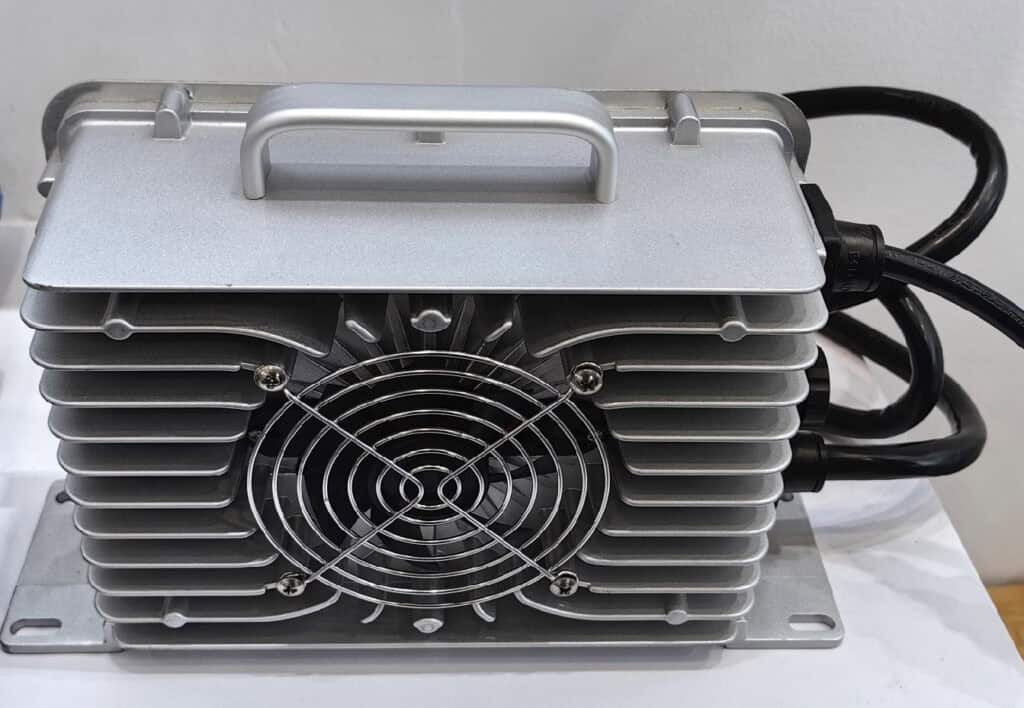
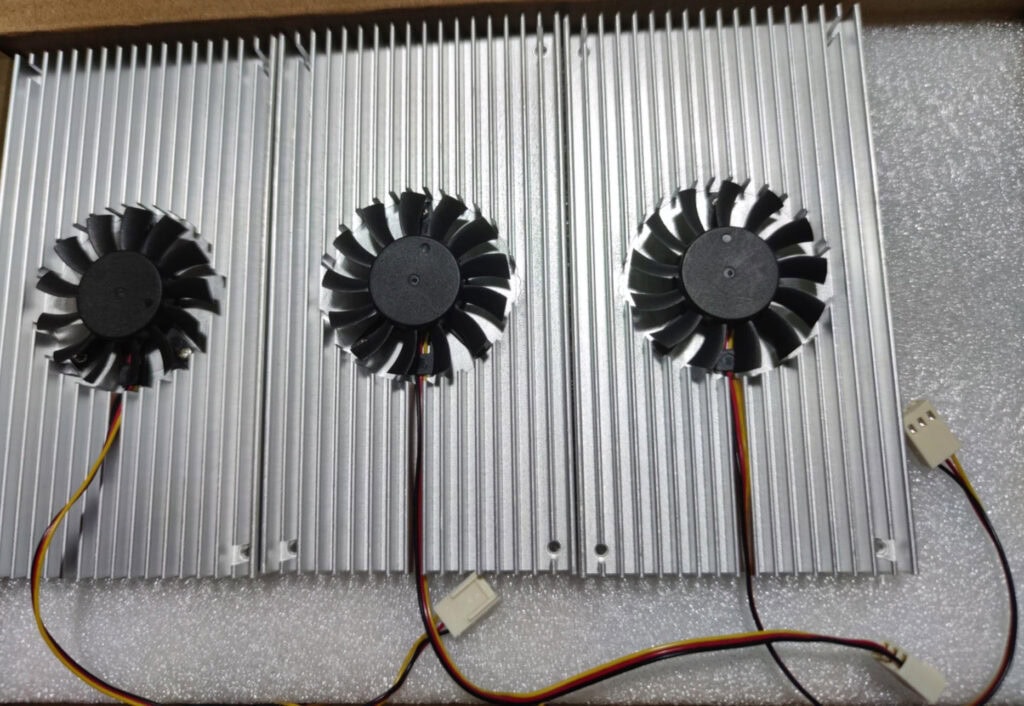
Active cooling may be a good choice when:
If silent operation, minimum moving parts, and low maintenance are higher priorities, a passive heat sink may be a better solution.
The right choice should be based on the complete thermal environment rather than component power alone.
XINXIANG can manufacture active heat sink components according to your drawings and assembly requirements.
Materials
Aluminum heat sinks are widely used because of their combination of thermal performance, low weight, manufacturability, and cost. Copper heat sinks can be used where greater heat spreading is required.
CNC Machining
Milling, drilling, tapping, pockets, mounting holes, cutouts, and other machining can be completed according to your design.
Surface Treatment
Anodizing, chemical conversion coating, painting, plating, and other finishes are available depending on material and application requirements.
Fan & Component Assembly
Fan mounting features, fan guards, thermal interface materials, mounting hardware, heat pipes, and other components can be integrated when required.
XINXIANG supports custom heat sink manufacturing from prototypes through repeat production.
Our capabilities include extrusion, skiving, die casting, forging, CNC machining, surface finishing, and assembly, allowing us to evaluate different manufacturing approaches according to the project.
For an active cooling project, useful information includes:
This information allows us to better evaluate manufacturability and suitable production options for your design.
An active heat sink uses forced airflow from a fan or blower, while a passive heat sink relies primarily on natural convection. Active cooling can provide greater heat transfer within a limited space but requires power and includes moving components.
No. More fins increase surface area, but very narrow channels also increase airflow resistance. Fin density should be matched to the available airflow, heat sink length, and fan or blower characteristics.
Yes. If you provide the fan dimensions, airflow information, mounting requirements, and heat sink envelope, the heat sink can be manufactured around your existing system design.
Aluminum is the most common choice because it offers good thermal performance with low weight and competitive cost. Copper provides higher thermal conductivity and can be useful where additional heat spreading is required.
Whether you need a compact fan-cooled extrusion, a high-density skived heat sink, or a larger forced-air cooling assembly, XINXIANG provides custom manufacturing solutions based on your drawings and project requirements.
You can also contact our team at sales@heat-sinks.com
Send us your drawing or project requirements. Our team will review your request and typically respond within 24 hours.
You can also email us directly at sales@heat-sinks.com