
Custom round, radial, and star-shaped heat sinks for LED lighting, power electronics, industrial equipment, and other circular thermal applications.
Round heat sinks are designed around a circular or near-circular footprint, with fins arranged around a central core, base, or mounting area.
Depending on the design, they may also be described as radial heat sinks, circular heat sinks, star heat sinks, or round pin-fin heat sinks.
This geometry is especially useful when the heat source, enclosure, mounting interface, or available installation space is circular. Radial fins can also provide airflow paths around the perimeter rather than relying on a single straight fin channel.
At XINXIANG, we manufacture custom round heat sinks using aluminum extrusion, forging, die casting, CNC machining, and secondary finishing processes. The appropriate manufacturing method depends on the diameter, fin geometry, thermal requirements, quantity, mechanical features, and target cost.
Most round heat sinks are manufactured from aluminum because it offers a practical combination of thermal performance, low weight, manufacturability, corrosion resistance, and cost.
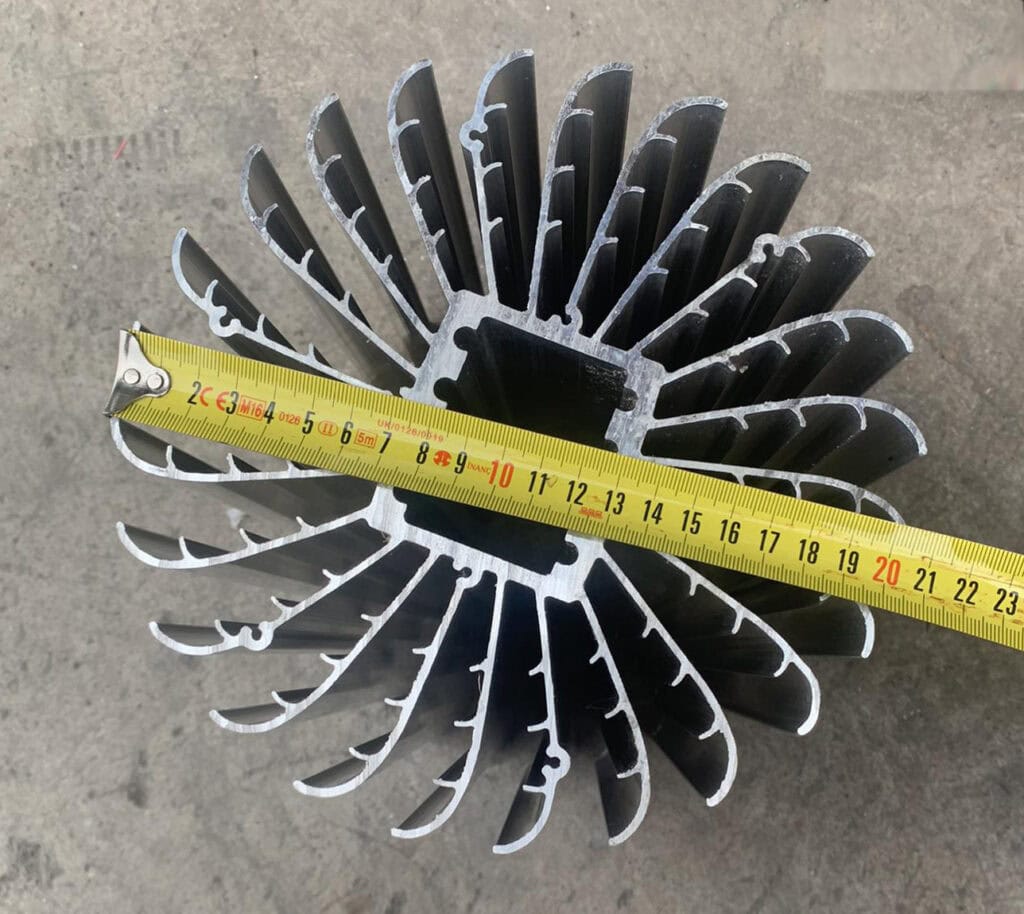
Round heat sinks can be manufactured in several different forms. The best structure depends on the thermal and mechanical requirements of the application.
| Structure | Best Suited For | Main Consideration |
|---|---|---|
| Extruded Radial Heat Sink | Round or star-shaped profiles, LED cooling, and repeat production | Cost-effective one-piece construction, but the fin geometry and overall cross-section must remain practical for extrusion |
| Forged Round Heat Sink | Compact round pin-fin, elliptical-fin, or radial-fin designs | Supports dense three-dimensional fin structures and multidirectional airflow, but tooling is normally required for production |
| Die Cast Round Heat Sink | Integrated housings, lighting bodies, and complex mechanical features | Suitable for complex shapes and higher production volumes where die-casting tooling is economically justified |
| Machined Round Heat Sink | Custom mounting interfaces, prototypes, low-volume parts, and precision features | CNC machining offers high flexibility, but is normally used as a secondary process or for lower-volume specialized designs |
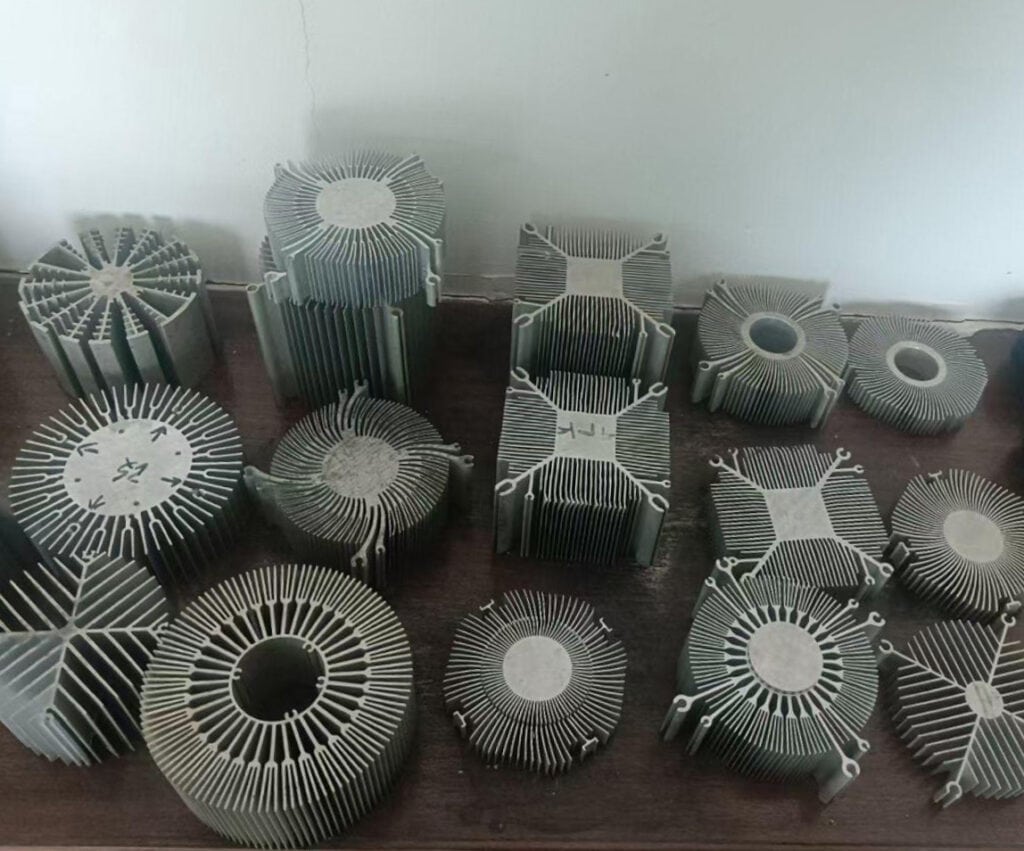
Extrusion is one of the most common manufacturing methods for round aluminum heat sinks.
A custom extrusion die forms the central core and radial fins as one continuous profile. The profile can then be cut to the required length and further processed with CNC machining.
Extruded round heat sinks are particularly attractive when the same cross-section is required for repeat production.
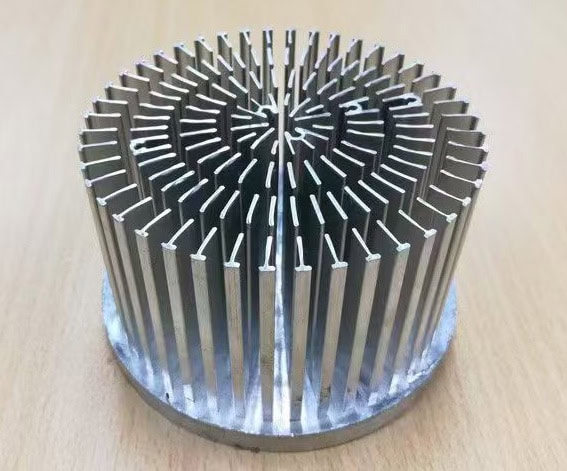
Cold forging is another practical option for compact round heat sinks.
Forging can produce round, elliptical, or other pin-fin structures as a strong one-piece component. Pin-fin arrangements can allow air to move through the heat sink from multiple directions, making them useful when airflow is not limited to one straight channel.
Forged structures may be considered when a compact footprint, dense fin arrangement, or three-dimensional airflow path is required.
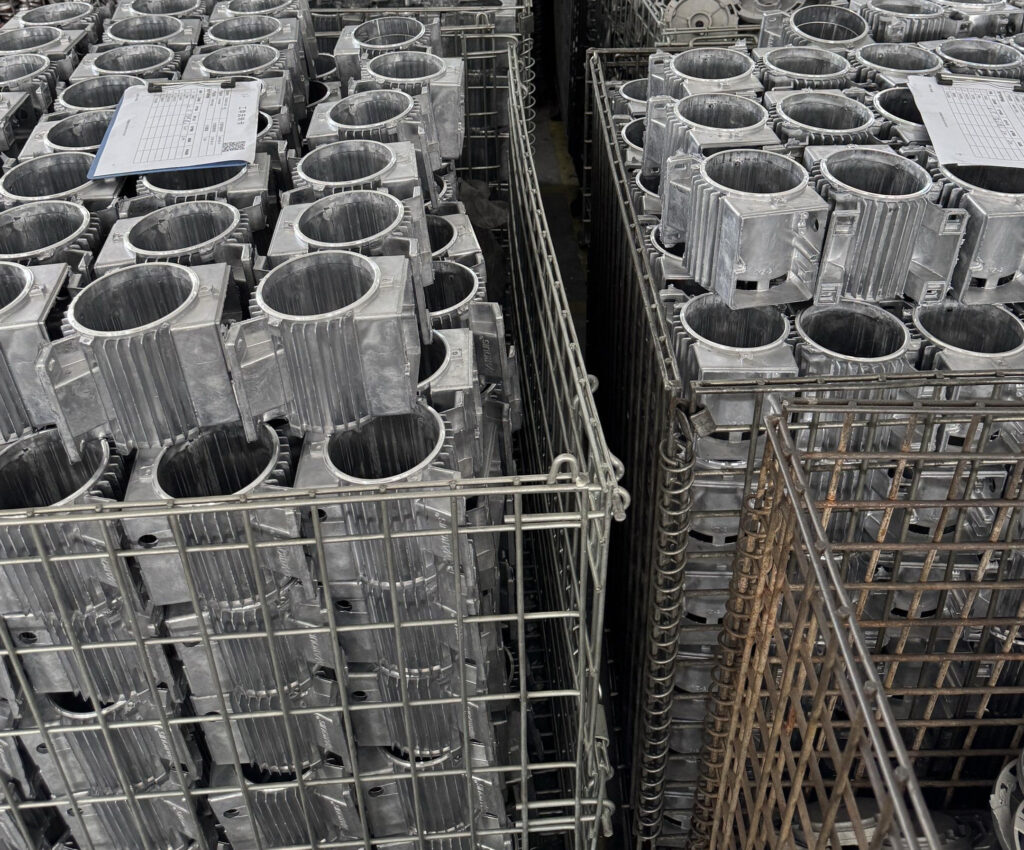
Die casting can be useful when the round heat sink is also part of the product housing.
Cooling fins, mounting bosses, ribs, screw locations, cable features, covers, and enclosure structures can be integrated into one cast aluminum component.
This can reduce the number of separate parts and assembly operations, particularly for lighting products and other higher-volume applications.
A circular heat sink can fit some applications extremely well, but thermal performance depends on more than the outside shape.
Important design factors include:
Fin Number and Spacing
Adding more radial fins increases surface area, but excessively narrow spacing can restrict natural airflow between the fins. The optimum fin count therefore depends on diameter, fin length, heat load, orientation, and whether the heat sink operates under natural or forced convection.
Fin Length and Height
Longer or taller fins provide more cooling surface, but the additional surface must receive sufficient heat from the base and sufficient airflow to be effective. Fin dimensions should therefore be evaluated together with base thickness, material conductivity, and the location of the heat source.
Heat Sink Orientation
Orientation is particularly important for passive round heat sinks. Under natural convection, heated air must be able to rise away from the fin surfaces while cooler air enters the heat sink. The actual airflow pattern changes with geometry and installation orientation. A round heat sink should therefore be evaluated in the same orientation in which it will operate inside the final equipment.
Central Core and Heat Spreading
Many radial extrusion designs transfer heat from a central core or mounting surface toward fins around the circumference. Core diameter, wall thickness, heat-source contact area, material, and interface flatness all affect how efficiently heat reaches the fins.
Natural or Forced Airflow
Round heat sinks are frequently used as passive cooling components, but fans or blowers can also be integrated where higher heat loads require forced airflow. For fan-assisted designs, fin spacing and geometry should be matched to the actual airflow and pressure available in the system.
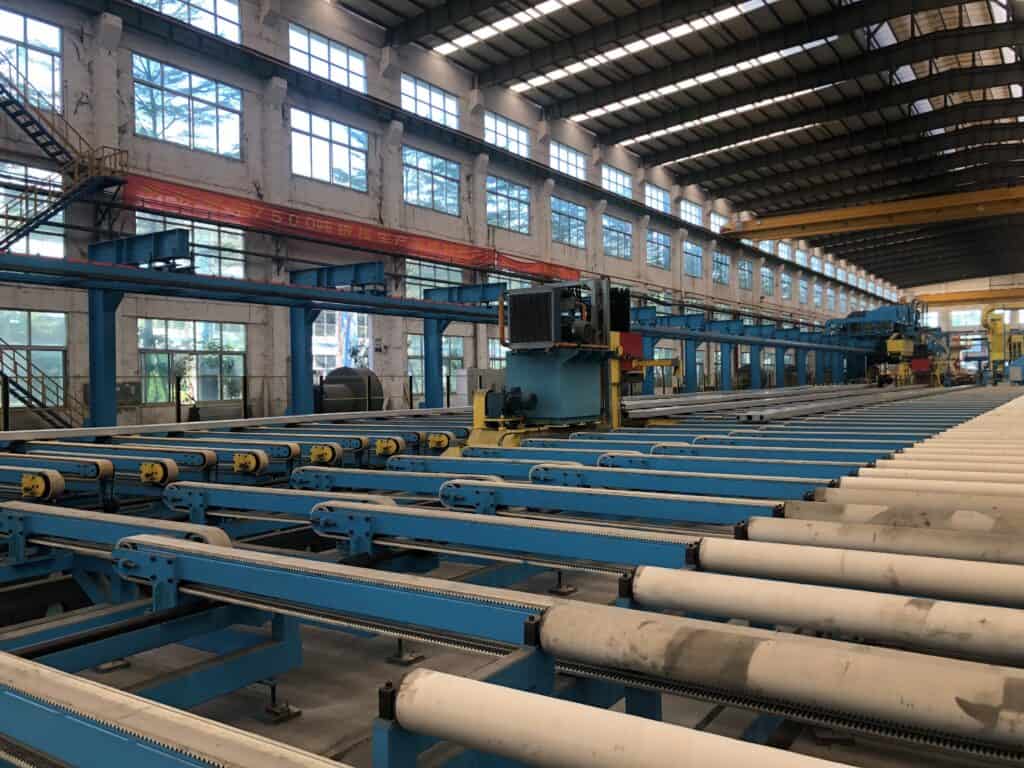
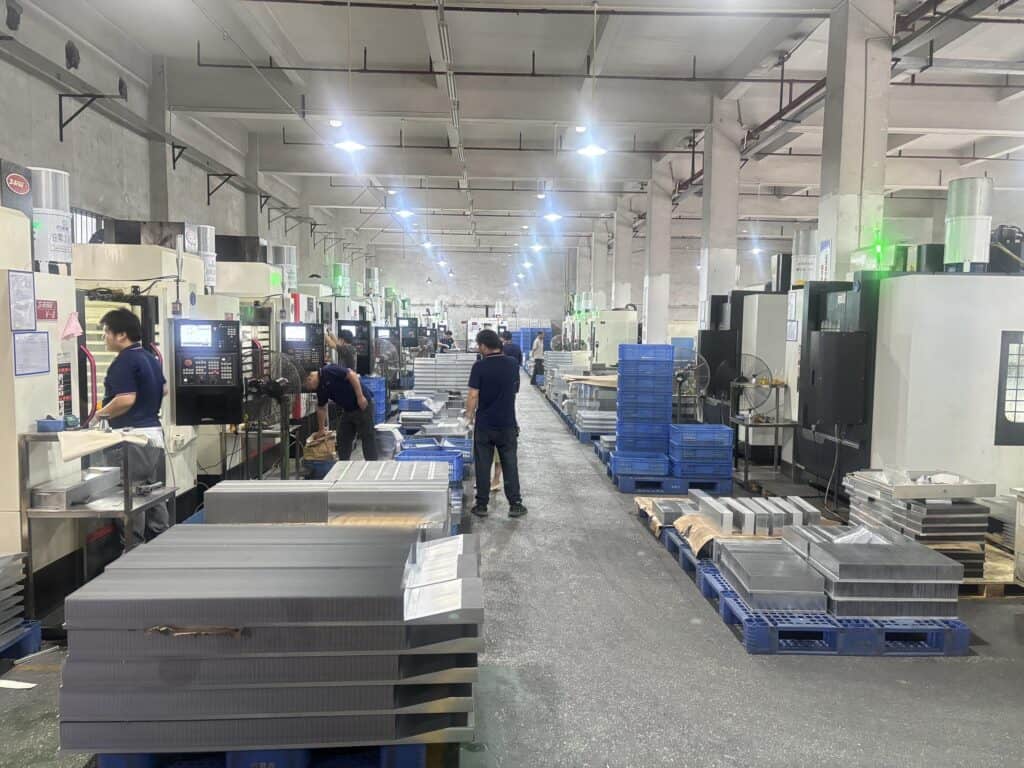
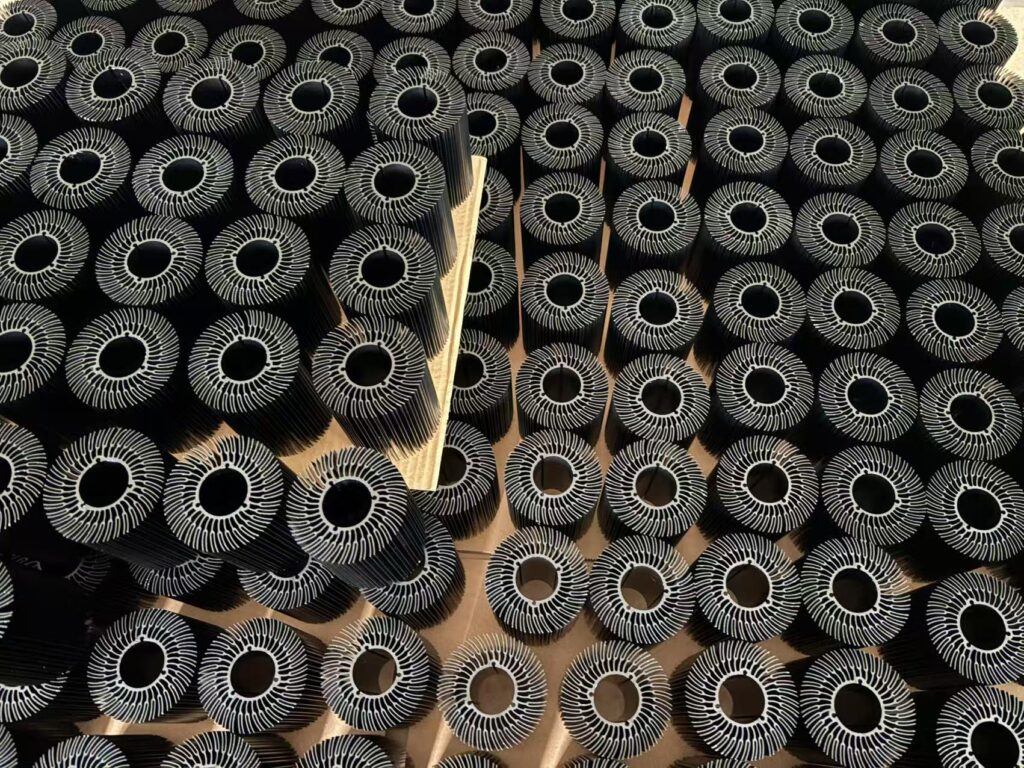
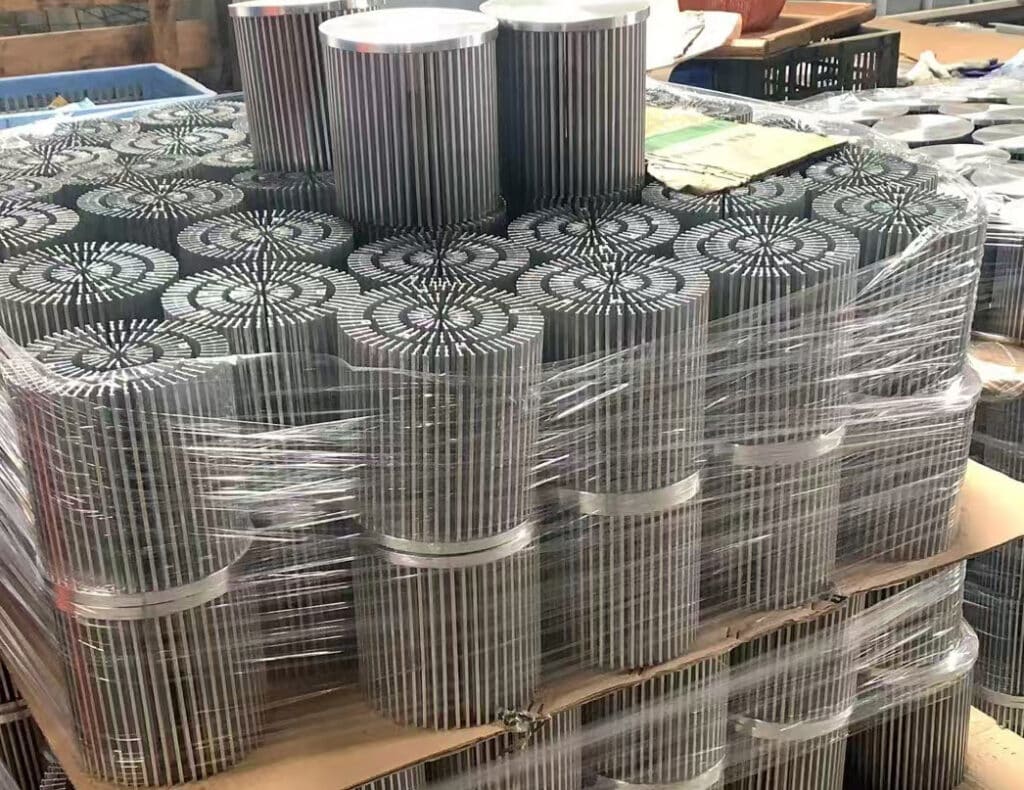
XINXIANG manufactures round heat sinks according to customer drawings, samples, or project requirements.
Aluminum is normally the first choice for round heat sinks.
Common alloys include 6063 for extruded profiles and project-specific aluminum grades for forged, machined, or die-cast structures.
Copper may be considered for compact designs where additional heat spreading is required and the added weight and cost are acceptable.
Outer diameter, central core dimensions, overall height, profile length, and mounting dimensions can be customized within the limits of the selected manufacturing process.
For extruded designs, feasibility depends on the complete cross-section rather than diameter alone.
Secondary machining can be completed according to your drawing, including:
Available structures may include:
Final fin thickness, height, pitch, and quantity depend on the manufacturing process and thermal requirements.
Typical aluminum finishes include:
Critical component-contact or electrically conductive areas can be masked or machined according to the design. See our Heat Sink Surface Finishes guide for more detailed guidance on surface finishing.
Round heat sinks can also be supplied with fans, brackets, mounting hardware, thermal interface materials, LED mounting components, guards, and other assembly parts when required.
Send us your drawings or project requirements, and we’ll review them before preparing a quotation.
With more than 20 years of heat sink manufacturing experience, XINXIANG supports custom thermal projects from design review and prototyping through repeat production.
Our manufacturing capabilities include aluminum extrusion, forging, die casting, CNC machining, surface finishing, inspection, and assembly.
Rather than treating every round heat sink as the same product, we evaluate the geometry, heat load, airflow, manufacturing quantity, and mechanical requirements before selecting a practical production method.
Round geometry. Practical manufacturing. Built around your application.
Round heat sink projects can vary significantly in geometry, thermal requirements, and production method.
For a new project, please provide as much of the following information as possible:
If you already have a completed design, we can review the drawing for manufacturing feasibility and quotation.
If the design is still under development, we can help evaluate whether extrusion, forging, die casting, CNC machining, or another manufacturing route is more practical.
The terms are often used interchangeably.
A round heat sink generally refers to the overall circular shape, while a radial heat sink more specifically describes fins arranged outward around a central region.
Many round aluminum extrusion profiles therefore have a radial or star-shaped cross-section.
No.
Extrusion is common for radial profiles with a continuous cross-section, but round heat sinks can also be forged, die cast, CNC machined, or manufactured using a combination of processes.
The appropriate process depends on the fin structure, size, quantity, mechanical features, and cost requirements.
Yes, many round and radial heat sinks are used for passive cooling.
However, performance depends on fin spacing, fin dimensions, orientation, available clearance, ambient conditions, and heat load.
A circular shape alone does not guarantee better natural-convection performance.
6063 aluminum is commonly used for heat sink extrusion because it provides a good combination of extrudability, thermal performance, surface finish, corrosion resistance, and anodizing response.
Other alloys may be considered depending on mechanical and manufacturing requirements.
Yes.
Depending on the design, we can machine central holes, bores, internal or external threads, flat mounting surfaces, screw holes, pockets, slots, and other features after the primary manufacturing process.
Yes.
Fans, guards, brackets, and other components can be integrated when natural convection cannot provide sufficient cooling.
The heat sink and fan should be selected together so that fin geometry matches the actual airflow.
Yes.
Send us your drawing, dimensions, quantity, material preference, surface finish, heat load, and airflow conditions. We can review the project and recommend a practical manufacturing approach.
Send us your drawing or project requirements.
XINXIANG can review the round heat sink geometry, manufacturing process, material, machining features, surface finish, quantity, and assembly requirements before preparing a quotation.
You can also contact our team at sales@heat-sinks.com
Send us your drawing or project requirements. Our team will review your request and typically respond within 24 hours.
You can also email us directly at sales@heat-sinks.com