Lightweight, Cost-effective Heat Sinks.
Manufactured for Industrial Electronics, Power Systems, LED Lighting, Telecom Equipment, Computing Hardware, and Custom Thermal Applications.
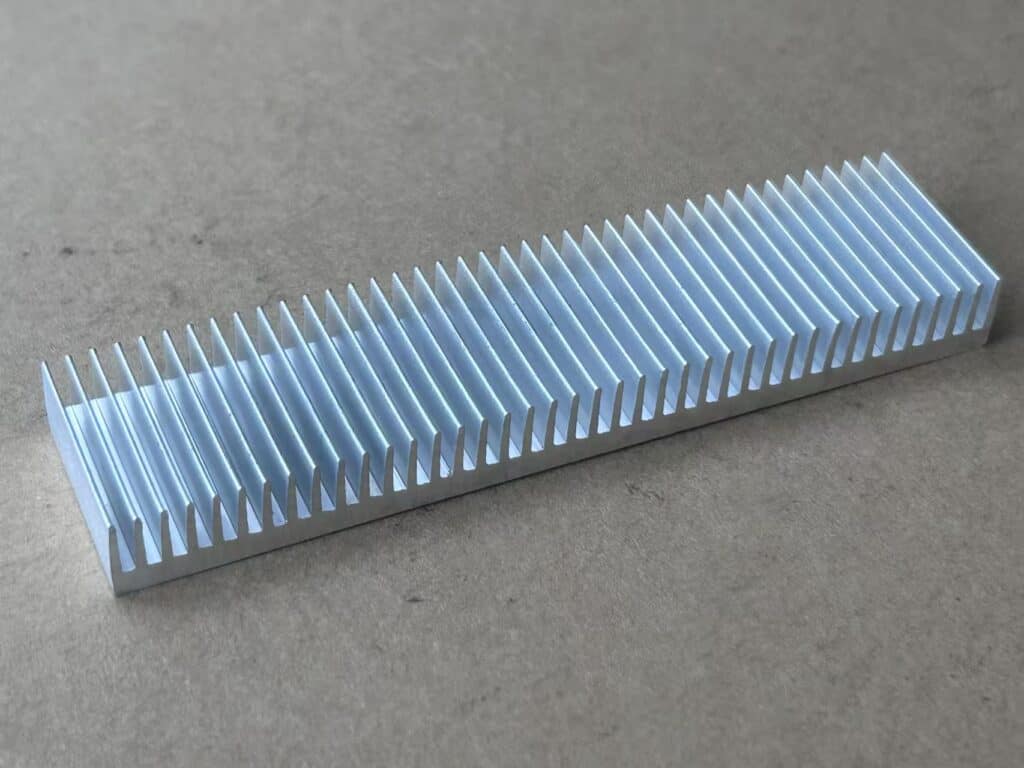
Aluminum is the most widely used heat sink material because it provides a practical balance of thermal conductivity, low weight, corrosion resistance, manufacturing flexibility, and cost.
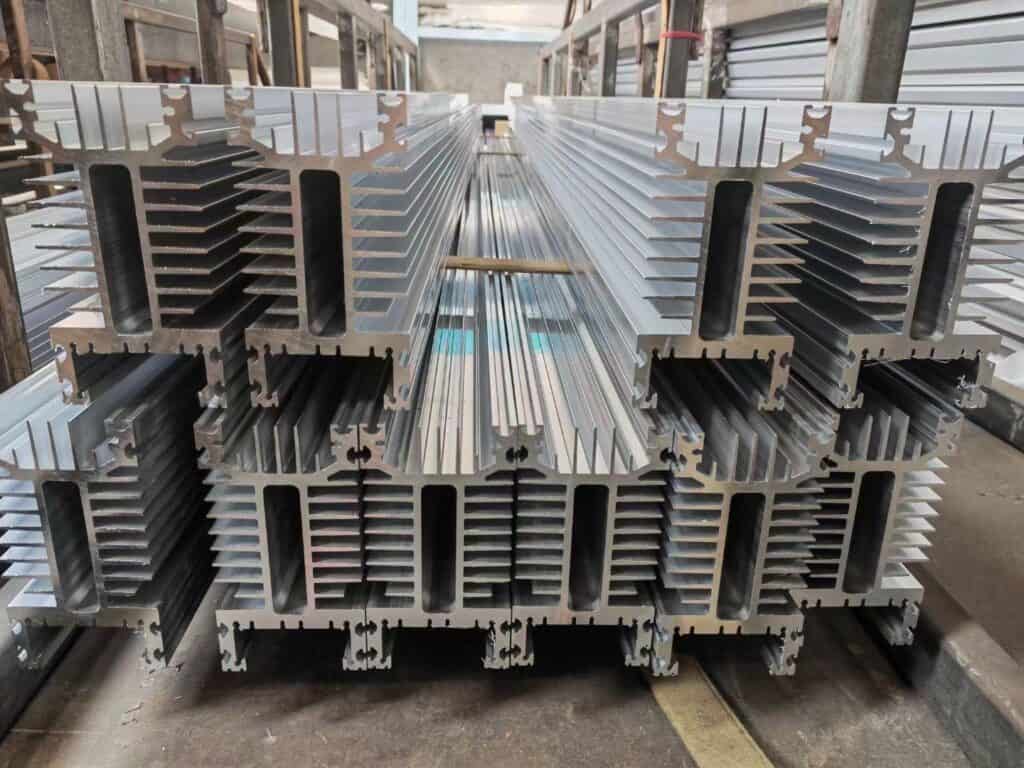
Different aluminum alloys can be extruded, skived, machined, forged, die cast, bonded, anodized, and assembled into a wide range of cooling products. This makes aluminum suitable for everything from simple passive heat sinks to high-density forced-air assemblies and liquid cooling plates.
Aluminum alloys do not all have the same thermal performance. Their conductivity, strength, machinability, surface quality, and finishing response depend on the alloy and temper. For example, 6063 is widely used for heat sink extrusions because of its thermal performance, surface finish, corrosion resistance, and anodizing response, while 6061 is often selected when higher mechanical strength or more demanding machining is required. High-purity aluminum grades such as 1050 and 1070 may be considered when conductivity is a higher priority than mechanical strength.
At XINXIANG, we manufacture both standard and custom aluminum heat sinks according to your drawings, heat load, airflow, installation space, surface finish, quantity, and assembly requirements.
Lightweight Construction
Aluminum has a much lower density than copper, helping reduce product weight, shipping cost, and mechanical load on the equipment.
Good Thermal Performance
Although copper has higher thermal conductivity, aluminum provides sufficient heat transfer for a broad range of air-cooled and liquid-cooled applications. Actual performance depends on the alloy, heat sink geometry, airflow, interface quality, and operating conditions.
Multiple Manufacturing Processes
Aluminum can be extruded, skived, bonded, forged, die cast, CNC machined, stamped, and formed into complex thermal structures.
Cost-Effective Production
Aluminum is generally more economical than copper and is suitable for both prototypes and repeat production. Extrusion and die casting can offer particularly competitive unit costs when production quantities justify tooling.
Flexible Surface Finishing
Clear or black anodizing, chromate conversion coating, powder coating, painting, and other project-specific finishes can be applied according to the required appearance and operating environment.
| Item | Available Options |
|---|---|
| Manufacturing Process | Extrusion, skiving, bonding, die casting, forging, CNC machining, or liquid cooling |
| Fin Structure | Straight, slanted, plate, pin, radial, folded, serrated, or custom |
| Cooling Method | Natural convection, forced airflow, or liquid cooling |
| CNC Machining | Cutting, milling, drilling, tapping, slots, pockets, counterbores, and flatness machining |
| Surface Finish | Mill finish, clear/black anodizing, chromate, powder coating, or painting |
| Mounting | Threaded holes, clips, brackets, spring screws, push pins, or custom hardware |
| Assembly | Fans, guards, shrouds, heat pipes, TIMs, fittings, sensors, and electronic modules |
| Inspection | Material verification, dimensional inspection, flatness checks, and project-specific reports |
Engineering Note:
Final dimensions and manufacturing limits depend on the alloy, fin geometry, tooling, machine capacity, tolerances, and production quantity.
We select the manufacturing method according to the required dimensions, fin geometry, heat load, airflow, mechanical features, tooling budget, and production quantity.
At XINXIANG, we can apply different surface finishes to custom aluminum heat sinks according to customer requirements.
Mill Finish or Machined Finish
Suitable when no decorative or additional protective coating is required. Critical component-contact surfaces can be precision machined to meet flatness and roughness requirements.
Clear Anodizing
Provides a durable aluminum oxide surface while maintaining a natural metallic appearance.
Black Anodizing
Commonly selected for appearance, corrosion protection, and improved surface emissivity in applications where radiation contributes to overall cooling.
Chromate Conversion Coating
Can provide corrosion protection while retaining greater electrical conductivity than a fully anodized surface.
Powder Coating or Painting
Used when color, branding, environmental protection, or external appearance is important.
Anodizing converts the aluminum surface into a durable oxide finish and improves corrosion resistance. Because the anodized layer is electrically insulating and can affect the thermal interface, critical contact areas may require masking or machining according to the assembly design.
For a more detailed comparison of anodizing, chromate conversion, powder coating, masking, and other finishing considerations, see our Heat Sink Surface Finishes guide.
| Design Factor | Aluminum Heat Sink | Copper Heat Sink |
|---|---|---|
| Thermal Conductivity | Good; varies significantly by alloy | Higher |
| Weight | Lightweight | Approximately three times heavier |
| Material Cost | Lower | Higher |
| Large Heat Sinks | Usually more practical | Weight and cost can become restrictive |
| Extrusion | Widely available and economical | Limited and comparatively expensive |
| Skiving / Machining | Well suited | Well suited |
| Surface Protection | Anodizing and coatings available | Anti-oxidation treatment or plating often considered |
| Best Fit | General industrial cooling and weight-sensitive systems | Compact, high-heat-flux, or heat-spreading applications |
Copper conducts heat more effectively, but it is significantly heavier and more expensive. Aluminum is therefore normally the first material considered unless the application requires greater heat spreading or a smaller cooling footprint.
Learn more about our Custom Copper Heat Sinks.
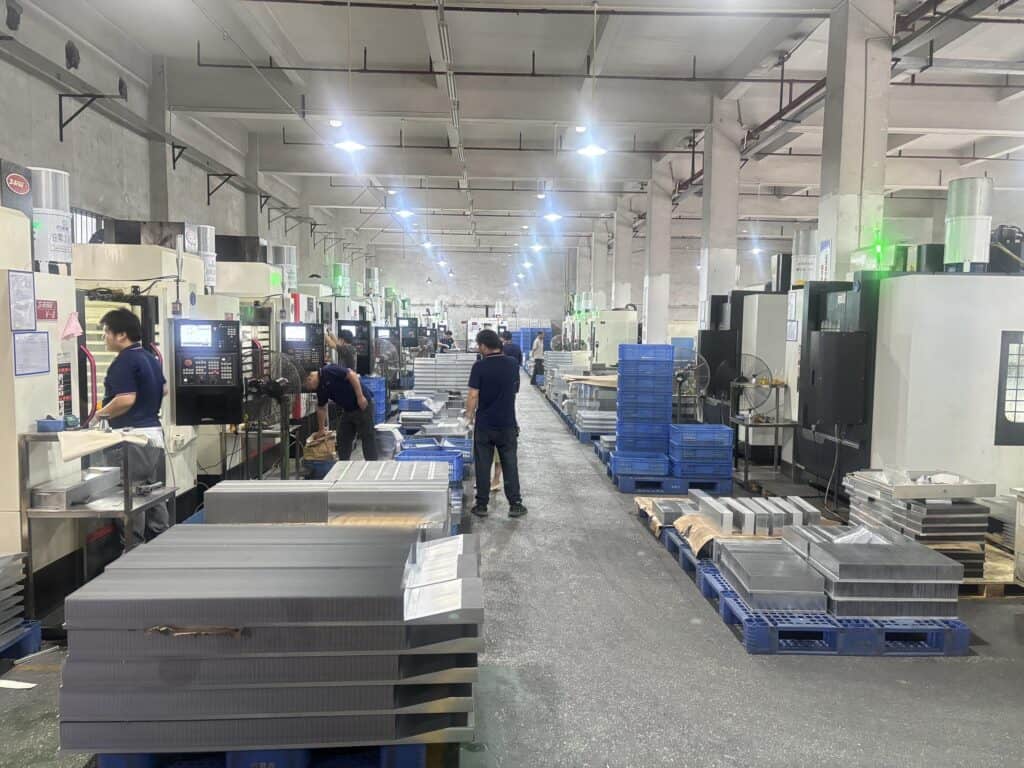
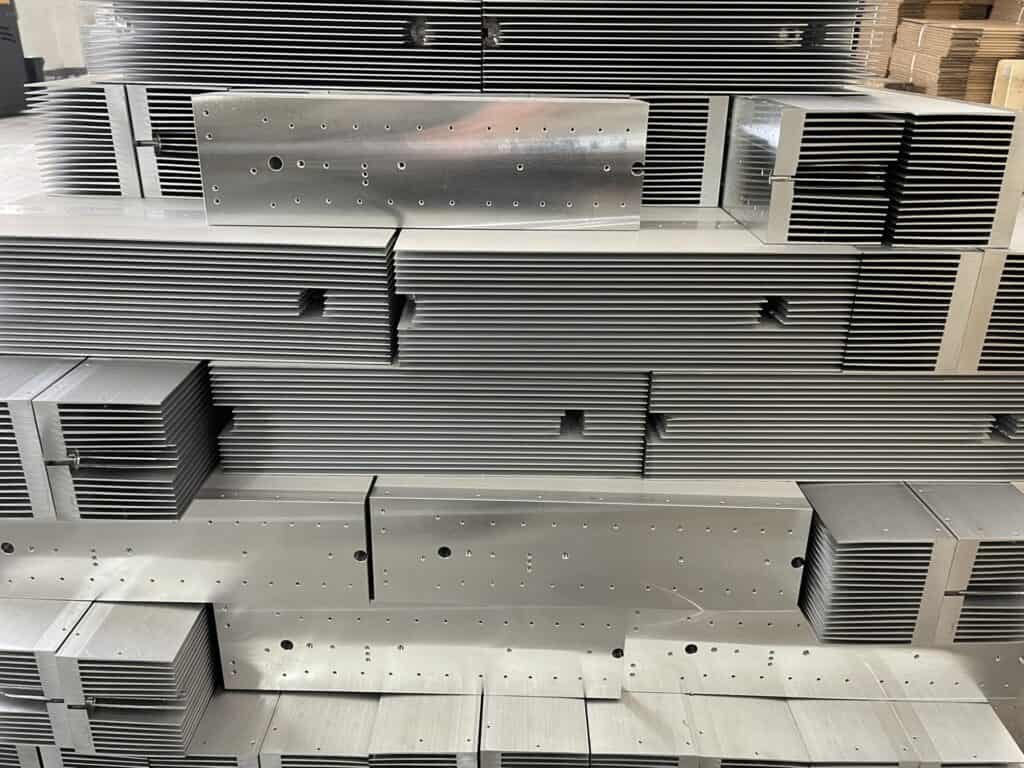
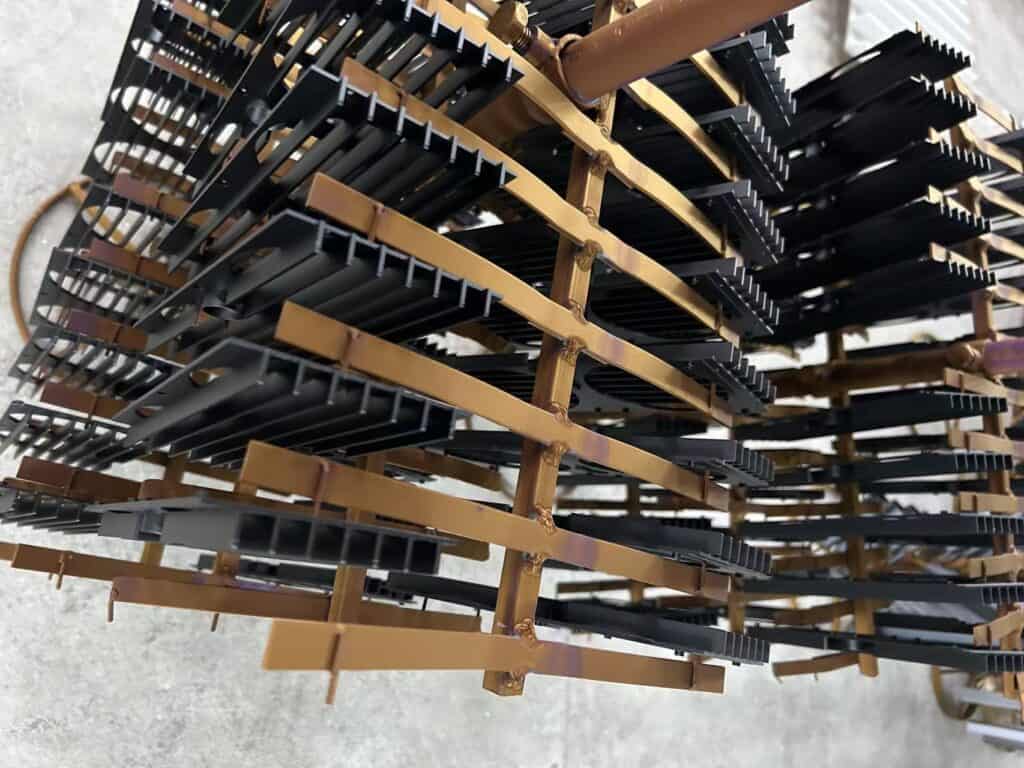
With more than 20 years of heat sink manufacturing experience, XINXIANG supports projects from design review and prototyping to volume production. Our capabilities include multiple aluminum heat sink processes, CNC machining, surface finishing, assembly, and inspection. We focus on practical thermal solutions, reliable quality, responsive communication, and consistent support for global OEM and industrial customers.
Multiple Manufacturing Processes
Our capabilities cover extrusion, skiving, bonded fins, die casting, forging, CNC machining, liquid cooling, and assembly.
Standard and Custom Designs
Existing extrusion tooling may reduce development time, while custom profiles and fully machined products can be developed according to your drawings.
Prototype-to-Production Support
We support samples, small-volume orders, repeat production, and larger OEM programs.
Secondary Machining and Finishing
Cutting, milling, drilling, tapping, anodizing, coating, assembly, and inspection can be coordinated as part of the complete project.
Global Delivery
We export heat sinks and thermal components to customers in North America, Europe, and other international markets.
There is no single best alloy for every design. 6063 is commonly used for extruded heat sinks, 6061 may be selected for greater strength and machining requirements, while high-purity aluminum may be considered when higher conductivity is required. The final choice depends on the process, geometry, strength, finish, and cost.
Yes, in many applications. Thermal performance depends on the complete design, including base spreading, fin surface area, airflow, interface quality, and ambient temperature. High-density skived, bonded-fin, active-air, or liquid-cooled aluminum solutions can handle demanding heat loads.
6063 generally offers better extrusion characteristics, surface finish, and anodizing response. 6061 generally offers higher mechanical strength and better suitability for some structural or heavily machined parts.
Yes. We can review custom dimensions, fin structures, mounting features, machining requirements, finish, assembly, and packaging according to your drawing.
Yes. Send us your heat load, airflow, installation space, mounting requirements, quantity, and target cost. We can help evaluate extrusion, skiving, bonded fins, forging, die casting, or liquid cooling.
Yes. Available services include cutting, milling, drilling, tapping, interface-surface machining, clear or black anodizing, chromate coating, powder coating, and project-specific finishes.
Yes. Fans, guards, shrouds, heat pipes, thermal interface materials, brackets, and mounting hardware can be integrated into the final assembly when required.
Please provide your drawing or 3D model, quantity, heat load, airflow conditions, preferred alloy, finish, critical dimensions, inspection requirements, and delivery location.
Send us your drawing or project requirements. Our team will review the aluminum alloy, manufacturing process, fin geometry, machining features, surface finish, quantity, and assembly requirements before preparing a quotation.
You can also contact our team at sales@heat-sinks.com
Send us your drawing or project requirements. Our team will review your request and typically respond within 24 hours.
You can also email us directly at sales@heat-sinks.com