Complex aluminum heat sink castings with integrated fins, housings, mounting features, secondary machining, and reliable volume production.
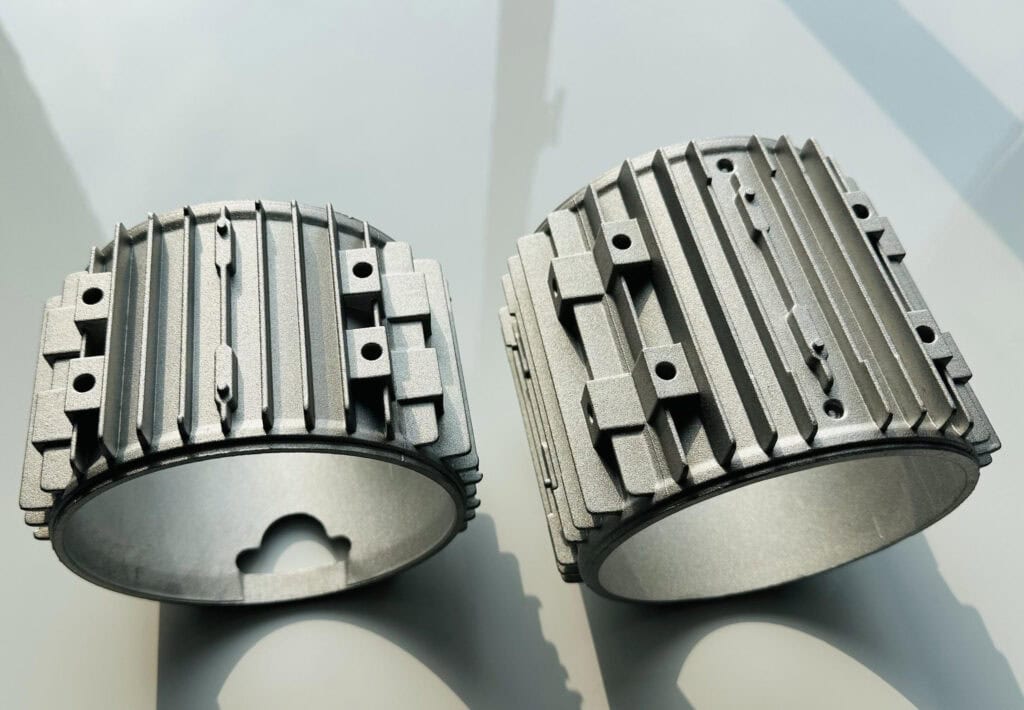 A die cast heat sink is produced by injecting molten aluminum alloy into a precision steel die under high pressure. After solidification, the part is removed, trimmed, machined where necessary, and finished according to the application.
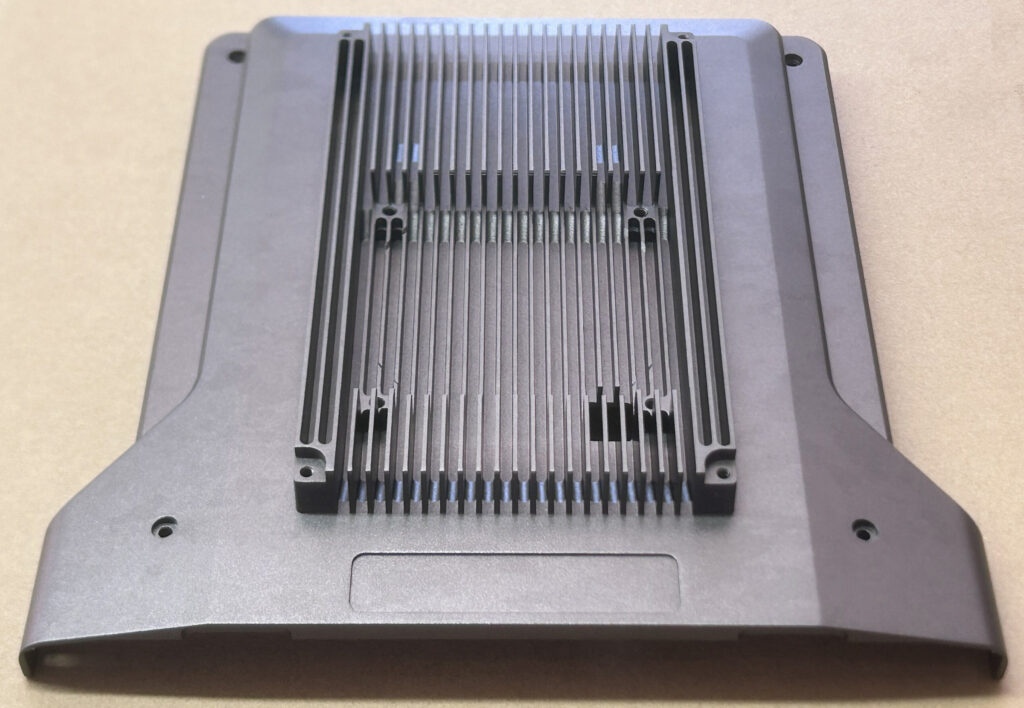
Unlike a conventional heat sink attached to a separate enclosure, die casting can combine the fins, base, housing, mounting bosses, ribs, cable features, and protective structure in one near-net-shape component.
This reduces the number of individual parts and simplifies downstream assembly. High-pressure die casting is particularly suitable for repeatable production of complex geometries and is generally most economical when the required volume justifies the initial tooling investment.
Integrated finned housings are also widely used in outdoor telecom equipment, where heat dissipation, enclosure sealing, and mechanical requirements must be considered together. For more detailed guidance, see our outdoor telecom heat sink design guide.
Complex One-Piece Geometry
Fins, enclosures, brackets, ribs, bosses, mounting holes, cable paths, logos, and other mechanical features can be integrated into a single component.
Reduced Assembly Work
Combining the enclosure and heat sink can reduce separate fasteners, interfaces, installation steps, and overall system complexity.
Repeatable Volume Production
Once the die and process are approved, die casting provides consistent geometry and efficient production for medium- and high-volume programs.
Weight Optimization
Ribs, pockets, metal-saving features, and controlled wall thickness can reduce unnecessary material while maintaining strength and promoting more consistent metal flow and solidification.
Good Cosmetic Appearance
Die cast aluminum provides a consistent industrial appearance and can be painted, powder coated, chromated, or machined for exposed products and outdoor equipment.
| Item | Typical Options |
|---|---|
| Material | Project-specific aluminum die-casting alloy |
| Product Form | Heat sink, enclosure, chassis, housing, or integrated thermal structure |
| Fin Geometry | Straight, radial, pin-fin, tapered, or custom |
| Tooling | Single-cavity or multi-cavity, depending on size and quantity |
| Machining | Interface surfaces, holes, threads, pockets, ports, sealing areas |
| Finish | As-cast, blasted, chromated, powder coated, or painted |
| Assembly | Fans, seals, covers, TIMs, connectors, mounting hardware |
| Production | Prototype tooling, pilot production, and volume manufacturing |
Engineering Note:
Die-cast alloys and wrought aluminum have different thermal and mechanical properties. The design should therefore be optimized around the selected alloy, wall thickness, heat-flow path, airflow, and available surface area rather than directly copying an extruded heat sink geometry.
Design and DFM Review
We review wall thickness, draft angle, parting line, ejector locations, rib structure, shrinkage, machining allowance, thermal path, and potential casting defects before tooling begins.
Tooling and Sampling
Custom steel dies are developed from the approved drawing. First samples are inspected for dimensions, appearance, machining feasibility, and assembly fit before volume production.
Secondary Machining
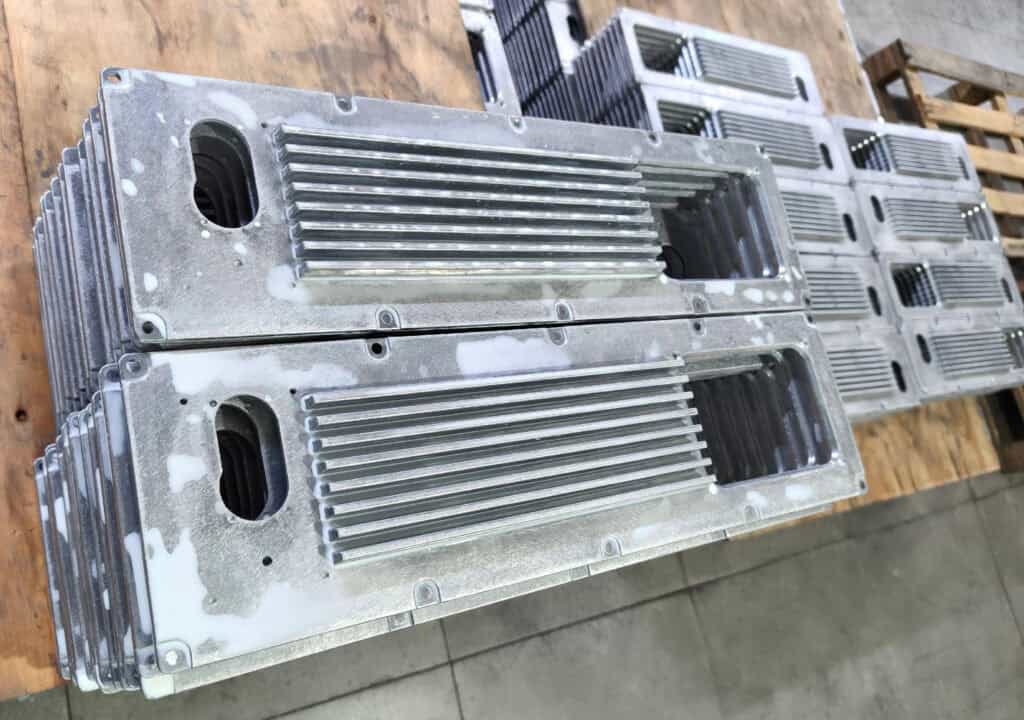
Critical mounting and heat-transfer surfaces can be CNC machined after casting. Available operations include milling, drilling, tapping, reaming, counterboring, sealing surfaces, and connector openings.
Surface Finishing
Available options may include shot blasting, tumbling, chromate conversion coating, powder coating, painting, and project-specific protective finishes.
Assembly Support
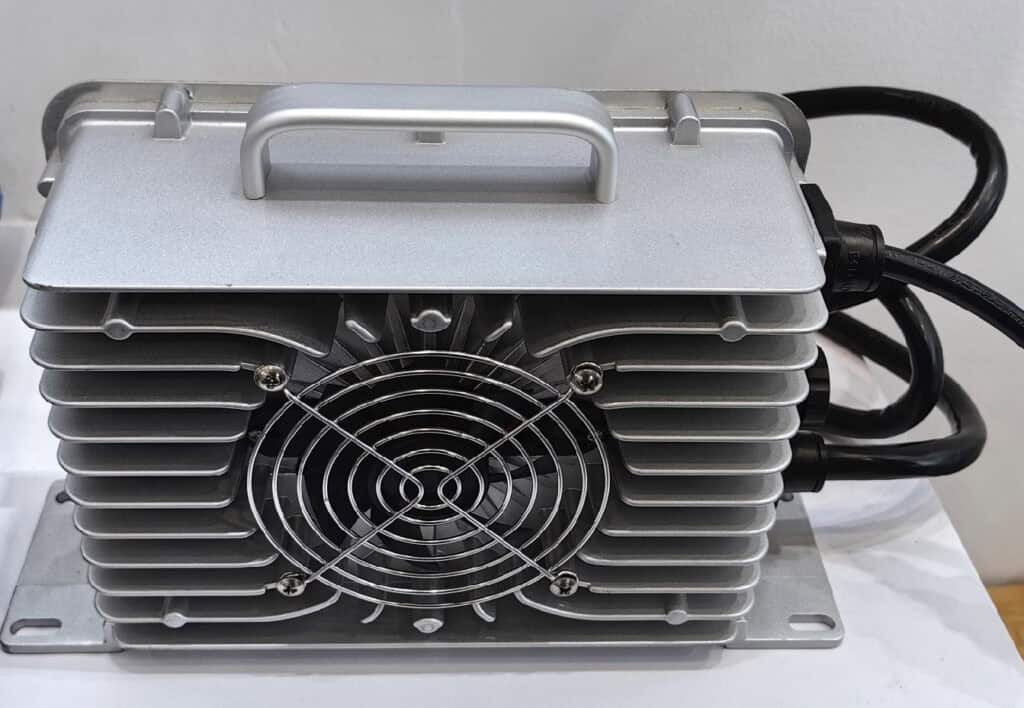
Thermal pads, fans, covers, seals, gaskets, connectors, fasteners, and electronic modules can be integrated according to the project requirements.
Application Review
Send us your drawing, material preference, quantity, and finish requirement.
Design and DFM
We review alloy selection, metal flow, fin or wall aspect ratios, fillets, draft requirements, base thickness, tooling stress, part ejection, machining allowances, mounting features, and dimensional tolerances.
Prototype & Production
Produce samples for dimensional, assembly, and thermal evaluation. Then complete volume production under controlled work instructions once we receive your confirmation.
Inspection and Delivery
We inspect casting dimensions, machined interfaces, threads, surface appearance, coating, and assembly fit according to the agreed quality plan before export packaging and delivery.
With more than 20 years of heat sink manufacturing experience, XINXIANG supports international OEMs and industrial buyers from early design review through repeat production. Our 6,000 m² facility combines multiple thermal manufacturing processes with CNC machining, finishing, inspection, assembly, and export packaging.
Usually within 24 hours. Just send us your drawing or basic specs — the more info you share, the faster we can quote accurately.
The initial tooling cost usually makes die casting less attractive for very small quantities. CNC-machined, extruded, or bonded-fin solutions may be more economical during early development.
Yes. This is one of the main advantages of die casting. Fins, protective walls, bosses, ribs, mounting points, and external appearance features can be integrated into the same part.
Critical component-contact surfaces are commonly CNC machined to achieve the required flatness, roughness, dimensions, and mounting accuracy.
Please provide a 3D model or drawing, target alloy, annual volume, heat load, airflow, surface-finish requirement, critical dimensions, and assembly details.
We select suitable packaging according to the part size, fin density, quantity, and shipping method. Options may include protective trays, cartons, pallets, or wooden crates.
Dense or delicate fins are protected with suitable separators, trays, or custom supports to reduce the risk of damage during transportation.
We can also follow your specified packaging requirements.
Yes, we can. We work with several reliable freight forwarders and can arrange door-to-door shipping to most countries — just let us know your delivery address.
We can also use your freight forwarder if you have one.
Send us your drawing, 3D model, estimated annual volume, and thermal requirements. We will review the casting design, tooling approach, machining operations, finish, and assembly needs.
You can also contact our team at sales@heat-sinks.com
Send us your drawing or project requirements. Our team will review your request and typically respond within 24 hours.
You can also email us directly at sales@heat-sinks.com