Large-format aluminum heat sinks for power electronics, industrial equipment, energy systems, telecom, and other high-heat applications.
Large heat sinks are commonly used when standard cooling components cannot provide enough surface area, heat spreading, or cooling capacity within the available installation space.
However, a large heat sink is not defined by one specific dimension or manufacturing process. Depending on the heat load, available space, airflow, component layout, production quantity, and target cost, the most practical solution may be an extruded, skived, bonded-fin, or fan-cooled design.
At XINXIANG, we manufacture custom large heat sinks according to customer drawings and thermal requirements. Our capabilities include aluminum extrusion, skiving, bonded-fin construction, CNC machining, surface finishing, and assembly, allowing us to select a manufacturing route that fits both thermal performance and production requirements.
Large heat sinks can be supplied as simple machined aluminum profiles or as complete cooling assemblies with fans, shrouds, heat pipes, mounting hardware, and other components.
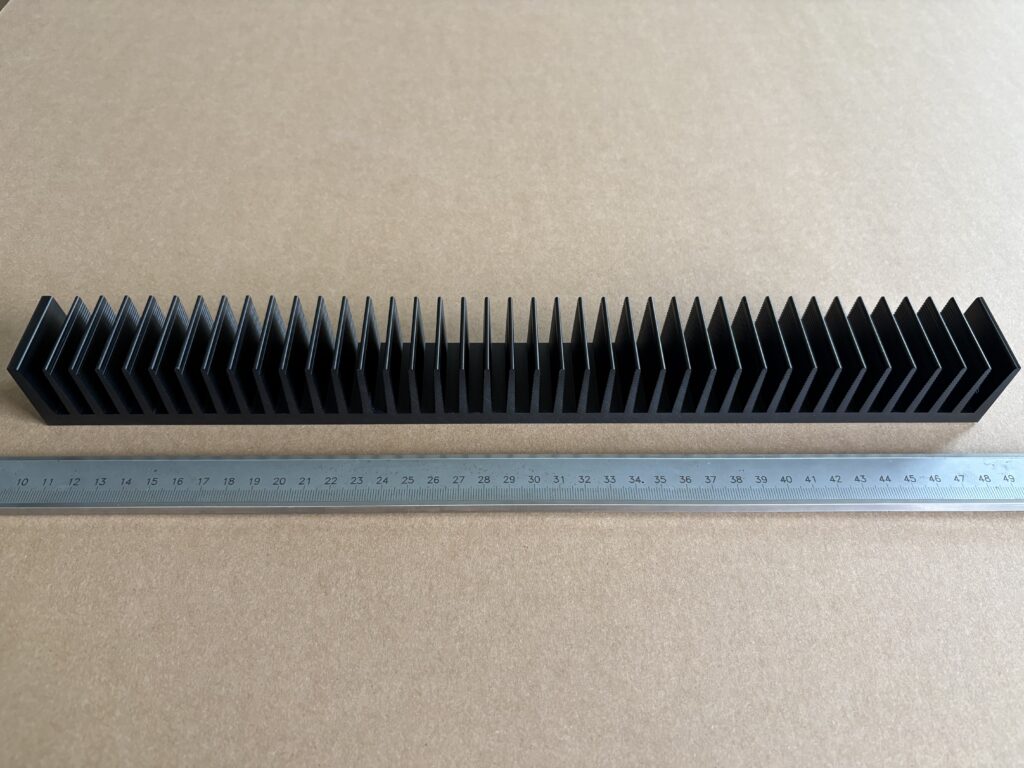
There is no single manufacturing process that is best for every large heat sink. Size, fin geometry, airflow, production volume, weight, tooling cost, and thermal requirements should be considered together.
| Manufacturing Process | Best Suited For | Main Consideration |
|---|---|---|
| Extruded Heat Sink | Large aluminum profiles, repeat production, and moderate fin density | Cost-effective for suitable designs, but fin geometry and overall section size must remain extrusion-feasible |
| Skived Heat Sink | High fin density, thin fins, and compact high-performance cooling | Provides high surface area without a fin-to-base joint, but maximum size depends on skiving capability |
| Bonded Fin Heat Sink | Very wide bases, tall fins, and large cooling assemblies | Offers greater dimensional flexibility than one-piece extrusion, with a controlled fin-to-base joining process |
| Active Heat Sink | High heat loads where forced airflow is available | Fin geometry and spacing should be matched to fan airflow and system pressure drop |
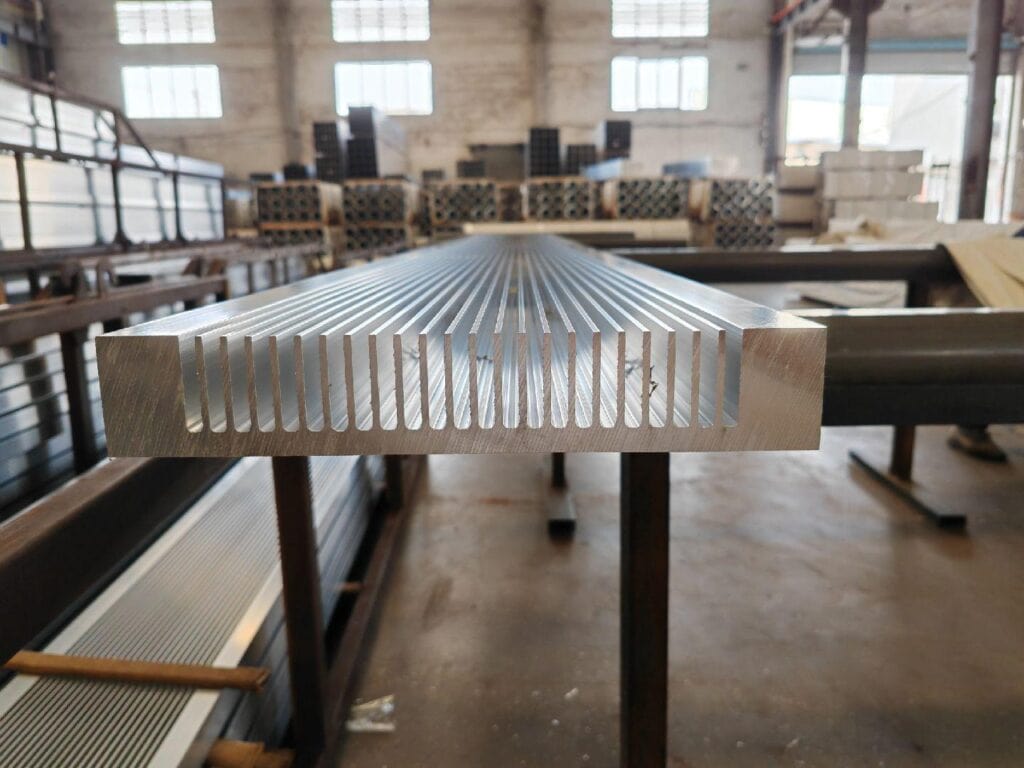
Extrusion is often the most economical solution when a large heat sink can be produced as a continuous aluminum profile. It provides a strong one-piece structure and is particularly attractive for repeat production.
You can also browse our existing heat sink extrusion profiles to check available profile sizes and tooling.
After extrusion, we can cut the profile to length and add mounting holes, threads, pockets, slots, flatness machining, or other CNC features.
For very large cross-sections, extrusion feasibility depends on overall width, fin height, fin thickness, base thickness, alloy, and profile complexity.
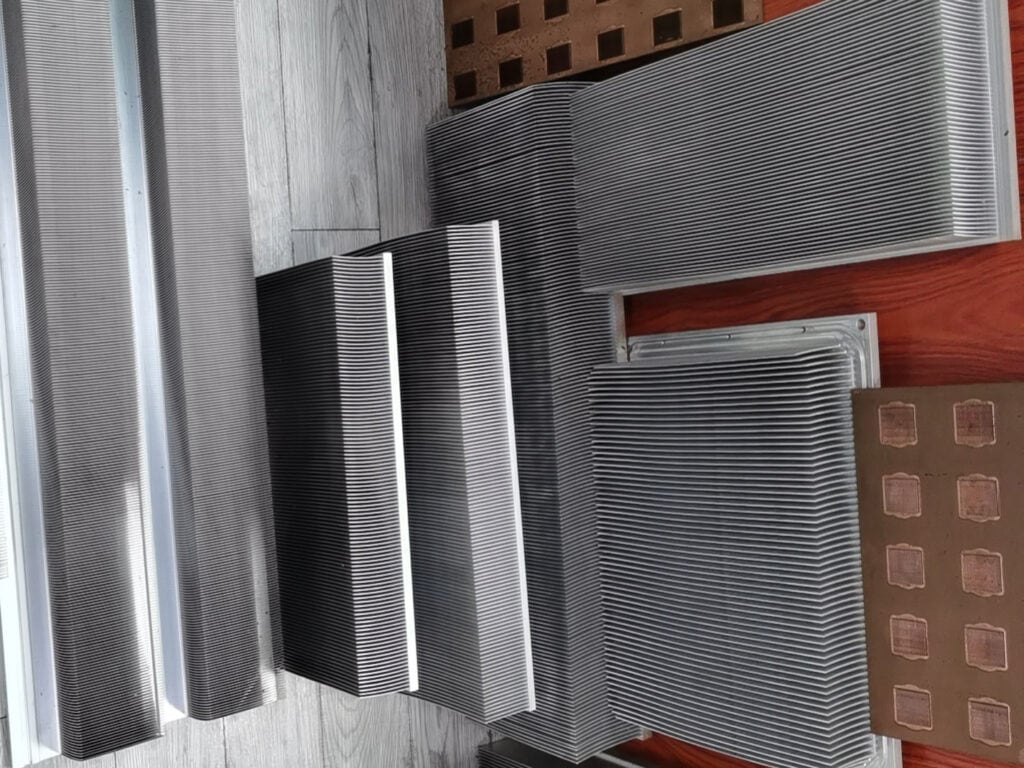
Skiving can produce thin, closely spaced fins directly from a solid aluminum or copper base.
It is useful when greater fin density is required than a practical extrusion can provide, especially in forced-air applications where a large amount of heat-transfer surface is required within a restricted envelope.
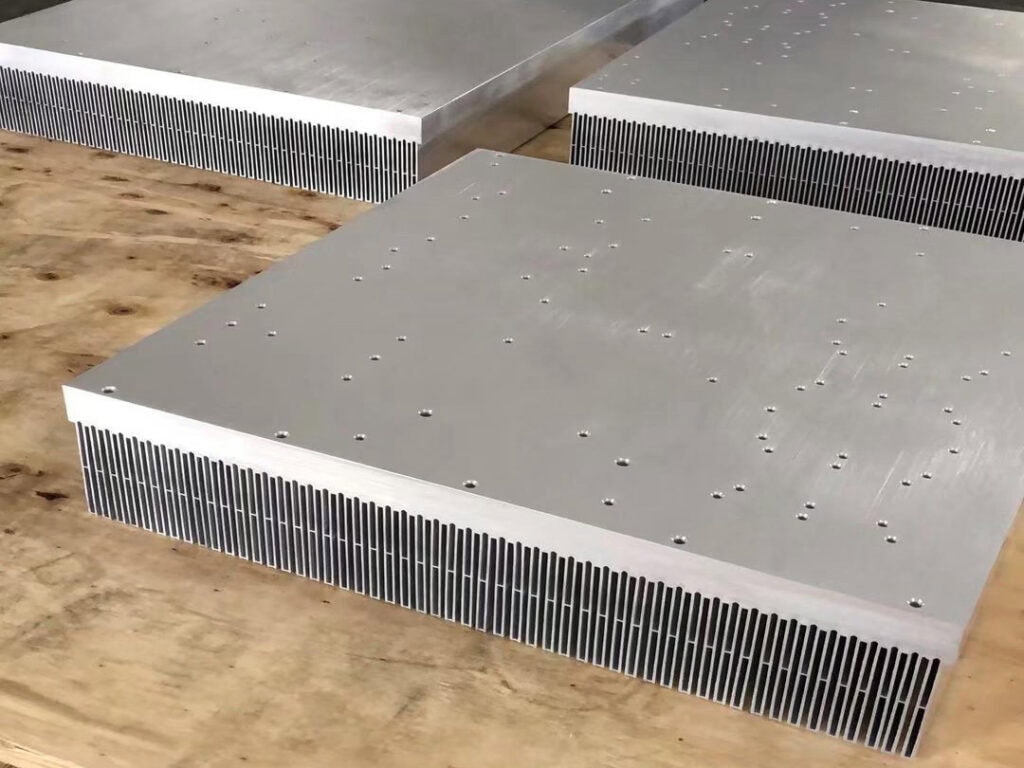
Bonded-fin construction is particularly useful when the required heat sink becomes too wide, too large, or requires fins that are too tall for a practical one-piece extrusion.
Separate fins are installed into a grooved aluminum or copper base, giving engineers greater flexibility in fin height, thickness, spacing, material, and overall dimensions.
This makes bonded-fin construction a common option for large power electronics cooling systems.
Increasing the physical size of a heat sink can provide more cooling surface, but effective thermal performance depends on how that surface is actually used.
A successful large heat sink design should consider:
Heat Spreading
Heat must first move efficiently from the heat source across the base before it can reach the fins. For large bases or concentrated heat sources, base thickness, material, heat-source location, copper inserts, heat pipes, or other spreading methods may need to be considered.
Fin Spacing
More fins do not automatically mean better performance. Closely spaced fins increase surface area but can also restrict airflow.
Natural-convection heat sinks generally require more open fin spacing, while forced-air systems can often use higher fin densities when sufficient airflow and pressure are available.
Airflow Direction
Fin orientation should work with the actual airflow inside the equipment. For natural convection, the design should allow heated air to rise freely through the fin channels.
For fan-cooled systems, fin geometry should be matched to the fan or blower rather than designed independently.
Weight and Mechanical Support
Large heat sinks can place significant mechanical loads on housings, PCB assemblies, mounting rails, and other structures. Aluminum is therefore commonly preferred because it provides a good balance of thermal performance, weight, manufacturability, and cost.
Machining and Flatness
Large heat sinks often require more than cooling fins. Mounting faces, power-module interfaces, holes, threads, pockets, slots, and controlled base flatness may all be important to final assembly and thermal interface quality.
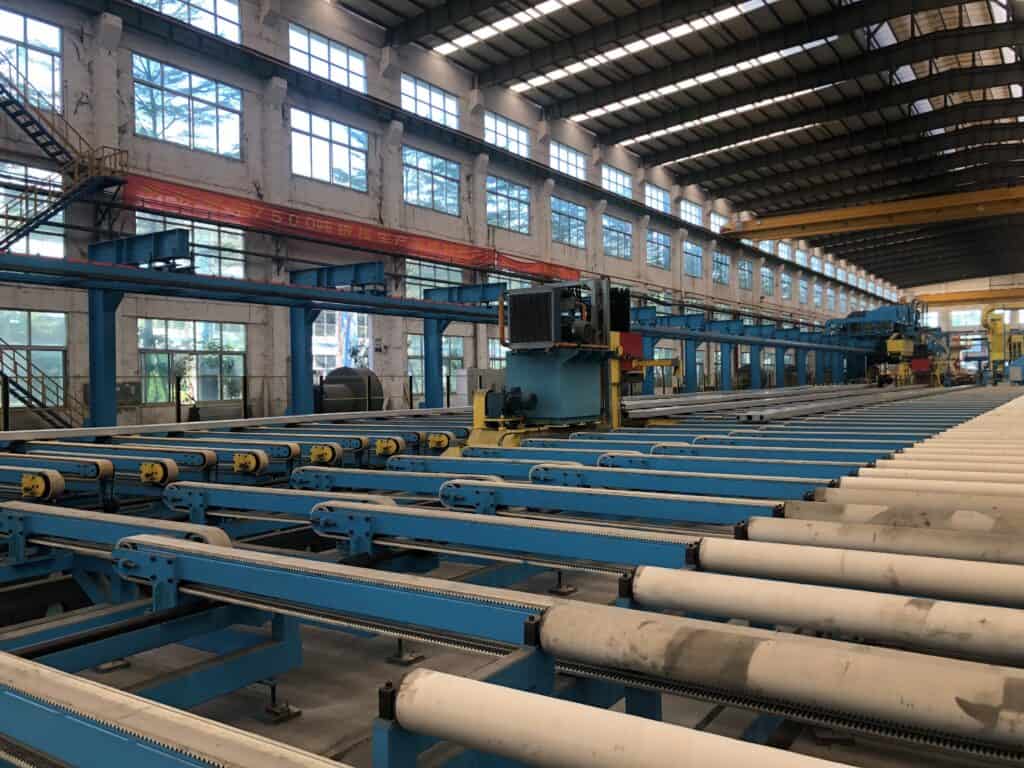
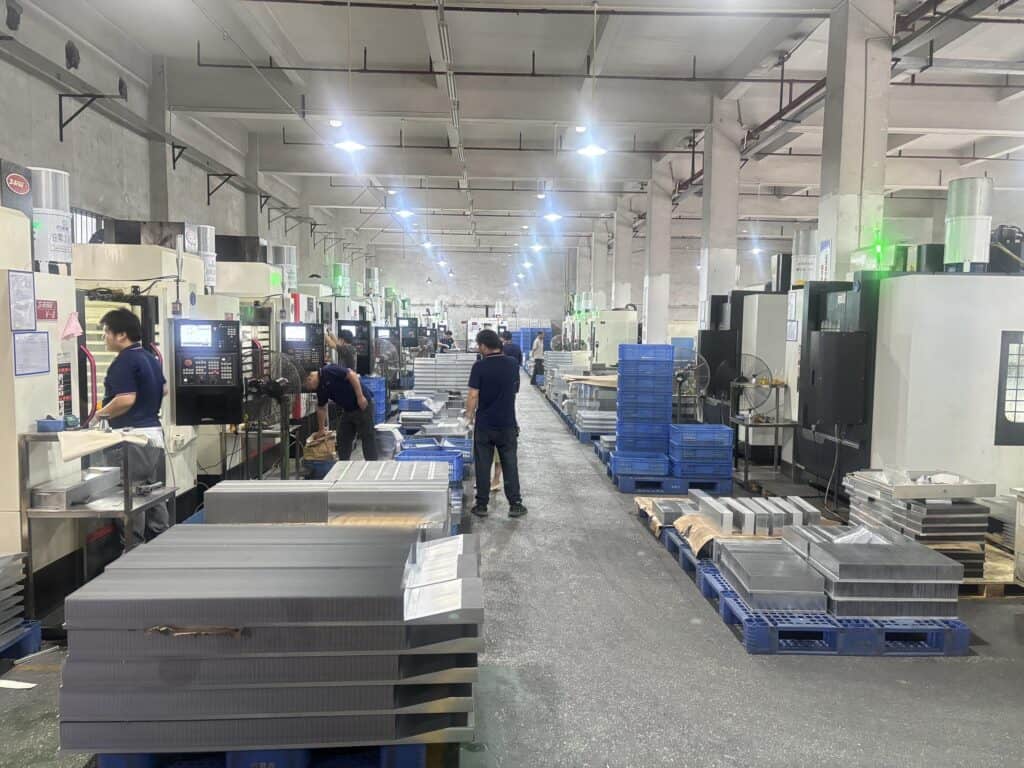
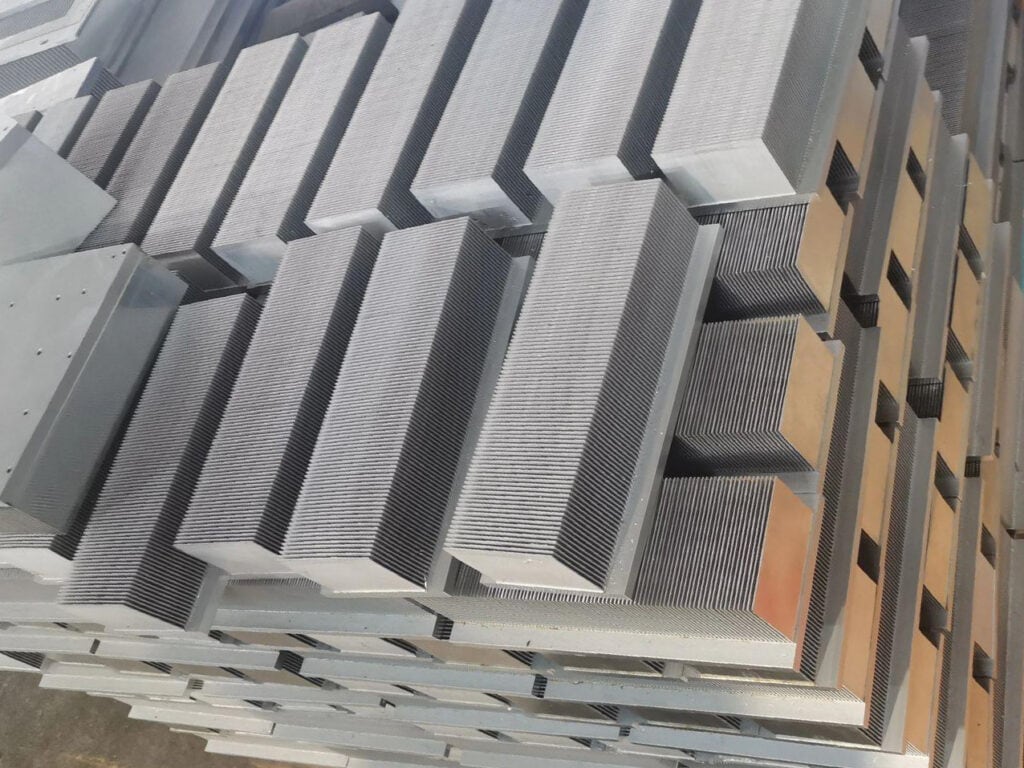
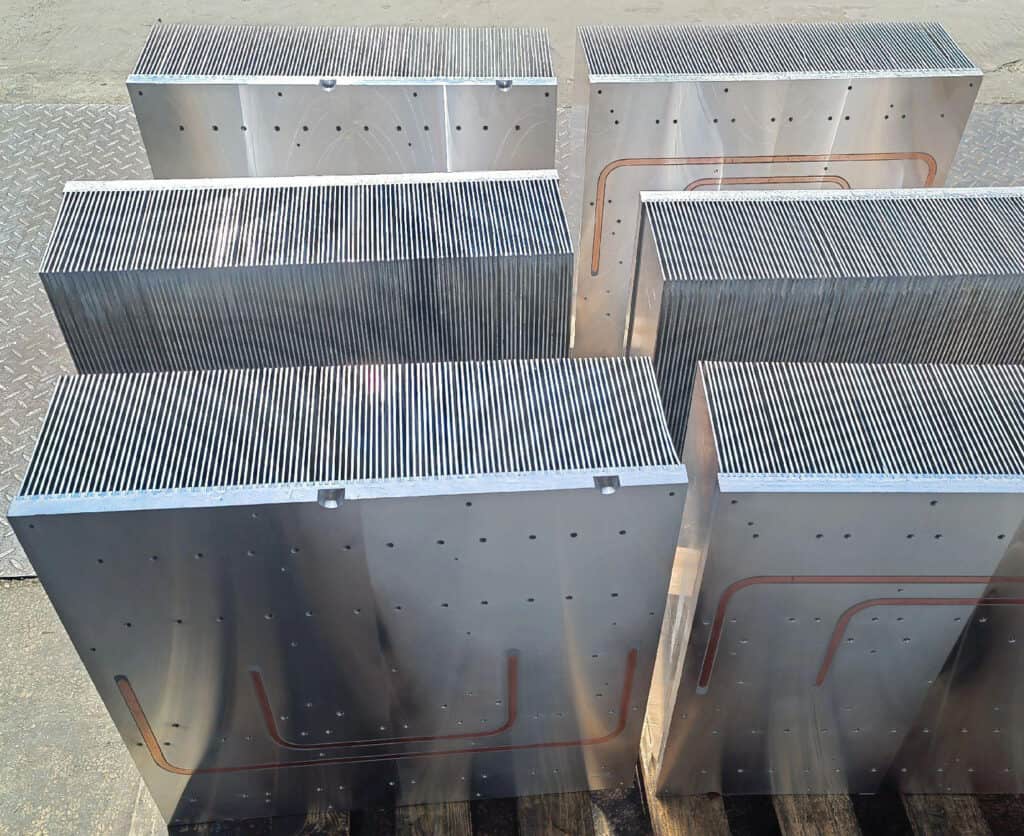
XINXIANG supports custom large heat sink projects from initial manufacturability review through production and final delivery.
Aluminum is the most common material for large heat sinks because of its favorable combination of thermal performance, weight, corrosion resistance, and cost.
Common aluminum options include 6063 and 6061. Copper or copper-aluminum hybrid structures can also be considered when improved heat spreading is required.
Available secondary operations include:
Large heat sinks can also be supplied with fans, fan guards, air shrouds, brackets, fasteners, thermal interface materials, heat pipes, vapor chambers, and other components when required.
Depending on the material and application, available finishes include:
Large and high-fin heat sinks require careful handling throughout machining, finishing, inspection, and transportation.
We inspect drawing-critical dimensions, machining features, surface condition, and other agreed requirements. Suitable protective packaging, pallets, or wooden crates can be selected according to heat sink size, weight, fin structure, quantity, and shipping method.
Send us your drawings or project requirements, and we’ll review them before preparing a quotation.
Large heat sinks are widely used in equipment where high power, continuous operation, or multiple heat-generating components create demanding thermal conditions.
With more than 20 years of heat sink manufacturing experience, XINXIANG supports international OEMs, engineers, and industrial buyers from prototypes through repeat production.
Our 6,000 m² manufacturing facility combines multiple heat sink processes with CNC machining, finishing, inspection, assembly, and export packaging.
Instead of forcing every large heat sink into one manufacturing method, we evaluate the geometry, quantity, performance requirements, and target cost to find a practical production solution.
Different sizes. Different thermal challenges. The right manufacturing process for each project.
Every large heat sink project has different dimensional, thermal, machining, and production requirements.
When reviewing a new project, useful information includes:
If you already have a completed heat sink design, we can review its manufacturability and provide a quotation.
If the design is still under development, we can review the manufacturing requirements and help determine whether extrusion, skiving, bonded-fin construction, or another production method is more practical.
This information allows us to better evaluate manufacturability and suitable production options for your design.
There is no universal dimension that defines a large heat sink. The term generally refers to heat sinks that are unusually wide, long, tall, heavy, or designed for relatively high thermal loads compared with standard electronic heat sinks.
Manufacturing feasibility depends more on the complete geometry than on one individual dimension.
It depends on the design.
Extrusion is often economical for repeat aluminum profiles. Skiving is useful when thin, dense fins are required. Bonded-fin construction provides greater flexibility for very wide bases and tall fins.
Forced-air cooling may also be added when passive convection cannot provide sufficient performance.
Large extruded sections are possible, but maximum size depends on the profile geometry, fin height, fin spacing, base thickness, alloy, die design, and extrusion press.
XINXIANG can evaluate large extruded profiles up to approximately 650 mm in width for suitable designs. Final feasibility should always be confirmed from the drawing.
Yes. We can provide milling, drilling, tapping, slots, pockets, mounting surfaces, local fin removal, and other machining operations according to the drawing.
Large parts with critical base flatness or interface requirements are reviewed individually.
Not necessarily.
Bonded fins provide greater flexibility for large widths, tall fins, and high fin density. Extrusion provides a strong one-piece structure and is often more economical for suitable profiles and repeat production.
The correct choice depends on thermal performance, dimensions, quantity, weight, and cost.
Yes. Depending on the project, heat sinks can be supplied with fans, shrouds, heat pipes, vapor chambers, brackets, thermal interface materials, and mounting hardware.
Send us your drawing or project requirements.
XINXIANG will review the size, material, heat load, airflow, machining requirements, production quantity, and surface finish to determine a practical manufacturing solution for your large heat sink project.
You can also contact our team at sales@heat-sinks.com
Send us your drawing or project requirements. Our team will review your request and typically respond within 24 hours.
You can also email us directly at sales@heat-sinks.com