
High-conductivity Copper Heat Sinks for Compact, High-power, High-heat-flux, and Space-constrained Thermal Applications.
Copper is selected for heat sinks when rapid heat spreading, compact size, or concentrated heat loads are more important than minimum weight and material cost.
Its higher thermal conductivity allows heat to spread more effectively from a small component-contact area into a wider fin field or cooling surface. This can be particularly valuable for processors, power modules, lasers, RF components, semiconductor equipment, and other devices with localized hot spots.
C11000 electrolytic tough-pitch copper is a common high-conductivity grade. The Copper Development Association lists C11000 as a minimum 99.9% copper alloy with at least 100% IACS conductivity in the annealed condition. Oxygen-free C10200 is another high-conductivity copper grade and may be considered for selected joining, vacuum, brazing, or specialized applications.
Copper is not automatically the best material for every heat sink. It is substantially heavier and more expensive than aluminum, so the final design must balance thermal performance, weight, machining, corrosion protection, system structure, and total project cost.
At XINXIANG, we manufacture custom copper heat sinks and thermal components according to your drawings, heat-source layout, cooling method, quantity, finish, and assembly requirements.
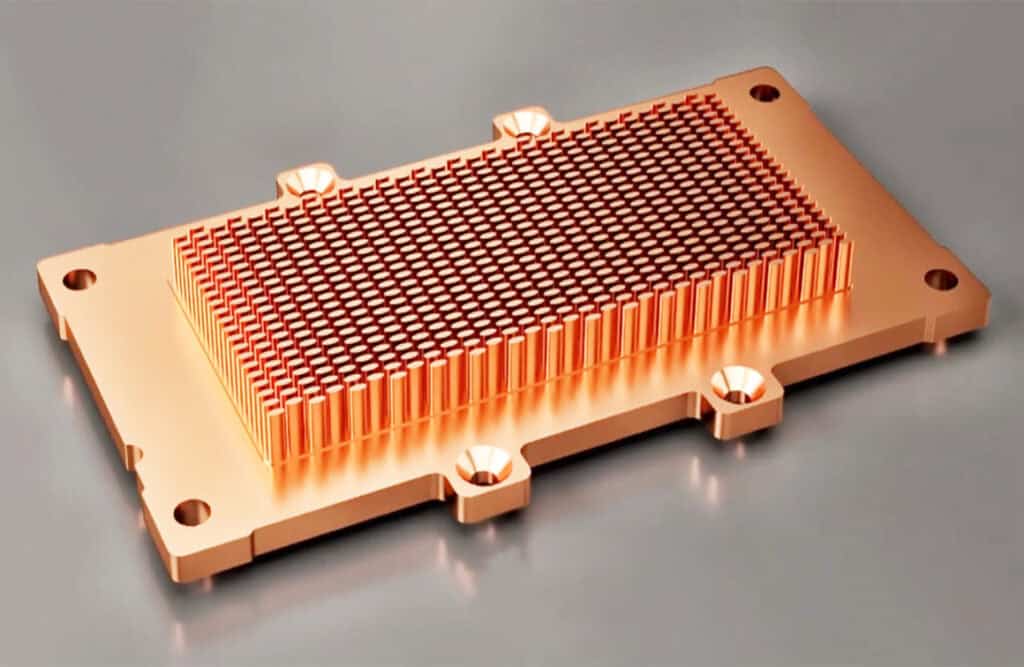
Superior Heat Spreading
Copper transfers heat more effectively through the base, helping distribute energy away from small or concentrated heat sources.
Compact Thermal Designs
Higher material conductivity can be valuable where the available footprint is limited and increasing the overall size of an aluminum heat sink is not practical.
One-Piece High-Density Fins
Copper can be skived or forged into one-piece base-and-fin structures without an adhesive interface between the base and fins.
Suitable for High-Heat-Flux Components
Copper is commonly considered for high-power processors, IGBT modules, RF devices, laser equipment, semiconductor systems, and other localized heat sources.
Flexible Surface Protection
Copper can be supplied bare or with project-specific anti-oxidation treatments and metallic plating.
| Item | Available Options |
|---|---|
| Manufacturing Process | Skiving, forging, bonded fins, brazing, CNC machining, or liquid cooling |
| Fin Structure | Straight plate fins, pin fins, folded fins, bonded fins, or custom |
| Material | C110, C102, or project-specific copper |
| Cooling Method | Natural convection, forced airflow, heat-pipe assisted, or liquid cooling |
| CNC Machining | Milling, drilling, tapping, component pockets, channels, ports, and flatness machining |
| Surface Condition | Bare copper, anti-oxidation treatment, nickel plating, or project-specific plating |
| Assembly | Fans, shrouds, heat pipes, fittings, TIMs, brackets, and mounting hardware |
| Inspection | Material verification, dimensions, flatness, plating, pressure, or leak testing as applicable |
Engineering Note:
Final capability depends on the copper grade, temper, fin geometry, tooling, machining access, tolerances, joining method, and order quantity.
Copper is more difficult and expensive to process than aluminum, so the manufacturing route should be selected carefully according to geometry, performance, quantity, and cost.
| Design Factor | Copper Heat Sink | Aluminum Heat Sink |
|---|---|---|
| Thermal Conductivity | Higher | Lower, depending on alloy |
| Heat Spreading | Better for concentrated hot spots | Often sufficient for broader heat sources |
| Weight | Heavy | Lightweight |
| Material Cost | Higher | Lower |
| Large Structures | Can become heavy and expensive | Usually more practical |
| Skiving and Machining | Suitable | Suitable |
| Extrusion | Possible but less economical and less common | Widely available |
| Surface Protection | Anti-oxidation treatment or plating may be required | Anodizing and coatings readily available |
| Best Fit | Compact, high-power, or heat-spreading-critical applications | General-purpose, large, and weight-sensitive applications |
Copper’s specific gravity is approximately 8.9, compared with about 2.7 for common aluminum alloys. Copper therefore weighs more than three times as much for the same volume, which can influence mounting, transportation, vibration, and system design.
Learn more about our Custom Aluminum Heat Sinks.
Copper should be considered when one or more of the following conditions apply:
Heat is concentrated in a small component-contact area.
The available heat sink footprint is tightly restricted.
Base heat spreading limits the performance of an aluminum design.
The product requires a compact skived or forged structure.
The heat sink also performs an electrical conduction function.
High conductivity is needed near the heat source before heat is transferred into aluminum fins, heat pipes, or liquid channels.
Copper may not provide enough additional system-level benefit when airflow, fin efficiency, thermal interface resistance, or external convection is the main limitation. A larger aluminum heat sink can sometimes provide similar overall performance at lower weight and cost.
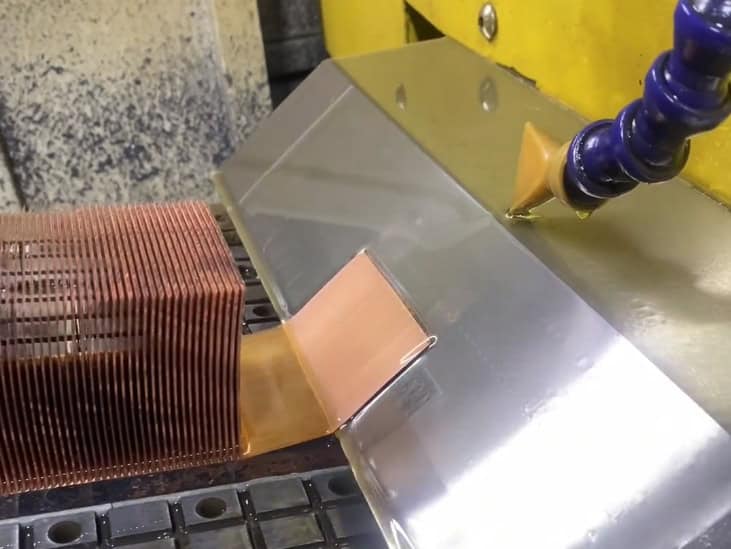
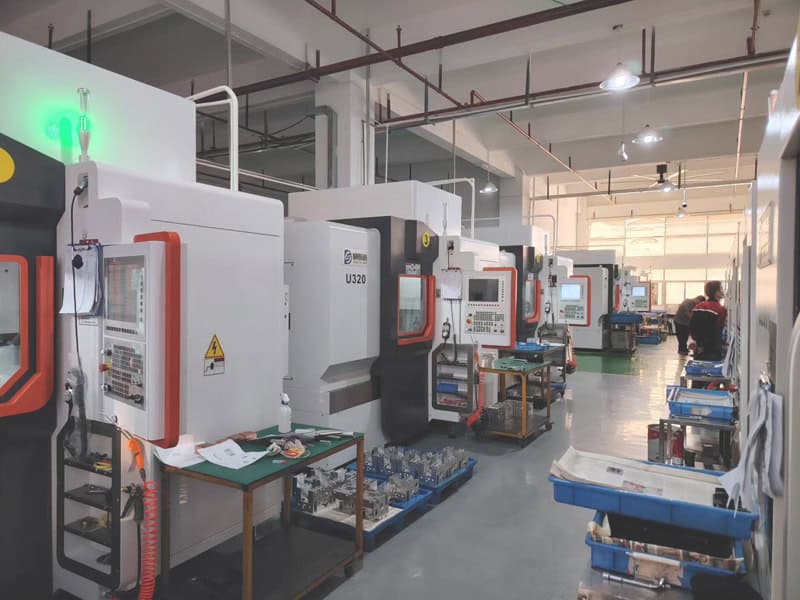
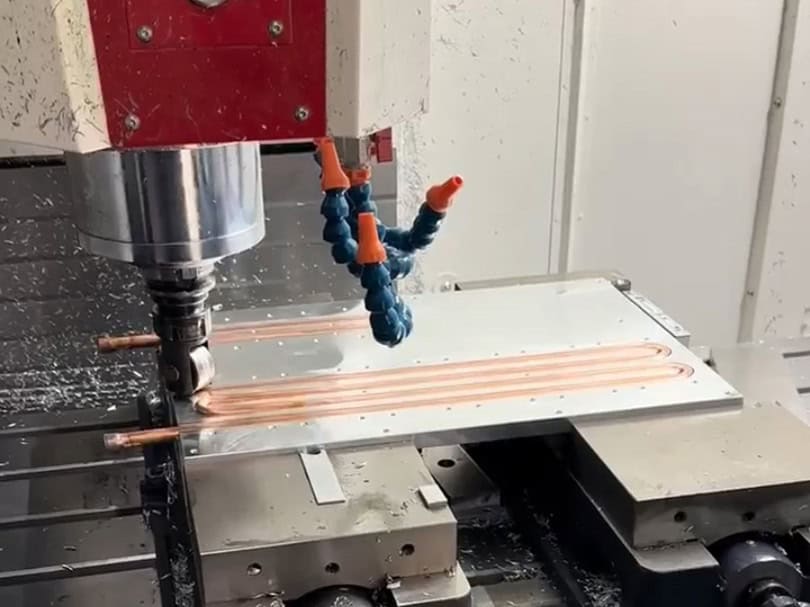
Aluminum and Copper Manufacturing
We can compare copper, aluminum, and hybrid design routes according to thermal performance, weight, cost, geometry, and production requirements.
Multiple Copper Processing Options
Available project routes include skiving, forging, bonded fins, CNC machining, heat-pipe integration, and liquid cooling.
Custom Machining and Finishing
We support component pockets, holes, threads, interface-surface machining, anti-oxidation treatment, plating, and final assembly.
Prototype and Production Support
Custom samples, engineering validation quantities, small batches, and repeat OEM production can be evaluated.
International Delivery
Copper heat sinks and thermal assemblies can be packed with appropriate fin protection and shipped globally.
No. Copper conducts heat more effectively, but it is heavier and more expensive. Aluminum may provide equal or better overall value when the design has sufficient size, airflow, and fin surface area.
C110 electrolytic tough-pitch copper is commonly selected because of its high conductivity and availability. C102 oxygen-free copper may be considered for specialized joining, vacuum, or low-oxygen requirements.
Yes. Copper skiving can produce a one-piece base and dense thin-fin structure. The maximum size, fin height, thickness, pitch, and tolerances depend on the design and machine capability.
Yes. Nickel plating can be evaluated according to the required corrosion resistance, appearance, solderability, electrical contact, and operating environment. Plating thickness and masked areas should be defined on the drawing.
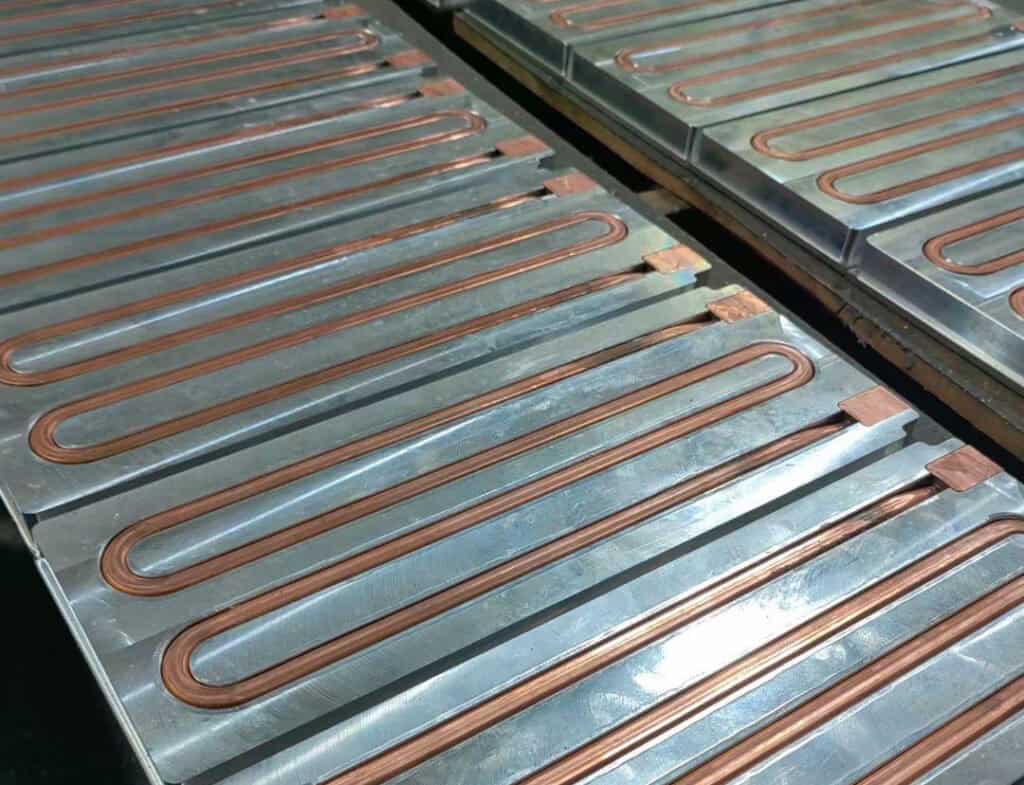
Yes. Common concepts include copper bases with aluminum fins, copper inserts in aluminum heat sinks, embedded copper tubes, and heat-pipe-assisted aluminum assemblies. Joining and galvanic-corrosion control must be reviewed carefully.
They can be, but copper’s higher conductivity does not eliminate the need for adequate fin spacing and external airflow. Natural-convection performance is often controlled by heat sink size, orientation, and air movement.
Copper or copper-containing cold plates can be evaluated according to coolant compatibility, joining method, pressure, flow, leak testing, weight, and cost.
Please send your drawing or 3D model, copper grade, quantity, heat load, heat-source location, airflow or coolant conditions, finish, critical tolerances, inspection requirements, and delivery location.
Send us your drawing and thermal requirements. Our team will review the copper grade, manufacturing process, fin geometry, machining, surface protection, weight, quantity, assembly, and inspection requirements before preparing a quotation.
You can also contact our team at sales@heat-sinks.com
Send us your drawing or project requirements. Our team will review your request and typically respond within 24 hours.
You can also email us directly at sales@heat-sinks.com